CEO Brian Krzanich Shares New Details on Advances in Autonomous Driving and the Future of Artificial Intelligence
Consumer Electronics Show (CES), Las Vegas, Jan. 8, 2018/New Delhi, 9 Jan – In the opening keynote for CES 2018, Intel CEO Brian Krzanich highlighted how data is transforming the world around us and driving the next great wave of technology innovation, from autonomous driving to artificial intelligence (AI) to virtual reality (VR) and other forms of immersive media.

In a keynote packed with glimpses into future technologies, Krzanich treated the audience to a dazzling array of data-driven innovations. In autonomous driving, he unveiled Intel’s first autonomous vehicle in its 100-car test fleet; disclosed that BMW*, Nissan*, and Volkswagen* are moving their Mobileye-based mapping design wins to actual deployments; and announced new collaborations with SAIC Motor* and NavInfo* to extend crowdsourced map building to China. Focused on the future of AI, Krzanich announced a partnership with Ferrari* North America to use Intel’s AI technologies to apply data from the racetrack to enhance the experience for fans and drivers. In immersive media, he introduced the newly established Intel Studios and announced Paramount Pictures* will be the first major Hollywood studio to explore this technology in tandem with Intel to see where this will lead for the next generation of visual storytelling.
“Data is going to introduce social and economic changes that we see perhaps once or twice in a century,” Krzanich said. “We not only find data everywhere today, but it will be the creative force behind the innovations of the future. Data is going to redefine how we experience life – in our work, in our homes, how we travel, and how we enjoy sports and entertainment.”
Krzanich’s keynote marked the start of CES for Intel and provided tangible examples for how the company and its partners are unlocking the power of data to transform businesses and our daily lives.
Building the Autonomous Future
In autonomous driving, Krzanich announced that 2 million vehicles from BMW, Nissan and Volkswagen will use Mobileye Road Experience Management (REM) technology to crowdsource data to build and rapidly update low-cost, scalable high-definition maps throughout this year.
For the China market, Krzanich disclosed two critical partnerships with leading automotive manufacturer SAIC Motor and digital mapping company NavInfo. In addition, SAIC will develop Level 3, 4 and 5 cars in China based on Mobileye technology. Levels are assigned based on capacity for autonomy – a Level 4 vehicle can drive itself almost exclusively without any human interaction, and a Level 5 vehicle can drive itself without human interaction on any road.
Krzanich also disclosed details for the company’s new automated driving platform, which combines automotive-grade Intel Atom® processors with Mobileye EyeQ5® chips to deliver a platform with industry-leading scalability and versatility for L3 (Level 3) to L5 (Level 5) autonomous driving.
Intel Senior Vice President and CEO/CTO of Mobileye Professor Amnon Shashua will share more details about the company’s autonomous driving strategy during an Intel press conference at CES on Tuesday, Jan. 9, at 10:00 a.m. (LVCC room #228).
Driving Insights with Intel AI and Exploring Technology of Tomorrow
Addressing artificial intelligence, Krzanich showcased how companies are using Intel’s technology to transform their businesses through AI. He announced Intel is partnering with Ferrari North America to bring the power of AI to the Ferrari Challenge North America Series that will take place on six courses in the U.S. this year. The Ferrari Challenge broadcast will use the processing power of Intel Xeon® Scalable processors and the neonTM framework for deep learning not only to transcode, identify objects and events, and stream the experience to viewers online, but also to mine the resulting data for further insights for drivers and fans.
Looking ahead to the future of computing, Krzanich noted Intel’s promising research into neuromorphic computing, a new type of computing architecture that mimics the way brains observe, learn and understand. Intel’s neuromorphic research prototype chip (“Loihi”) is now fully functioning and will be shared with research partners this year.
Krzanich also announced the next milestone in Intel’s efforts to develop a quantum computing system. Intel shipped its first 49-qubit quantum computing test chip (“Tangle Lake”) to research partner QuTech*. Quantum computing is the ultimate in parallel processing, and Krzanich noted it has the potential to compute at a far greater speed than anything ever achieved before.
Creating a New Wave of VR and Immersive Media
In addition to enabling AI and the autonomous future, Krzanich discussed how data can transform other everyday experiences, such as entertainment and media. He announced the debut of Intel Studios, a newly constructed, state-of-the-art studio dedicated to the production of large-scale, volumetric content – using Intel® True View technology – that will create new forms of visual storytelling with and without VR. Intel Studios features the world’s largest volumetric video stage and a comprehensive post-production and control facility that will enable companies to create lifelike immersive media experiences like never before. Paramount Pictures is the first major Hollywood studio to explore this technology in tandem with Intel.
In sports, Krzanich announced that Intel will enable the largest scale virtual reality event to date with the Olympic Winter Games PyeongChang 2018 using Intel® True VR technology. Intel, together with the official Rights Holding Broadcasters, will capture a record 30 Olympic events, with both live and video-on-demand content available. This marks the first-ever live virtual reality broadcast of the Olympic Winter Games and will be available in the U.S. via a forthcoming NBC Sports* VR app. Krzanich also showcased how Intel is helping bring the future of 5G to the Olympics Winter Games to enable other new realistic, immersive and responsive sports and entertainment experiences with VR and 360-degree video.
Finally, Intel achieved a new Guinness World Records* title for the most UAVs airborne simultaneously from a single computer indoors when Krzanich presented a spectacular indoor light show performed by 100 Intel® Shooting Star Mini drones, or UAVs (unmanned aerial vehicles).
“If you are impressed by what you see at CES this week, stay tuned,” Krzanich stated in his closing remarks. “We are still discovering new ways to apply the power of AI and data. These discoveries will impact nearly every sector of innovation, and Intel is at the forefront of this revolution, bringing to life the promise of data-driven experiences through autonomous driving, AI, 5G and VR. At Intel, we not only see a world of infinite possibilities where technology makes our lives easier, we see a future where technology makes the world a better place.”
]]>- The new generation of the sporty sedan enjoys an extensively redesigned front and rear, with a more sophisticated interior
- Now available with a more powerful 2.5L engine in two model configurations – a Jetta SE and Jetta SEL
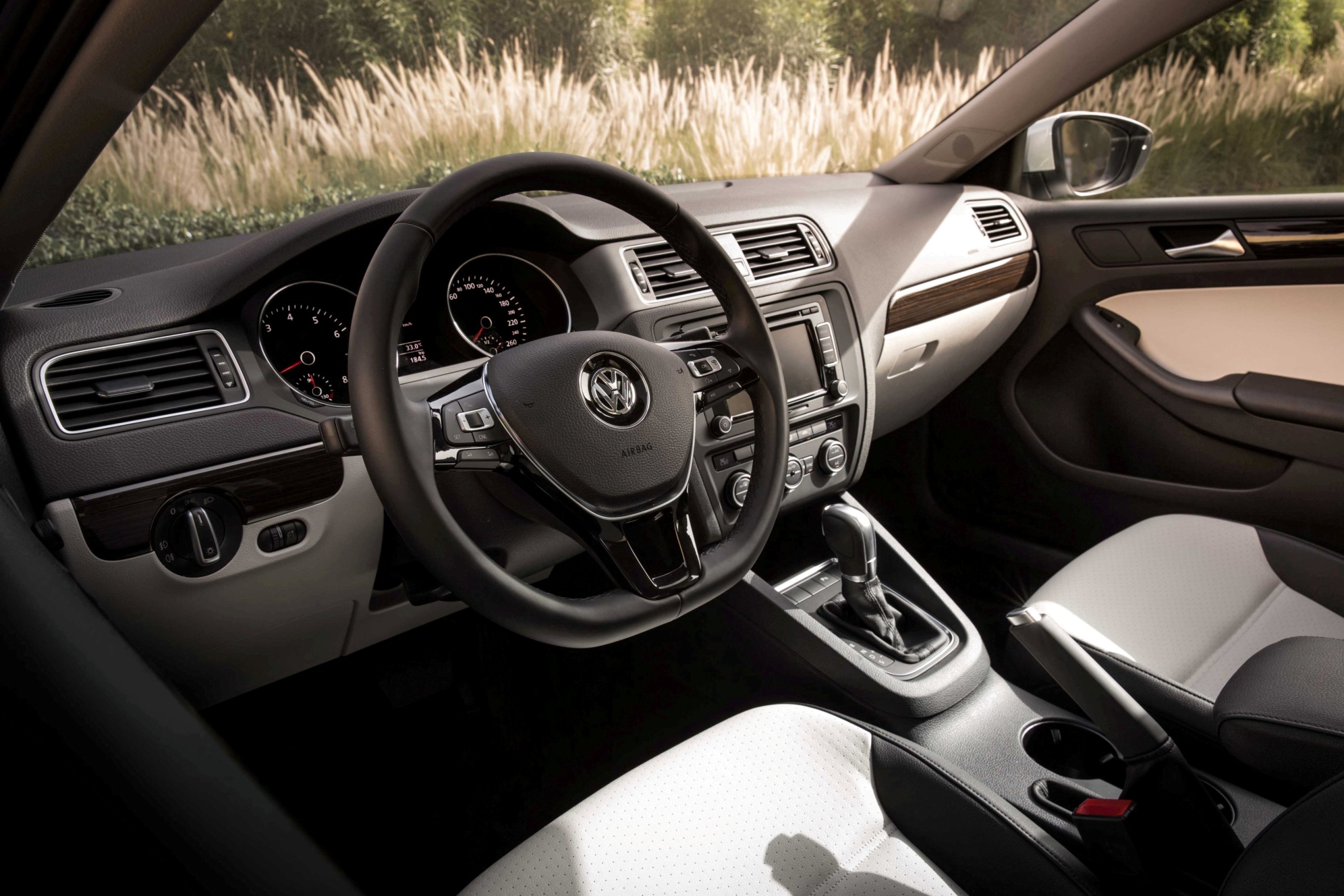
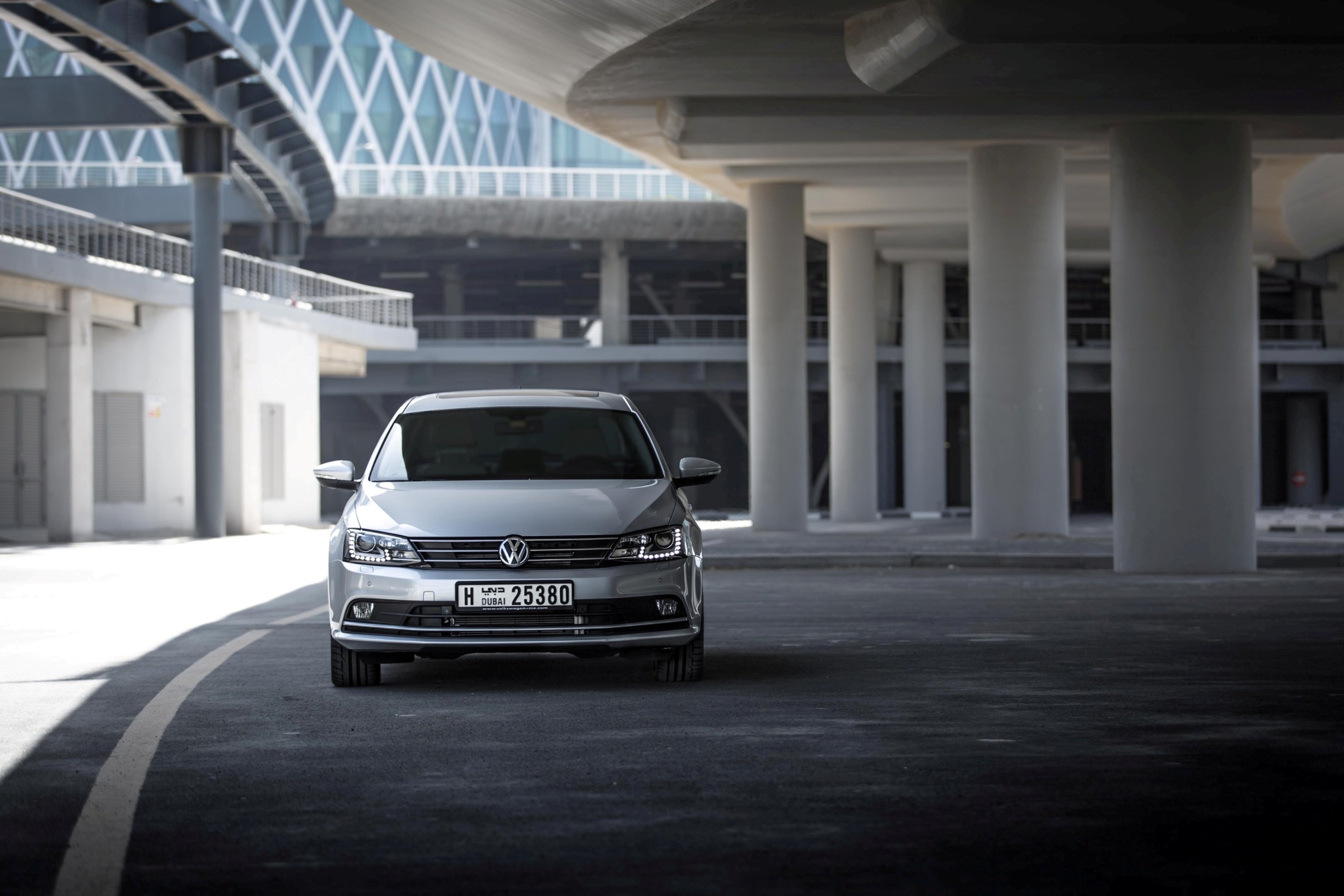
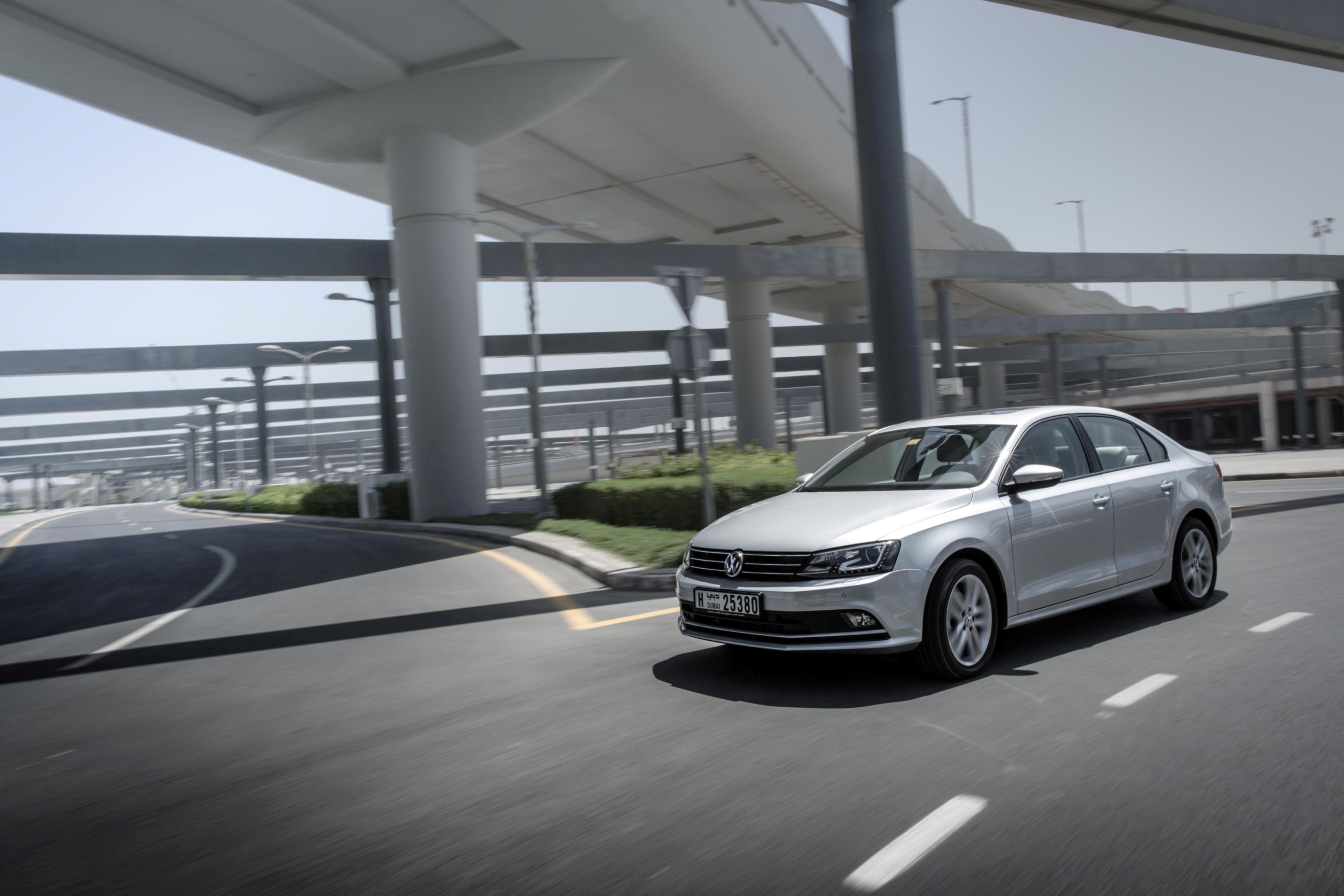
Dubai, 11 May 2015: Al Nabooda Automobiles today announced the arrival of the new, more powerful 2.5L engine Volkswagen Jetta in showrooms across Dubai, Sharjah and Fujairah.
The new generation of the sporty sedan will be available at prices starting from AED 81,950 with a sophisticated new design for both the front and rear, new technological features and a more sophisticated and comfortable interior.
The Jetta is now available in two model configurations, Jetta SE and SEL, with a 2.5 litre petrol engine, producing 125kW/170 HP – an increase of 55 HP – in addition to a 6-speed automatic transmission gearbox. With a fuel consumption of just 7.1l/100km, the Jetta propels from 0-100 km/h a full 3.6 seconds faster than the previous model while maintaining the same fuel consumption.
Thierry Seys, General Manager, Al Nabooda Automobiles, Volkswagen, said, “The new 2.5L Jetta blends a sophisticated design with a sporty driving experience thanks to an additional 55 HP and a 2.5L, five cylinder engine.
With a new engine, additional features and a new stylish design, the Jetta remains an affordable model with world-class German-engineering, offering more value-for-money than competitors in its class”.
The entry level model with a 2.5L engine is the Jetta SE, which features a parking distance control that provides acoustic warning signals at the front and rear of the vehicle; the “Climatronic” air-conditioning system with automatic air recirculation mode activation via air quality sensor; multi-function leather wrapped steering wheel with aluminium decorative inserts with control for MFD, radio and telephone; a multi-function display “Plus”, RCD 510 radio and media-In jack with iPod/iPhone adapter. Additionally, the model also features an electric tilt/slide glass sunroof; 17-inch alloy “Lancaster” wheels; rear view camera “Rear Assist” and Leatherette interior.
The top line model, Jetta SEL offers a number of distinguishing features including ambient lighting, enhancing the sensation of space creating a pleasant atmosphere; front fog lamps with static cornering light on the exterior along with bi-xenon headlamps including cornering lights, LED rear lights and LED separate daytime running lamps.
The Light and Sight Package in the Jetta SEL has highly advanced features that further boost the safety aspect of the model: the auto dimming interior mirrors, dims potentially visually impairing light emitted by traffic approaching from the rear, and automatic headlamp activation with separate daytime running lights. The proactive safety features ensure you have the ultimate peace of mind for you and your loved ones.
To find out more about the Volkswagen Jetta or to enquire about the latest generation of the sporty sedan, visit your nearest local Volkswagen showroom today.
]]>
Dubai, 2 March 2015: Three Dubai residents have left the UAE sand in their wake and flown to the freezing temperatures of Sweden for a once in a lifetime Volkswagen driving experience on an icy lake.
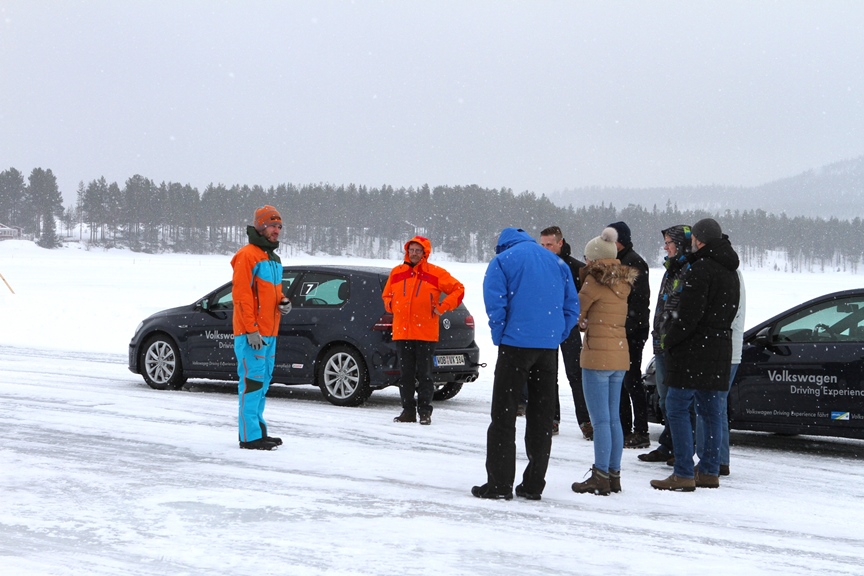
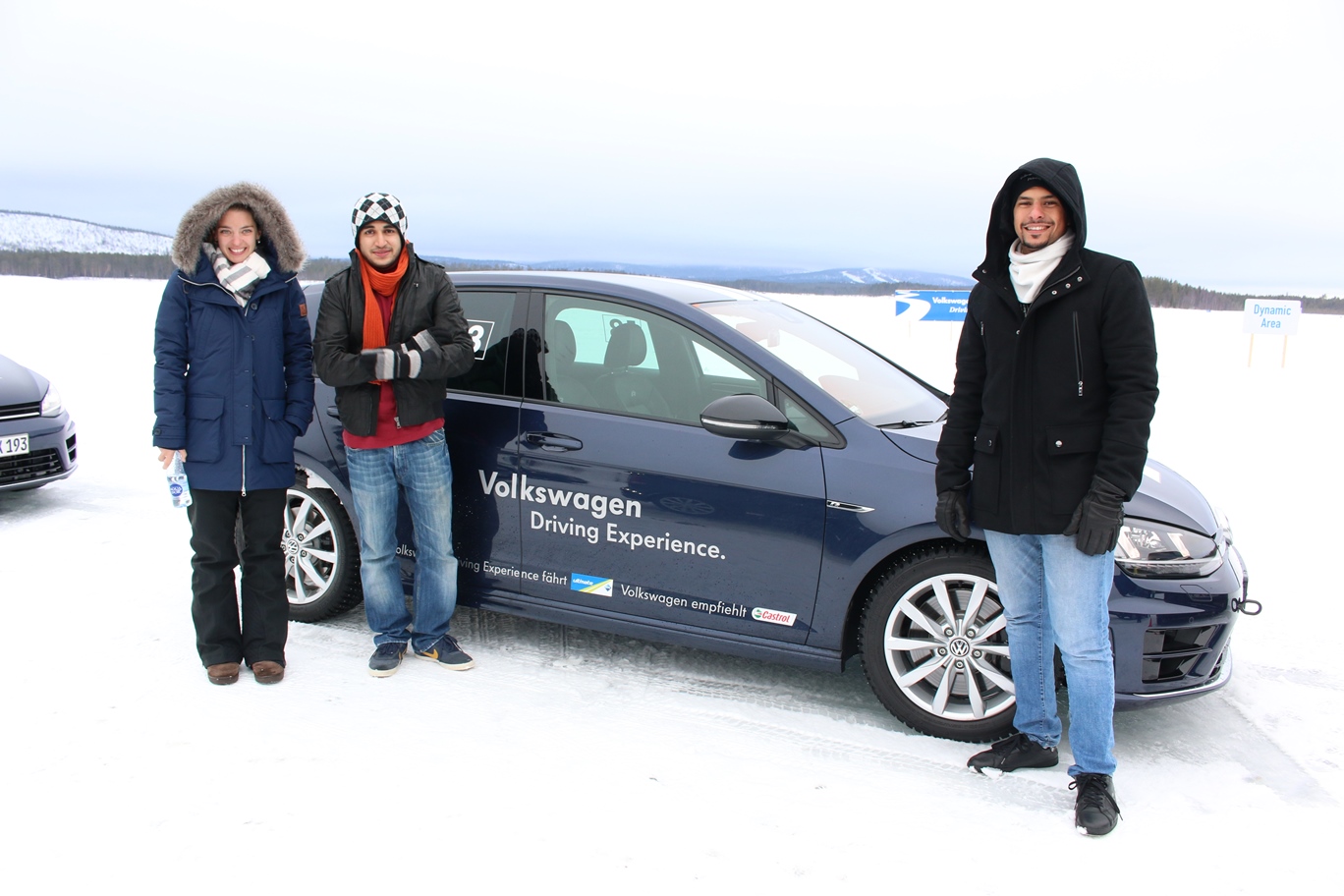
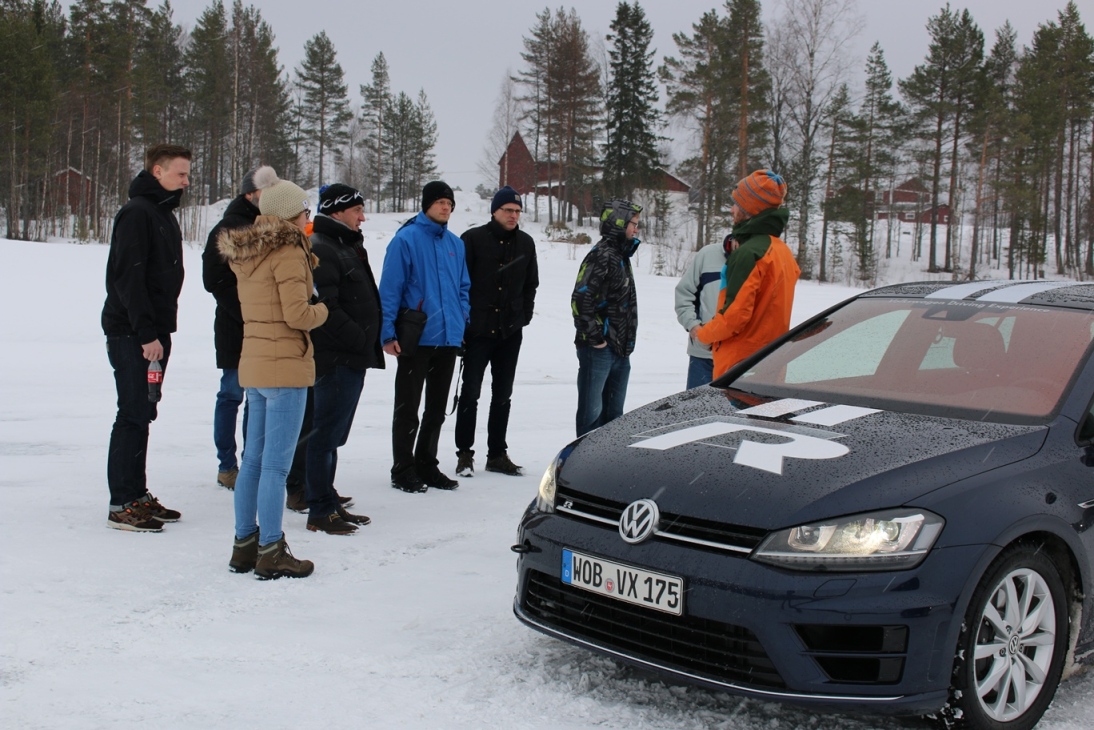
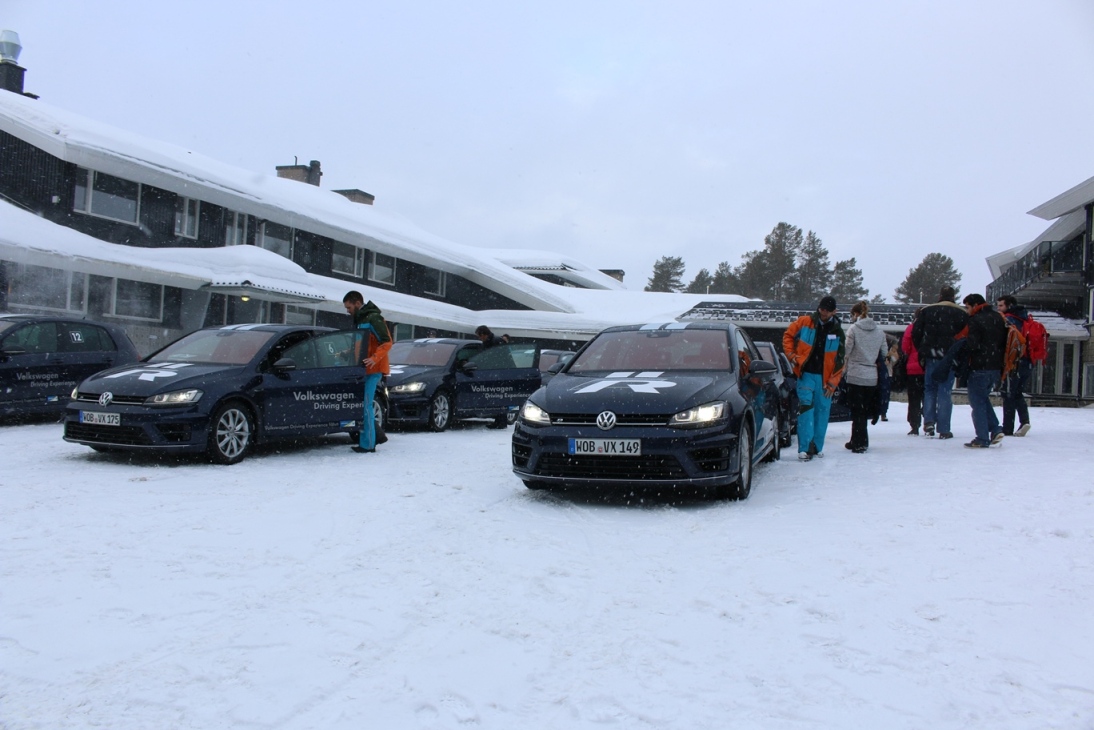
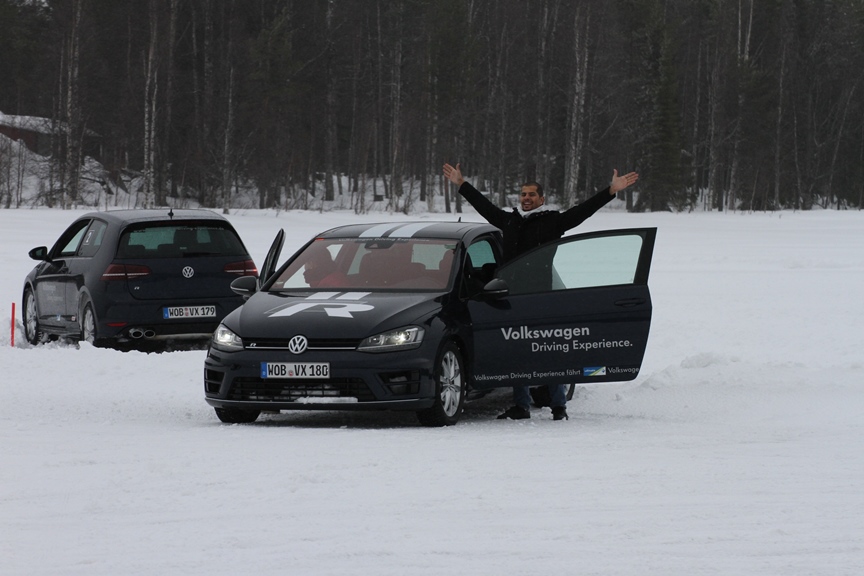
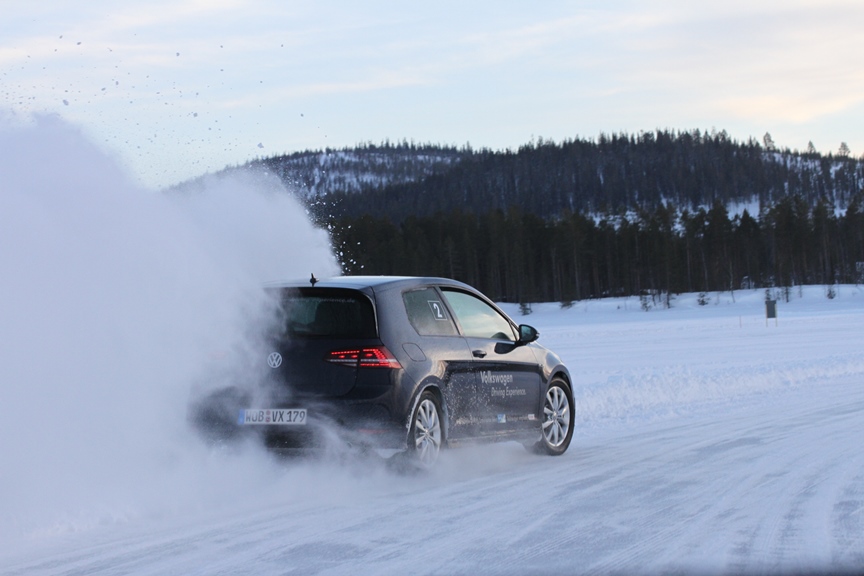
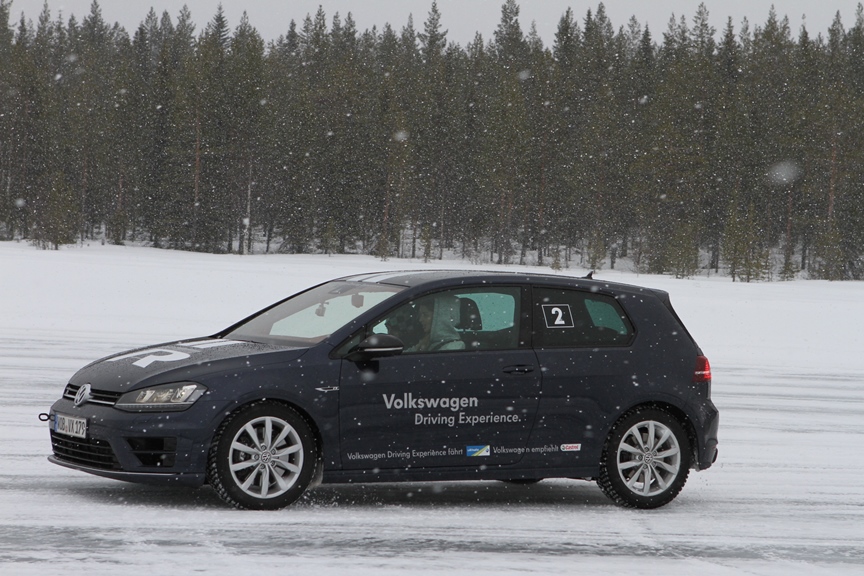
Ziyad Asgar Kazi from India, Islam Masoud from Egypt and Amanda Rushforth from the UK won an all-expenses paid trip to Arvidsjaur in Sweden, courtesy of Al Nabooda Automobiles, the exclusive distributor of Volkswagen in Dubai and the Northern Emirates.
The five-day trip saw each winner take to the wheel of the powerful Golf R, learning the specific techniques for driving on icy terrains by a team of professional trainers, while taking in the awe-inspiring winter landscapes just a few kilometres below the Arctic Circle.
Thierry Seys, Volkswagen General Manager at Al Nabooda Automobiles said: “It is our privilege to host Ziyad, Islam and Amanda on this truly memorable trip to Sweden and I know they are all doing exceptionally well in mastering the challenges set before them.
“This is a way we say thank you to our customers, who are loyal to the Volkswagen brand and who truly appreciate quality German engineering combined with outstanding vehicle performance.”
]]>
- Al Nabooda Automobiles announces the arrival of new Touareg in its Dubai, Sharjah and Fujairah showrooms
- New Touareg typified by dynamically designed front and rear sections, a start stop feature, and fresh colours and wheels
- Upper- class SUV equipped with an automatic post-collision braking system, preventing secondary collisions in the event of an accident
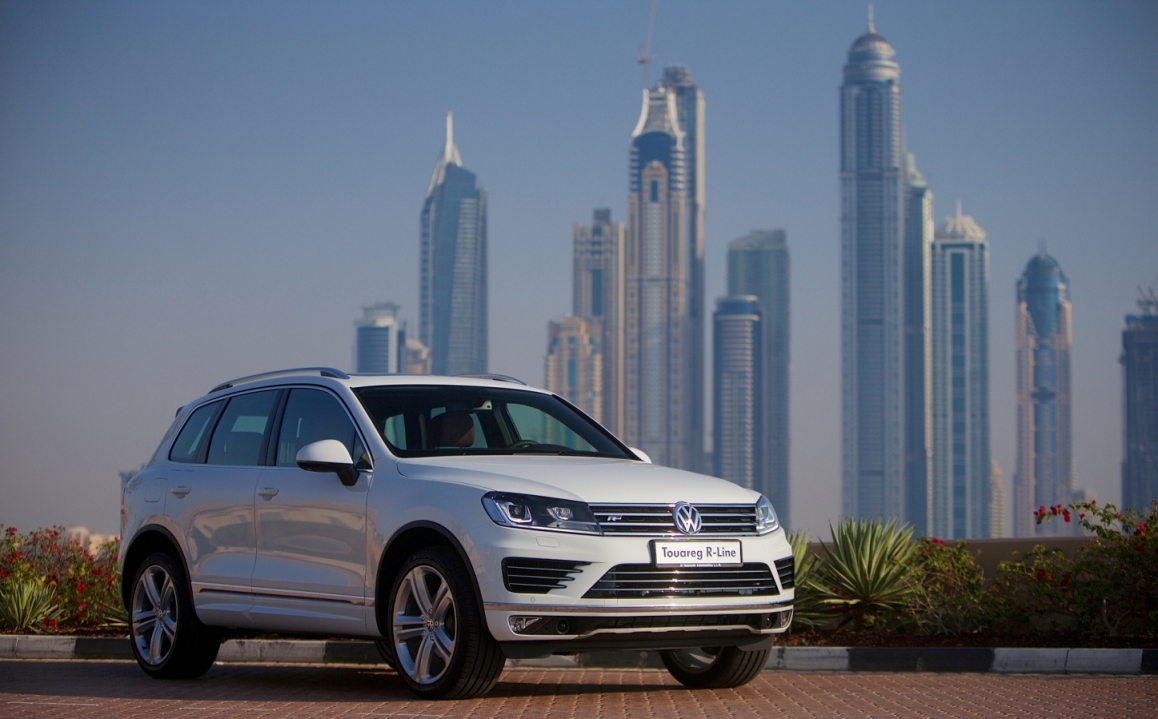
Dubai, 11 January 2015: Al Nabooda Automobiles, the sole distributor of Volkswagen in Dubai and the Northern Emirates today announced the much anticipated arrival of the new Touareg in its showrooms.
Unveiled at the SUV world premiere in Beijing earlier this year, the new Touareg, has been redesigned to offer customers new front and rear designs, new technical features and a wide range of colours and interiors.
The Touareg is one of the world‘s most successful premium-class SUVs. Within a decade, Volkswagen has sold around 720,000 units of the high-class sport utility vehicle; last year alone over 70,000 drivers chose a new Touareg, which combines the best of passenger car comforts and off-road worlds in one model.
The 2015-generation can be identified by the new front and rear designs and by its new colours. In terms of technology, all V6 and V8 models now come equipped with an automatic post-collision braking system (helps prevent a secondary collision in case of an accident), bi-xenon headlights and a coasting function.
Thierry Seys, General Manager, Al Nabooda Automobiles, Volkswagen, said: “The new Touareg boasts the comfortable dimensions of a luxury sedan and the dynamic attributes of a sports car. The spacious SUV’s latest model offers our valued customers an economical drive experience, whether on or off-road.
“The Touareg is one of the most successful upper class SUV’s in the world and we anticipate its popularity with our customers across Dubai and the Northern Emirates will continue with the arrival of the new model to our showrooms.”
Exterior design and features
Front end. The front-end design of the Touareg was completely re-developed. Especially distinctive are the headlights which are now larger; moreover, bi-xenon headlights as standard and the newly designed LED daytime running lights, available from the SEL package onwards.
The trapezoid-shaped lights create a line towards the re-designed radiator grille in the middle of the vehicle. In contrast to the previous model, the grille is trimmed with four transverse chrome fins instead of two; the two lower fins are visually extended into the headlights. Together, the radiator grille and headlights form a prominent wide band.
Designed as a parallel line beneath it is the new bumper, which is now styled for a more horizontal effect. The new design gives the Touareg an even wider and more impressive appearance. Complementing this visual image is the lower area of the bumper, which boasts a completely new look. As on the new Scirocco R sports car from Volkswagen, the lower air inlet now forms a stylised “A“ instead of a “V“ that transitions into the side air inlets to the right and left; giving the new Touareg a fuller stance on the road.
When the “Chrome & Style“ package is ordered with the SEL, there is a chrome strip on the next level, which continues into the side and rear body sections. Beneath this strip are newly designed fog lights that are coordinated with the new bumper design. At the bottom level, there is a new front spoiler, which perfects the aerodynamics of the underbody and the front wheels
Rear section. From the rear, the more precise styling of the Touareg is marked by its new, cleanly designed bumper which, similar to the front end, emphasizes the width of the SUV. When the “Chrome & Style” package is ordered as an option on the V6 package, a wrap-around chrome strip is integrated in the bumper.
Integrated between the exhaust tailpipes is a redesigned diffuser. Designers have relocated the LED rear fog lights to the bumper, which, as in the previous model, also integrates the rear reflectors. Visual highlights in the area of the boot lid include the re-designed VW badge and a sharpened tornado line between the rear lights.
Colours. Thelatest Touareg is available in a total of twelve body colours; five of which are new to the model package: “Light Silver Metallic“, “Sweet Date Gold“, “Moonlight Blue Metallic“, “Black Oak Brown Metallic“ and “Reef Blue Metallic“.
Interior design and features
Upholstery materials and accents. The new Touareg also offers an extended line-up of upholstery materials and wood accents – the “Vienna leather“: a fourth colour, “Bonanza Brown“ (dark brown), is now offered in addition to the colours “Titan black“, “Corn Silk Beige“ and “Natural Brown“.
In addition to these four colours, there is the elegant “Nappa leather“ which can now be ordered in the new colour “St. Tropez“ (light sand hue) and “Bonanca Brown” . Also new are the two fine wood accents “Sapelli Mahagoni“,”Wallnut” and “Engineered Ebony“.
Controls. The interior of the Touareg reflects an extraordinary alliance of rugged SUV elements and sophisticated premium-class elements including aluminium rotary knobs for the Climatronic system, running gear adjustment, air suspension, radio-navigation system, mirror adjustment and the air vent knobs which have been replaced by a new style of rotary knob – perfected both to look and to touch.
In addition to the chrome accents around the control panel modules and the running gear adjustment controls, the red illumination of all controls is now white.
Above the infotainment system, the central push button/display bar on the centre console is now extended. Previously the console consisted of three elements: “Park Distance Control“ (PDC), hazard warning unit and status display “Passenger airbag off“. In the new generation Touareg, the new push button for windscreen heating has been integrated to the right of the passenger airbag indicator, meaning the three button module now boasts five buttons. Another upgrade as standard includes a manual lumbar support adjustment in the front seat area.
Extensive range of standard features. The new Touareg is equipped with standard features such as bi-xenon, all-wheel drive, 17-inch alloy wheels, cruise control system with multifunction steering wheel, RCD 550 infotainment system with touchscreen, stop-start system, regenerative braking, coasting function, climate control system (Climatronic), servo steering and ESC with trailer stabilisation function.
The V8 versions offer extra standard features such as 18-inch alloy wheels, the “Chrome & Style“ design package, comfort seats in “Vienna leather“, fine wood accents, electric opening and closing function for the boot lid, anti-theft warning system and a Keyless entry and exit, and engine starting system.
Start-Stop Feature: The Start-Stop-system turns off the engine automatically when the car slows to 7km/h and comes to a halt. As soon as the brake pedal is lifted, the engine starts meaning the engine only runs when needed.
Multiple-collision avoidance braking system After a collision is detected, the brakes are automatically held in order to keep the car from rolling further unintended
12-pin trailer socket The trailer socket boast an additional two extra connections via pins 10 & 11 enabling the new Touareg to supply the trailer with higher currents while the engine is running (approx. 15-20 A) for example when charging of trailer battery or for air cooler.
Fuel consumption reduced by up to six per cent. Thanks to extensive aerodynamic improvements (such as air inlet openings in the front of the vehicle, modified door mirror caps and new wheel spoiler), tyres optimisation for low rolling resistance and standard 8-speed automatic gearbox optimised for low friction, Volkswagen was able to improve the fuel efficiency of the Touareg by up to six per cent.
In everyday driving, fuel consumption is also reduced by an optimised stop-start system, a standard coasting function for the V6 versions (until now only available with the Touareg Hybrid) which means as soon as the driver releases the accelerator pedal, the engine is decoupled from the gearbox; this is also known as “coasting“– a function even possible at vehicle speeds up to 130 km/h.
Technical perfection. The standard steel-spring running gear has also been optimized in the new Touareg; improvements include more agile steering response and a gain in comfort. An air suspension is available as an option.
Changes in the spring/damping unit have also resulted in optimized driveability of standard suspension.
The new Touareg will initially be available in the Middle East with both V6 and V8 FSI, a direct-injection petrol engines.
]]>
Pioneering edition of the Middle East Car of the Year Awards to showcase all nominated cars in accompanying two-day exhibition
November 10, 2014
All eyes are set on the inaugural edition of the Middle East Car of the Year (MECOTY) Award, the most coveted award for the regional automotive industry. Senior management executives from the entire industry have confirmed their attendance and are eagerly waiting in anticipation for the final results to be announced in a glittering gala awards night on November 20, 2014 at the Meydan Beach Club, JBR, Dubai.
“Middle East Car of the Year is a key platform for automotive brands in this region and we look forward to finding out how Jaguar Land Rover and its competitors have made an impact in this region,” said Bruce Robertson, Managing Director, Jaguar Land Rover MENA. “We are very pleased to have four of our vehicles nominated for the award and wish everyone the best of luck.”
“We are extremely honoured to be recognized by Middle East Car of the Year Award, which is one of the most reputed automotive awards in the industry,” said Samir Cherfan, Managing Director, Nissan Middle East. “Being nominated shows our commitment to the region to fulfill consumer demands. Nissan is committed to delivering innovation and excitement and winning an award at MECOTY will be recognition and a testament to that.”
The nominees underwent a stringent selection process that lasted almost seven months by a select panel of judges, who are handpicked to represent their respective countries, this makes MECOTY the only independent recognition for car manufacturers which acknowledges the fact that the cars they are selling in the region are in line with consumer needs.
“’We believe McLaren Automotive is evolving to be seen as a leading global luxury supercar brand and we recognise the huge importance the Middle East has on shaping such an image and will continue to have on our success against our competitors,” said Ian Gorsuch, Regional Director for Middle East & Africa. “We understand the regional market and we listen to what our customers want, this is what has led to incredible demand for our already award winning supercars and prestigious award nominations such as this.”
“We are pleased to have models from both our BMW and MINI brands nominated for this year’s Middle East Car of the Year Awards. The number of nominations for BMW Group confirms that we offer the right products to the discerning customers of this region. The Middle East Car of the Year Award celebration will be an exciting evening and BMW Group looks forward to being part of it,” said Johannes Seibert, Managing Director, BMW Group, Middle East.
MECOTY has empowered consumers by letting them vote for their favourite car through a custom Facebook app, which after receiving an overwhelming public response, took its last votes in yesterday. Five lucky winners will be given an opportunity of a life time to attend this exclusive industry-invite only event and watch the action as it unfolds.
“With the launch of this app, we have given the power to the people to vote for their favourite car and demonstrate their brand loyalty. It was purely a social media driven campaign and all manufacturers were given an equal opportunity window of three weeks to get their fans and followers to vote for their brand and make it win the prestigious Consumer Car of the Year title. The results will be a definitive measure of how connected the manufacturers truly are with their followers and a true testament of their public relations and marketing team’s engagement strategies,” said Mohammad Ali Sajjad, Advisor, MECOTY 2014.
“We are proud to have our new products nominated for the first Middle East Car of the Year Award. The fact that these models have been shortlisted is a testament to General Motors’ unwavering commitment to the highest standards of automotive excellence by delivering an enhanced driving experience and performance that exceeds expectations. We are eagerly looking forward to the 2014 MECOTY awards ceremony. Winning – and receiving industry-wide recognition on a regional level – would be a true honor,” said Maurice Williams, President and Managing Director of GM Middle East Operations.
Another exciting thing to look forward to in the event is the accompanying nominated cars display, which eliminates the need to go to various showrooms and waste time, energy, money and resources.
“If you are in the market for a new vehicle and can’t decide which car to invest on, just visit the nominated cars display of MECOTY 2014, see all the best cars of the year on one platform, meet the showroom representatives then and there and make the decision on which car to buy on the spot! Our aim is to bring the car manufacturers closer to their customers and the display is the perfect platform to execute this vision,” said Saeed Al Marzouqi, CEO & Chairman, Custom Events, Dubai.
Sponsors and partners of the event include: Platinum Sponsors, Dubai Properties Group, Official Venue, Meydan Beach Club and Support Sponsor, Carmudi.ae.
“Carmudi.ae is pleased to partner with such an important event in the region’s automotive industry and take part in showcasing the top brands and models as picked by both experts and the public. Just like MECOTY, we strive to provide our customers with the best experience in the marketplace.” Kerem Kuyucu, Managing Director of Carmudi Middle East
Prominent brands to be placed on display include Audi, Bentley, BMW, Chevrolet, Cadillac, Ford, Hyundai, Infiniti, Jaguar, Lexus, Land Rover, KIA, Maserati, McLaren, MINI, Mercedes, Nissan, Opel, Rolls Royce, Toyota & Volkswagen.
 New York, 17 June 2014
Good morning everyone. I am delighted to be here with all of you today. I missed last year’s event, so it’s good to be back.
Today I want to speak to you about two main points: one about the material and the second about the general economic health.
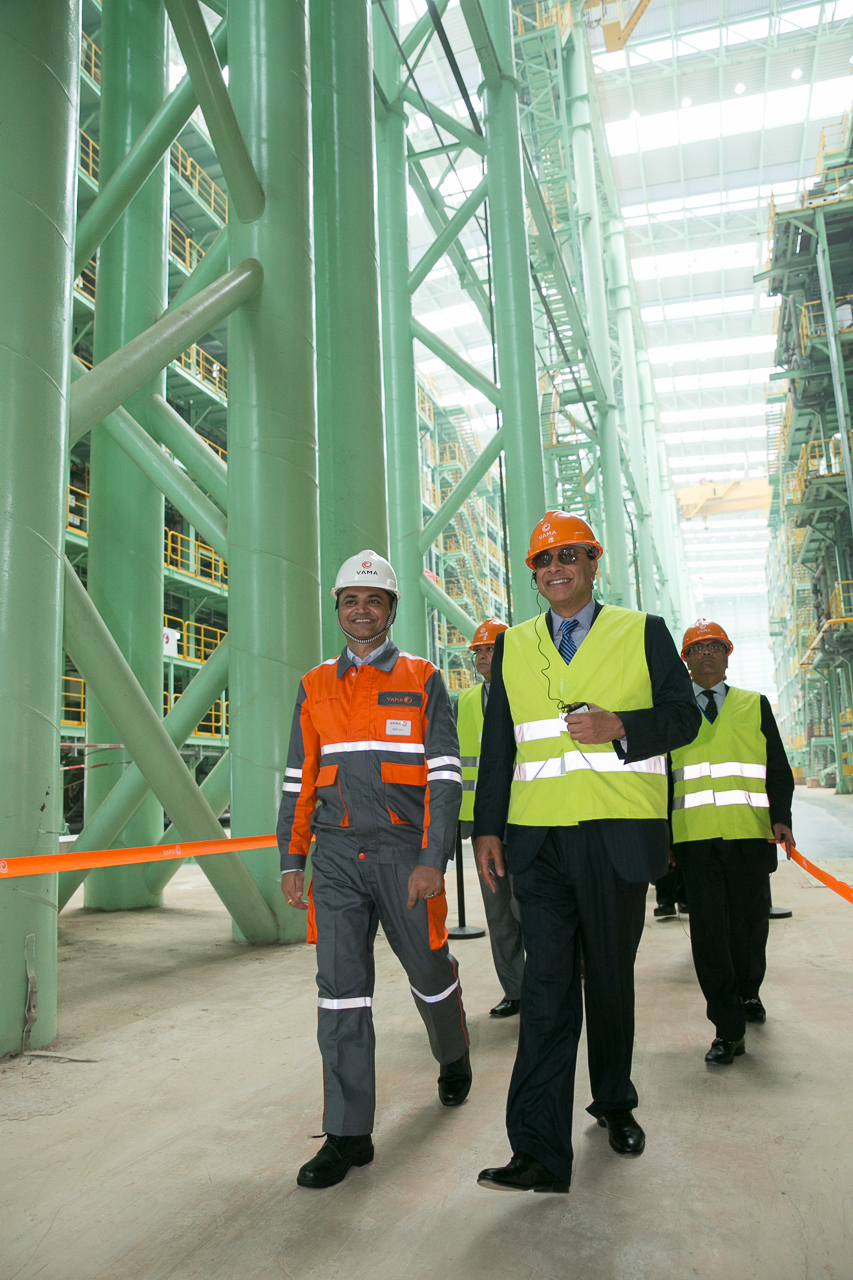
I have come to New York straight from China, where on Sunday ArcelorMittal celebrated the inauguration of our newest steel plant, called VAMA.
VAMA is a US$800m joint venture between ArcelorMittal and our partner Hunan Valin Iron & Steel Company. It is located around 1,000 kilometres west of Shanghai in the town of Loudi. It has taken two years to build. And it’s going to create 600 high-skilled jobs, with plans to create more as production increases.
We are very excited about this new plant; because for the first time ArcelorMittal will be producing high-strength automotive steel in China, the world’s largest and fastest growing automotive market.
Our customers will be global brands – such as Volkswagen, GM, Ford, PSA, Daimler-Benz, Toyota, Honda, Renault, Fiat and Nissan – as well as leading domestic manufacturers.
These customers have encouraged us to enter this market. They are excited about our new presence because it addresses the two main concerns of the automotive segment today.
The first is the geographic shift to the developing economies. The global automotive market is expected to grow by 33 million cars between 2007 and 2020. 32 million of these cars are coming from developing economies, with the biggest growth in China. The second is being able to meet new fuel efficiency legislation. Carmakers need to reduce the weight of their vehicles in order to meet future regulations. In Europe the target is 95 grams of CO2 per kilometre by 2021; and for NAFTA the target is 54.5 miles per gallon fuel efficiency by 2025, in 2 phases. The solution for both is essentially the same: To deliver a twenty five percent reduction in the weight of structural components and closures, in other words the body-in-white. The total weight of these parts typically ranges from 600 kilograms to 800 kilograms. So that means we need to lighten them by 120 – 160 kilograms. VAMA is the perfect example of ArcelorMittal’s ability to do both.
Regarding the geographic shift to developing economies, we are making strategic investments to support our customers’ requirements. This is vital because generally speaking the auto sector operates global platforms. This means they will increasingly make cars exactly the same way in China as they do in the United States. Being able to work with the same supplier in different markets is therefore clearly an advantage as they are guaranteed exactly the same product produced to exactly the same quality standards. It was an important part of the logic behind the creation of ArcelorMittal and also an example of how the era of consolidation has created unique benefits for the era of innovation. In other words, the merger gave us the global position from which today we are able to provide our global customers with the innovation they require and which we have developed as a result of our size and scale.
VAMA is the most recent example in the fastest growing market; but there are others. In Brazil we have invested in the production of advanced high strength steel at our Vega do Sul plant. And one of the reasons we were so delighted to acquire the Calvert facility in Alabama – where we are ramping up to full capacity – is because it is located near Mexico, which has a fast growing automobile market.
Turning to fuel efficiency, I want to make two points. First, it is true the steel industry is constantly in a state of technological revolution. Our steels for the automotive sector are a perfect example. I don’t want to get too technical, but essentially steel’s strength has multiplied by ten times over the past twenty years from 170 to 1700 megapascals. These are phenomenal changes. And we don’t know where the limit is in terms of product development. Every day we open up new frontiers and do things which yesterday didn’t seem possible.
Second, and most importantly, I want to stress that steel can provide all the weight reduction that auto producers require to satisfy the new fuel efficiency standards; for all types of vehicle. That may come as a surprise to some of you. I know other materials talk about 30 or 40% lighter than steel, but that’s only accurate if you are using the steel of 2005 as a comparison. Today we are working with completely different steels, which are the results of hundreds of millions of dollars of investment. This includes our S-in-motion range of products. S-in-motion is a collection of over 60 different advanced and ultra high strength steels that can collectively take the weight out. These include both cold stamped and press hardened steels like Usibor. Usibor is really ground-breaking technology. When parts require the highest strength, Usibor provides the lightest solution of any materials. A great example is the award-winning laser-welded, hot-stamped door ring co-engineered with Honda for its new Acura MDX. Not only did it achieve a four kilogram reduction in weight, but also the highest available collision safety rating from the Insurance Institute for Highway Safety.
In Europe, which had a two year head start over NAFTA as the targets were introduced two years earlier, 15% of all vehicles are already compliant with 2020 emission targets. Not only have the European carmakers had more time to get comfortable that steel can meet all their requirements, but they have also reversed some decisions in terms of the use of alternative materials. The most powerful evidence of this is from the automakers directly. The head of materials research and manufacturing from Volkswagen probably put it best – at least from our perspective – when he said: “We are using high strength steels in increasing amounts. It is a very cost effective way of reducing weight. Using new innovations in steel engineering…..it is possible to reduce weight without the use for more costly materials”.
So there is a lot of noise around that is obstructing the most critical fact: namely that steel can already achieve the required weight reductions. And we can do it in a more cost effective and environmentally friendly manner than any other material.
The second point I want to refer to in steels favour is cost. There isn’t much to say here except steel is more cost effective – and just as safe – than other materials.
The third element in steel’s favour is sustainability and this needs a little more elaboration. One crucial aspect of steel which is often forgotten is its performance over the entire life cycle – as well as its importance in the creation of more sustainable products. Today, people are not incentivised to look at the carbon footprint of a product over its entire life cycle. But they should be, because this is one important way we can make bigger steps towards an overall more sustainable environment. If I’m a car company today, what matters is that I can make my emission targets. And that’s good and needs to be done. But what would be even better – even more socially responsible, more visionary and more sustainable – is if we can make them in a way that is the most efficient over the life cycle from the production of the materials to the end of the car’s life. And this is where again there is a benefit with steel. Not only does steel produce less CO2 than other alternative materials, but it is also the only material which is 100% recyclable with no diminution in properties.
So, to conclude on this topic, we understand there is a challenge from other materials. And we accept that we live in a multi-materials world where the intersection of regulatory incentives and market competition ensures that the bar continually goes up. But no one should doubt that steel remains the material of choice. It is also important for people to understand that:
– We are confident that we are developing the required steels to help our customers achieve their fuel emission reduction targets for all types of vehicles
– There are some parts of the vehicle, notably where strength is the priority, where steel is the lightest of all materials
– We have the most cost effective and environmentally friendly solution
– And – crucially – we expect ArcelorMittal’s auto steel business to grow as our customers increasingly value technical capabilities and a global footprint
Part of this growth is due to the global economy, whose prospects have thankfully improved since the last time I spoke here in June 2012.
At that time the world was facing its most serious economic challenges since the onset of the crisis. The focus was on Europe. It was a time of great uncertainty and what-if’s, resulting in a paralysed business environment and frozen investment decisions. The situation in Europe was of concern to everyone, including here in the US, which was in a comparatively stronger position. And the emerging markets, where many had pinned their hopes to keep the global growth engine running, were also beginning to falter.
Fast forward two years and we are all relieved the picture is a more pleasant one, particularly in the developed markets.
Today Europe is more stable, and we are beginning to see a return to growth. Some structural problems remain but I believe the governments recognise the measures that must be implemented. Overall therefore we are confident that the corner has been turned and are cautiously optimistic.
In the US underlying growth is strong and this is reflected in numerous different indicators. The economy has consistently generated an additional two hundred thousand jobs a month, consumer spending remains strong, increasing at a 3.1% annual rate,. Purchasing managers indices continue to improve; and light vehicle sales in May were the highest for over seven years at 16.7 million.
In fact the key difference between now and two years ago is that the developed markets are on a much stronger footing. 2014 is expected to be the strongest year for the OECD since 2010. This is certainly positive for ArcelorMittal as two thirds of our shipments are in the developed world.
There is however a slightly different story in the developing economies. Two years ago these markets were also starting to slow, due – it was assumed – to the knock-on effect from the developed markets. However it has become apparent that whilst growth in many of these markets remains above that of their developed world counterparts, there are some major structural issues which need to be addressed.
India is a good example that has recently been in the spotlight due to its election. Two years ago, the forecast for growth in India was around 7%. This was lower than the 8% they had been delivering, but still pretty impressive by many standards. Today we are looking at growth rates closer to 5 – 6%. To put this in context the latest 5 year plan calls for 8% GDP growth in order to reduce poverty by 10%.
The new Indian Prime Minister has promised “less government, more governance.” I feel more confident that he is able to deliver on this promise. It is what India needs if it is to realise its potential of being one of the world’s economic powerhouses. The same is true of other major developing economies, such as Russia and Brazil, currently in the spotlight on account of the world cup, which has attracted controversy as well as excitement. Structural problems due to low levels of investment continue to hold back growth in Brazil. Its growth model, centred too much on boosting consumption in the presence of supply constraints, is unsustainable. It will be important for new measures to be implemented that address the structural problems and return the country to a stronger level of growth.
In Russia, the high reliance on energy exports is a long term risk and the country needs to diversify into other sectors. GDP growth was already slowing even before the Ukraine crisis at only 1.3% in 2013.
China, as is often the case, has its own unique dynamics. In fact the situation today in China is not dissimilar to the one in 2012, where growth was slowing slightly. The difference is whilst China is unlikely to let growth slip below 7% and will continue to inject small amounts of stimulus as required, we are unlikely to see the size of stimulus we did in 2012. This may mean having to accept a lower level of growth, but it also means there is less risk of a hard landing. This will impact steel demand. This year we are forecasting steel growth of around 3% in China, compared with 7% in 2013. The clear risk is that overcapacity in China is threatening higher imports to Europe and the US. Whilst we believe China recognises the need to deal with what is likely to be a long-term overcapacity issue, it is also important that the overflow to other markets enters on a fair basis. In this regard we support the modernisation of Trade Defence Instruments proposed by the European Commission.
One opportunity that presents itself to support further growth in many countries is infrastructure investment. Many developing economies, with Brazil, Russia and India as examples already mentioned, are held back by poor infrastructure. This makes the cost of managing logistical challenges too expensive to support business investment. But the problem is not limited to developing economies. Here in the United States the infrastructure is also in serious need of catch up investment. Last year, the American Society of Civil Engineers rated overall US infrastructure a D+. And inland waterways got a D. The ASCE estimates that the US would need to spend around US$450 billion a year to get to a B rating by 2020. That’s more than double what is currently planned. I am aware that I say this at a time when shrinking the budget deficits remains a priority for many countries. As indeed it should. But it is important to invest for the future. And when interest rates are so low, it makes sense to take advantage and address urgent infrastructure requirements that support growth.
This would also further boost manufacturing, which has a critical role to play in economic growth. In all economies, manufacturing remains a major employer and a real driver of innovation. Last November, we had the privilege of welcoming the President of the United States to our facility in Cleveland. In his address, the President said that ‘manufacturing is the hub of our economy. When the manufacturing base is strong, the entire economy is strong’. It was great to hear him say this. And of course I agree. Equally in Europe, I am delighted that the EU parliament has set a target for manufacturing to represent 20% of its GDP by 2020. This compares with around 16% today
Where governments must be careful however is to recognise how some of their decisions could have a negative impact on the competitiveness of manufacturing.
We are now less than two years from COP 2015 in Paris. The aim is to agree a global solution to reduce CO2 emissions. I agree that any effective environmental program ultimately needs to be global. Otherwise there is a real risk that energy intensive industries will no longer be competitive in certain economies. And that they will be pushed towards those countries with looser legislation and in all probability less efficient and therefore less environmentally friendly operations. Our unmatched lifecycle footprint and the application of the product mean that steel is critical to the transition to a low carbon world. According to the Boston Consulting Group, steel has a positive CO2 emission savings ratio of six to one. That means for every ton of CO2 produced during the steel making process, six tons of CO2 were saved through the application of the product. Looking at eight applications alone, the net CO2 savings are approximately 350 million tons of CO2 per year.
But in order for us to play this role, governments must recognise the importance of competitiveness in their policy calculations. We believe Brussels needs to take the opportunity to close the huge gap that is threatening Europe’s energy-intensive industries. They need to address the over regulation that will harm the competitiveness of European manufacturing. To give some context, if we paid US energy prices at our European facilities, our costs would drop by more than one billion dollars. Instead, given the current policy environment, this disadvantage is only likely to increase more. All we request is a fair and level playing field, which allows local producers to compete under the same conditions in domestic and international markets.
These are not just academic concerns. Political decisions have been made and are being made – particularly in Europe – that penalise an ultimately more environmentally friendly product like steel. Our standard of living and the aspirations of billions of people depend on sound policies that promote sustainable manufacturing. Policies that instead penalize the most energy efficient producers and shift production to regions with lower performance and standards are misguided and counterproductive. That’s why the European steel industry is now looking at developing an industry standard for the construction industry called SUSTSTEEL: the Sustainability for Steel Construction Products. This is still under development, but would essentially be based on a number of KPIs on areas including social responsibility, social compliance and health and safety.
Safety of course must be the number one priority; it certainly is at ArcelorMittal. In fact it has been our priority since the creation of the company in 2006. And we have come a long way. In 2013 our lost time injury rate was 0.85 which is our best performance to date. This is better than the industry average which according to the world steel association was 1.4 in 2012. Of course being better than average is not enough. We are focussed on driving further improvement, with the main focus being on the complete eradication of fatalities. Both ArcelorMittal and the industry more generally have more progress to make. Within ArcelorMittal we have some exemplary plants which have never had a fatality or even in a few instances a lost time injury. Other companies will have the same. The challenge is to extend these results to a whole company and ultimately the entire industry. That has to be the aspiration and we have to believe it is possible.
Let me conclude. The steel industry has been through a tough time, but at ArcelorMittal we have adapted our business and learned from that experience. The good news is that the global economy is in a stronger place than it was in 2012, particularly in the developed world. We live in a competitive world, with increasing pressure on business to be part of the solution to the major mega-trends that shape the global environment. I firmly believe that steel has the potential to be part of that solution, as fundamentally the product we make remains vital to the infrastructure of the modern world. And although challengers to that product exist, I also believe that steel remains the best solution based on a number of criteria, including sustainability. That’s why I am confident steel will be not only the fabric of life, as we say at ArcelorMittal, but also the fabric of the future.
Thank you very much.
]]>- Iconic car arrives at Al Nabooda Automobiles showrooms across Dubai and Northern Emirates
- Volkswagen customers advised to book now; prices starting from AED99,900
- Bold, dynamic, masculine with a 2.0L turbo engine
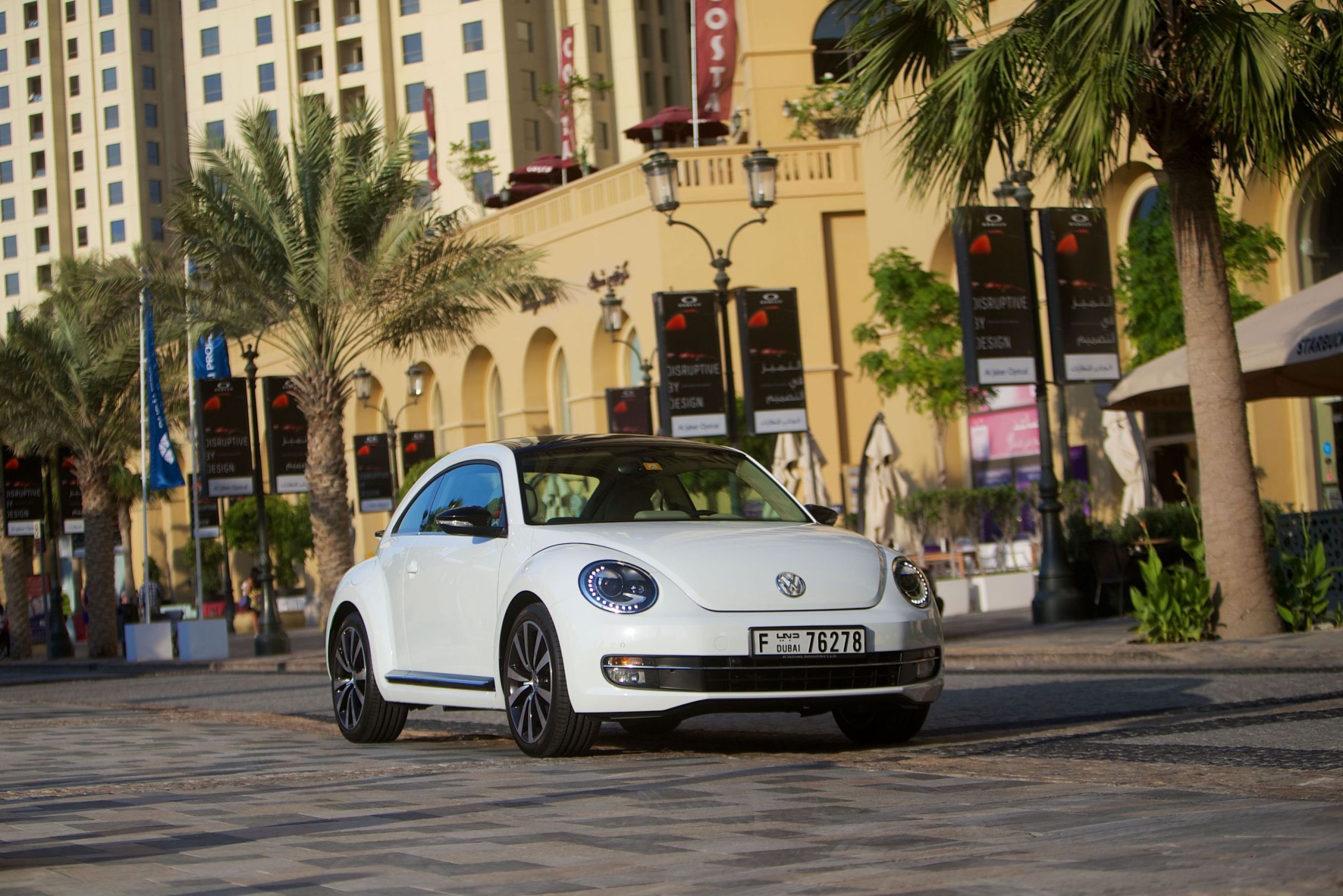

UAE, 20 May 2014: The wait is finally over. One of the most anticipated new car models of the year has arrived in the Middle East, and customers in Dubai and the Northern Emirates will be the first to get behind the wheel.
The region’s first shipment of the next generation Beetle has been delivered to the Al Nabooda Automobiles showrooms in Dubai, Sharjah and Fujairah as anticipation for the much loved automotive classic reaches fever pitch.
The car’s fame was magnified on the silver screen in classic movies and now the bolder, more dynamic and more masculine Beetle will be seen on the roads of the UAE.
“More than 21 million Beetles have been manufactured since the original design in the 1930s, so it is no understatement to say that the model is one of the most successful in the international automotive industry,” said Thierry Seys, General Manager, Al Nabooda Automobiles, Volkswagen.
“We have been inundated with bookings since we announced its arrival earlier this year and we know our customers have a deep affection and admiration for the car, which has truly stood the test of time. The new generation of the Beetle has a more masculine design thanks to its 2.0L turbo and 155 kW/210 hp engine.”
The next generation Beetle is now available at Al Nabooda Automobiles showrooms in Dubai, Sharjah and Fujairah, with prices starting at AED99,900.
]]>The Indian auto sector does not want to slip away the money generating opportunity, which the festive season brings. The back-to-back launches are taking place to fire up the gloomy market. Spurred by the heightened customer spending around Diwali both homegrown and overseas auto giants have lined up a slew of great models.
The constant petrol price hike is a major issue in the world of motoring and as a result, the growth in demand of diesel powered vehicles is being seen for quite a while now. The upcoming or refreshed models commonly have a diesel heart to suit the needs and pockets of discerning Indian buyers. No doubt, the thoughts on the future of the Indian car market is disturbing auto majors as the year 2013 was labeled as ‘Black Friday’ in the Indian auto industry but the coming Festive season might give these disheartened auto majors a reason to celebrate.
As per market analysis, the month of October and November brings about 23% hike in the sales figure as this time is considered to be the most auspicious time for making purchases. From fresh models, facelifts special editions, to freebies, offers on accessories, loyalty exchange bonus and free insurance for consumers, all are offered on a gold platter to the Indian car buyers.

Beginning with the week right on the day of Ganesh Chaturthi, two major launches were made, both of which were hatchbacks; both were launched to conquer their respective segments and were a part of a long term strategy for their own auto majors to acquire the top slot. Yes, we are talking about the Hyundai Grand i10 and BMW 1 Series. The Grand i10 makes its entry in the Indian car market to heat up competition against Maruti Swift, whereas BMW 1 series is going to steal the show from the Mercedes Benz A Class. Hyundai has big shoes to fill as the South Korean auto major plans to beat Maruti at its own game and reach the top slot whereas BMW wants to snub the Mercedes Benz advances as it is trying to claw its way back into the top slot.

Mahindra Scorpio the SUV, which was rolled out 11 years ago is making headlines back-to-back. Mahindra India’s indigenous product is not jaded and not lost its ground either. The Scorpio SUV has locked horns with the the 1 year old Renault Duster and has won hands down in the month of July and August in terms of sales figures. September also has begun on a positive note for the brand, as Mahindra Scorpio sales reached the 4 million mark from the day of its launch in the Indian car market. To keep the momentum going, Mahindra India has also introduced Mahindra Scorpio Special Edition, which is limited to 500 units, as the facelift version will be rolled out in the month of January 2014. Mahindra Scorpio seems to be on the glory track.
Limited Edition market is turning dramatic and is sure to see a lot of happenings in the coming weeks. Etios sedan and Liva hatchback duo from brand Toyota has joined the limited edition bandwagon with the launch of a special edition. The Japanese auto major has brought the new limited edition variants on the occasion of the second anniversary of Etios in India. The Xclusive edition cars are based on the G variant of the original models and are available in both petrol and diesel engine options. The feature-enriched Xclusive variants come for about Rs.15,000-20,000 over the normal G variants; the company will release just 1000 units.
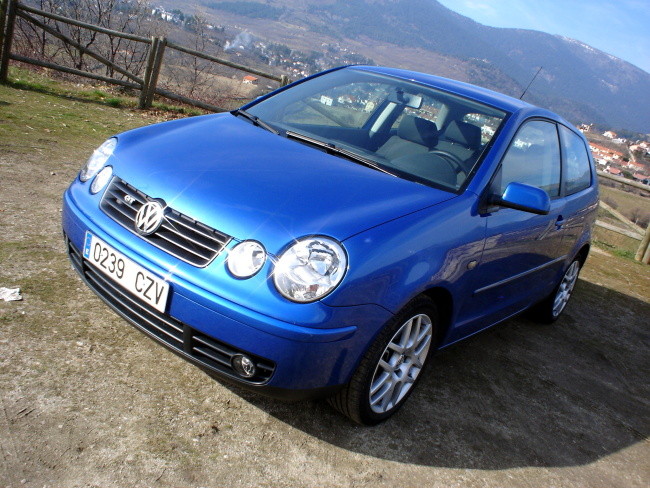
Away from the limited edition glory, Volkswagen has added a new edition, Polo GT TDI after the GT TSI variant which was introduced in the month of April. Volkswagen Polo has always been criticized for its engines and the company is planning to replace these engines with the facelift version to be launched in May next year. The 1.6L 4 cylinder diesel engine is extremely frugal and saves chunks of money in the sky rocketing fuel price scenario of the Indian economy. Indian auto market is driven by the fuel economy figures and the new Volkswagen Polo GT TDI fits the bill, well. The Volkswagen Polo GT talks of better technology and the story begins well under the sharply cut bonnet of the new hatch.
The festival season is just weeks away now and the fresh launches last week are sure to bring back to life, the listless auto market; the day of reckoning is not too far!
sourced from www.cardekho.com
]]>  New York, NY, July 31, 2013 – Dedication, determination, and the desire to be the best are what drove Haitian-American Lee ‘Q’ O’Denat to become one of the hottest entrepreneurs and most influential hip-hop personalities in the country! He literally went from being homeless to being the force behind one of the most controversial, yet highly visited, websites in the world: www.WorldStarHipHop.com.
According to renowned website info company Alexa, as CEO and Founder of WorldStar Hip Hop (WSHH), ‘Q’ has pushed his website to one of the top 200 websites in the country for traffic, beating out media giants like Oprah.com, CBS.com, MTV.com, VH1.com and BET.com. Based on its level of traffic alone, WSHH is comparable to a billion-dollar brand. Not bad for a guy who dropped out of school in 9th grade! Today, this self-taught, tech-savvy music mogul stays focused on the technological trends that impact and drive today’s youth, knowing that it’s the 18-24 crowd that mostly frequent his site. This trendsetter recognizes hard work and only surrounds himself with techie geniuses; believing that if you surround yourself with losers – you become one!
WSHH has been ranked #1 on the Source magazine’s Power List and has been honored three times by BET (Black Entertainment Television) as “Best Hip Hop Online Site.” Averaging more than 70 million visits a month, this “shock site” has a global following that is unprecedented. Referring to his site as the “CNN of the ghetto,” Q’s philosophy is Reach one – Teach one and he is quick to offer budding video directors, music producers and artists an outlet and the chance to be seen or heard on his site.
With a story that reads like a modern-day urban legend, ‘Q’ runs WSHH with a keen eye on the “hood” culture and the understanding that Hip Hop is here to stay. His website’s popularity with a worldwide urban audience has not gone unnoticed by corporate America either. Advertising mainstays such as Wal-Mart, Fiber One (a General Mills product), Equifax, high-end retailer Bloomingdales, Volkswagen and Microsoft are just a few of the multi-billion dollar companies that have chosen to promote their products on the site.
The charismatic Q started his business in 2005 selling mix tapes via mail, but found the process cumbersome. In 2007, after thoroughly reading up on the marketing and operational advantages of offering downloads online of hip-hop mix tapes, he developed his website. It grew rapidly and has expanded beyond music downloads: today, it’s home to cutting edge videos, hip-hop news and even gossip. WorldStar Publishing is the next venture for this prolific entrepreneur, who also is looking to start his own record label.
‘Q’ has advice for anyone wanting to follow their dream: “Don’t be afraid to sacrifice and take a chance. No reward comes without risk.” Adding, “Don’t be afraid even if nobody else believes in you. Do you? Keep that third eye open.”
]]> Volkswagen shouldn’t sue University researchers – it should employ them
Cars are now a genuine target for cyber criminals and it is possible for attackers to gain control of a vehicle while it is in motion, with disastrous consequences.
Alex Fidgen, Director at IT security company MWR InfoSecurity, said: “It is feasible that an exploitation of any number of embedded devices within a car might allow an attacker to gain control. For instance, this would have serious consequences if the brakes were applied at high speed.”
The comment was made after Volkswagen allegedly sued the University of Birmingham to stop it from publishing how it had hacked anti-theft systems on luxury cars such as Lamborghinis and Porsches.
“Vendors should not try to block security research, they should work together with the researchers to understand the nature and potential consequences of the threats they are facing,” said Fidgen.
“Resorting to legal action to block such details from being published is the wrong approach. Manufacturers should instead incorporate strong security research in the design process.”
He added: “There are real concerns about the attitude of VW given they appear to be trying to suppress this information rather than working to rectify it.”
Fidgen said: “Manufacturers do not seem to have considered the security threat when using embedded computer systems. Cars are becoming increasingly more computerised, particularly supercars which sell for hundreds of thousands of pounds. But not enough thought appears to have gone into securing the systems which leaves the cars wide open to theft and the misuse of computer information.”
Fidgen indicated that such IT vulnerabilities could potentially have very serious impacts, both from security and financial perspectives, as cyber criminals target companies on a daily basis.
Fidgen said: “Volkswagen have only highlighted to the criminals out there that the problems are likely to be genuine and important, so the damage has already been done.”
He added: “There is a long track record of companies using legal action to try to prevent vulnerability information from being understood. This has probed to be highly ineffective as in most cases the security community was able to obtain the information through different research teams.”
Fidgen said: “Car manufacturers continually try to upstage each other with the latest computer ‘Gizmo’s’ for vehicles. They are on a never-ending treadmill to try and keep ahead and offer their customers the latest technology. However, they now need to take a step back and look at how security should be embedded.”
He added: “From a customer point of view, it’s not just about the car being stolen, it’s about the owners personal information being stolen from mobile phones and other mobile devices that are linked to the cars on board computer systems. From the manufacturers’ perspective, it’s about the latest ‘gizmo’ being stolen by competitors.”
About MWR InfoSecurity
MWR InfoSecurity is one of the world’s leading information security consultancies – MWR specialises in identifying, managing and mitigating Information Security risks.
The company undertakes simulated cyber attacks with organisations across different industries to help them understand the security threats they are facing.
]]>