The post Meet the Social Entrepreneurs Leading Africa’s Transformation appeared first on Core Sector Communique.
]]>
- Nine of the World Economic Forum’s 17 global Social Entrepreneurs of the Year for 2017 are actively leading positive transformation in Africa, and achieving outcomes that have eluded governments and conventional businesses
- Success stories include tackling poaching, mobilizing health workers, reuniting refugees, using fingerprinting to give people an official ID for the first time, and delivering medicines in rugged terrain using drones
- Members of the Forum’s Schwab Foundation for Social Entrepreneurship from all over the world will convene in Durban South Africa, on 1-3 May for the Solutions Summit, a meeting aimed at scaling and mainstreaming social innovation for Africa’s development
- For more information, please visit wef.ch/af17
 Durban, South Africa, 26 April 2017 – Nine individuals representing seven organizations, all with operations in sub-Saharan Africa, have been recognized as Social Entrepreneurs of the Year by the Schwab Foundation for Social Entrepreneurship. These nine individuals are among 17 recognized globally as Social Entrepreneurs of the Year for 2017.
Social entrepreneurs establish and run outstanding, innovative businesses that benefit low-income, marginalized and vulnerable people. Members of this year’s cohort, along with other members of the community, will play a leading role at a special Solutions Summit that will take place in Durban, South Africa, on 1-3 May. This meeting, convened by the Schwab Foundation and supported by the Motsepe Foundation, will take place just ahead of the World Economic Forum on Africa, and aims to find ways of scaling the work of the social entrepreneurs to help them have a more profound impact on society.
The Social Entrepreneurs of the Year for 2017 that are active in sub-Saharan Africa are:
- Vivek Maru and Sonkita Conteh, Namati, Sierra Leone/USA: Namati trains and supports local paralegals to assist the billions of people worldwide who live outside the protection of the law. Focusing on three main justice challenges – land and environment, access to decent healthcare, and citizenship rights – it has helped over 90,000 clients in 10 countries.
- Keller Rinaudo, Zipline, Rwanda/USA: Zipline is the first company to use drones to deliver vaccines, medicine and blood for transfusions for use in rural Rwanda. Each drone, or “zip”, flies at 100 km/hour, dropping its cargo with a small parachute. Zipline’s partnership with the Rwanda government covers 20 hospitals and health centres.
- Eleanor Allen, Water for People, USA: This company helps 4 million people across nine countries access water and sanitation services by helping governments build institutions and authorities capable of delivering sustainable services. Through its Everyone Forever model, Water for People aims to help 40 million people.
- Raj Panjabi, Last Mile Health, Liberia/USA: Last Mile Health pioneered a model to recruit, train, equip and manage community health workers in rural Liberia, a country where 46% of women report having lost a child under the age of five. The company’s partnership with the government mobilized 1,300 health workers to help stop the spread of Ebola. Its new aim is to deploy over 4,000 professionals to reach over 1.2 million Liberians.
- Christopher and David Mikkelsen, REFUNITE, Denmark: The company helps refugees locate missing family members and other loved ones via a free and easy-to-use mobile platform. REFUNITE and has reconnected more than 38,000 family members to date.
- Toby Norman, Simprints, United Kingdom: Simprints brings relief to the 1.5 billion people in the world that currently lack an official ID by developing an affordable and secure open-source fingerprint system that is four times cheaper and 228% more accurate than existing biometric tools.
- Dale Lewis, COMACO, Zambia: COMACO tackles poaching by helping farmers improve their livelihoods by accessing higher-value markets for products such as peanut butter, rice and honey. To date, COMACO has registered 140,000 farmers committed to conservation farming practices and wildlife preservation.
At the heart of the Solutions Summit will be an effort by social entrepreneurs, plus members of the Forum’s Young Global Leaders and Global Shapers communities, to advance “systems change” in social entrepreneurship, in other words uniting relevant stakeholders behind particular ways of solving big social challenges in order to reach a critical mass in terms of people. Research suggests that today, too many promising social enterprises are prevented from achieving true scale as they are built on models borrowed from the private sector which are not suited to social entrepreneurship, such as branch replication, franchising or open-source dissemination.
More than 1,000 participants are taking part in the 27th World Economic Forum on Africa in Durban, South Africa, from 3 to 5 May 2017. The theme of the meeting is “Achieving Inclusive Growth through Responsive and Responsible Leadership”.
The Co-Chairs of the World Economic on Africa are: Winnie Byanyima, Executive Director, Oxfam International; Siyabonga Gama, Group Chief Executive Officer, Transnet; Frédéric Lemoine, Chairman of the Executive Board, Wendel; Rich Lesser, Global Chief Executive Officer and President, Boston Consulting Group; and Ulrich Spiesshofer, President and Chief Executive Officer, ABB.
The World Economic Forum, committed to improving the state of the world, is the International Organization for Public-Private Cooperation.
The Forum engages the foremost political, business and other leaders of society to shape global, regional and industry agendas. (www.weforum.org)
The post Meet the Social Entrepreneurs Leading Africa’s Transformation appeared first on Core Sector Communique.
]]>The post India’s first Impact Investment Conclave: Prabhav 2016 – to help social entrepreneurs tap into the $18bn opportunity appeared first on Core Sector Communique.
]]>Minister of State for Civil Aviation, Shri Jayant Sinha and the Minister of State for Power, Coal, New & Renewable Energy and Mines, Shri Piyush Goyal among the prominent speakers
Organized by Impact Investors Council and the Ministry of External Affairs, the Conclave is supported IDFC Bank, Omidyar Network, GIZ, DFID, and others
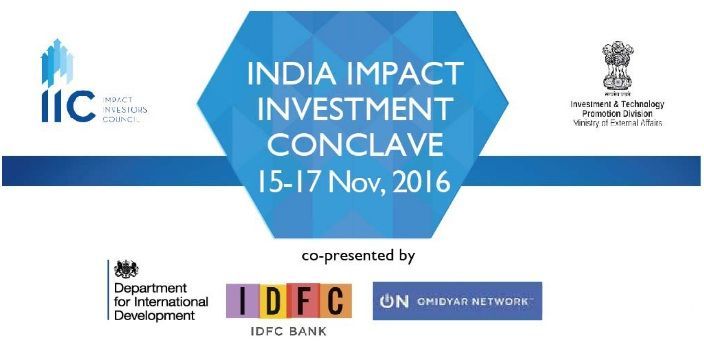
New Delhi, October 12, 2016: India’s only impact investing industry body, the Impact Investors Council (IIC) has announced that it is organizing India’s very first Impact Investment Conclave, Prabhav 2016, in Delhi from 15 to 17 November 2016, in partnership with India’s Ministry of External Affairs. Impact investment primarily focuses on creating a positive social or environmental impact as against merely financial motives. India has emerged as one of the largest impact investment destinations in the world with over 50 active impact investors and a cumulative investment of $7.5 billion till date in more than 350 enterprises and funds across a range of industries such as financial inclusion, agribusiness, healthcare, education and clean energy.
For the first time ever, Prabhav 2016 will bring top leaders from as many as 150 global impact investors to India to meet potential investees. Eminent speakers at the conclave will represent the multiple stakeholders:
- India’s Government will be represented by Minister of State for Power, Coal, New & Renewable Energy and Mines, Shri Piyush Goyal; India’s Minister of State for Civil Aviation Shri Jayant Sinha; Ministry of External Affairs’ Director, K Nagaraj Naidu
- India’s Impact Investing industry will be led by IIC Chairman and Founder of Elevar Equity, Sandeep Farias; Founder MD & CEO, IDFC Bank Rajiv Lall; Partner and Managing Director, Omidyar Network India Advisors Roopa Kudva; SIDBI’s Chairman and Managing Director, Dr. Kshtrapati Shivaji; Founder–Aavishkaar, Vineet Rai and Founding CEO of Impact Investors Council Amit Bhatia; among others.
- International Impact Investors will be led by speakers such as USAID’s General Counsel John L. S. Simpkins; Marilou van Golstein Brouwers, President- TRIODOS; and Encourage Capital’s Co-Managing Partner and Board Chairman and a Trustee of the Rockefeller Philanthropy Advisors, Adam Wolfensohn; Brooks Preston, Head of Investment funds, OPIC; Claudia Schmerler, Head of Division, KFW; Jaap Reinking, Director Financial Institutions, FMO will also travel to India to speak at the event.
The global impact investors will also participate in tours across North, West and South India to meet various social enterprises and gain a first-hand, immersive grassroots experience of social impact at work.
“Impact Investing has the potential to be India’s next transformational industry by bringing so many LPs & GPs together on one platform to meet potential investees, Prabhav 2016 will be a game changer for India’s social enterprises that will indirectly boost incomes, jobs, and access to essential services significantly,” adds Sandeep Farias, Chairman- IIC and Founder Elevar Equity.
Dr. Rajiv Lall, Founder MD & CEO, IDFC Bank says, “IIC is benefiting the lives of the people at the base of the economic pyramid by combining the depths of management, a social entrepreneurial spirit and depth of financial markets to create impact across industries.”
Ms. Roopa Kudva, Partner and Managing Director, Omidyar Network India Advisors says, “Omidyar Network is deeply committed to supporting social entrepreneurs in India – in fact, we hope to double our India investments to USD300mm by 2020. Based on the opportunities we are seeing, we believe that impact investing is at a tipping point in India, and we look forward to attending Prabhav 2016 to further support and advance the industry.”
Amit Bhatia, Founding CEO of Impact Investors Council, says, “Since 2001, India has attracted a stellar $7.5 billion in cumulative impact investments- $2.5 billion in core direct-to-beneficiary sectors (e.g., Financial Inclusion, Skills Development or Affordable HealthCare) and another $5 billion in indirect impact (e.g., Rural Infrastructure & Climate Change). Prabhav 2016 will focus on how India can enhance its Impact Investing ecosystem to build a US$18 billion sector by 2020 and a US$1 trillion social economy by 2035!”
About the Impact Investors Council
Impact Investors Council (IIC) is the industry association of Impact Investors in India. Impact Investors are financial investors who invest in social enterprises to deliver social (and environmental) impact to the poor in sectors such as Agriculture, Financial Inclusion, Affordable Education & Healthcare, Water & Sanitation, Clean Energy, Livelihoods, etc. Impact Investors use the power of both financial markets and social entrepreneurship to deliver such impact. IIC seeks to develop the impact-investing sector in India by focusing on impact measurement & standardization, research & policy support and self-regulation. IIC is a Section 8 company and can be found at http://iiic.in/
The post India’s first Impact Investment Conclave: Prabhav 2016 – to help social entrepreneurs tap into the $18bn opportunity appeared first on Core Sector Communique.
]]>The post ARAB WORLD NEEDS MORE SOCIAL ENTREPRENEURS TO MEET LONG-TERM SOCIETY NEEDS appeared first on Core Sector Communique.
]]>Ta’atheer will be told society can’t flourish without people who want to do good, create impact and make change in the long-run

Dubai, UAE, 16 May 2016: The Arab world urgently needs more social entrepreneurs to help make up for a lack of government and private sector investment and the failings of outdated CSR methods to support society’s long-term needs, experts say.
Helen Al Uzaizi, Director of the Board for the volunteerism and development network nakhweh.org, will tell delegates at Ta’atheer in Dubai next week that the region must discover a new generation of individuals who genuinely want to do good and make long-term changes if society is to flourish.
Al Uzaizi is one of 50 plus speakers who will be addressing Ta’atheer, formerly known as the CSR Summit that will take place at The Address Hotel, Dubai Marina from 22-25 May. The forum is held under the patronage of Her Excellency Sheikha Lubna Al Qasimi, UAE Minister of State for Tolerance and Board Member of Friends for Cancer Patients.
“We need more social entrepreneurs in the region who can support the needs of society,” said Al Uzaizi. “They come in at a level that fills the voids that are left because governments are focused on their own growth agenda and the private sector businesses are driven by the bottom line most of the time.
“Having organisations that base their business model on creating an impact is a great way to bridge between the two and is very much needed today.
“Social enterprise is based on the premise that a business CAN operate while helping society at large and that the two are inter-connected. You can’t have a flourishing society without social entrepreneurs. People who want to do good, create impact and make change in the long-run.”
Supported by the Community Development Authority of the Dubai Government, Ta’atheer is the new name for the former CSR Summit which has re-branded in recognition of how attitudes are changing towards corporate social responsibility, and a shift in focus on business strategies aimed at ensuring long-term sustainable social impact.
Reflecting this shift, Al Uzaizi said: “CSR is outdated in this region. Whereas 15 years ago it was enough to give to a charity that donated clothes or food to the needy, there is now a real need to create long-term, sustainable change in the community.
“If we look at the biggest social contributors today, most of them are giving to research, education, employability, vocational training and general development initiatives rather than traditional charities.”
Another of the speakers at Ta’atheer, Sami Khoury, Executive Director at Young Arab Leaders, urges corporates to dig deeper rather than persist with “primitive” CSR programmes.
Said Khoury: “Corporations have the funding and abilities to contribute beyond donations and quick fixes by either developing dedicated departments that solve social/environmental problems, or playing a constant and active role in supporting organizations whose mission to create long term impact and sustainability.”
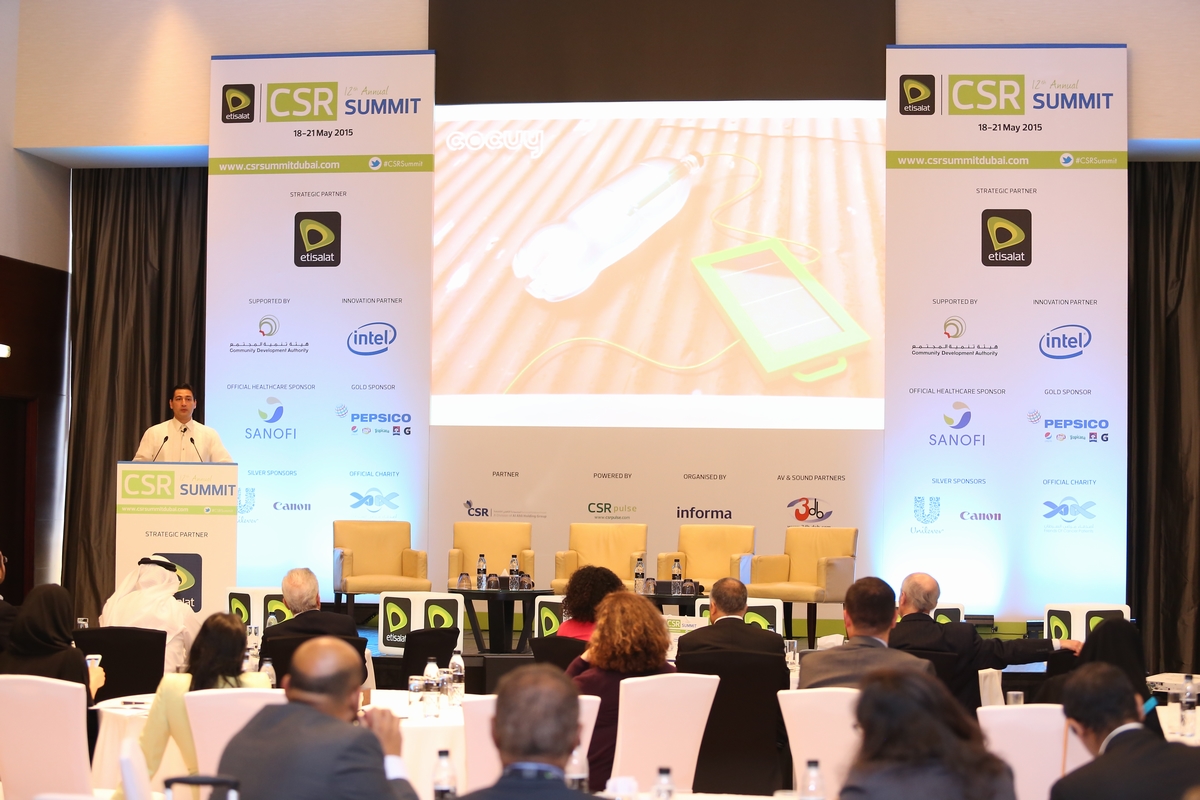
Ta’atheer is supported by Creating Shared Value Partner, Nestlé, Silver Sponsors MMV, ADIB and Johnson & Johnson, Bronze Sponsors Oman LNG and Aqaba Development Corporation and Official Charity Partner, Friends of Cancer Patients.
The forum will open with a keynote address by H.E. Khaled Al Kamda, Director General of the Community Development Authority of the Dubai Government, before speakers from organisations such as Nestlé, Facebook, Saudi Aramco and the World Economic Forum deliver thought-provoking presentations and panel discussions.
The post ARAB WORLD NEEDS MORE SOCIAL ENTREPRENEURS TO MEET LONG-TERM SOCIETY NEEDS appeared first on Core Sector Communique.
]]>The post Project Inspire Calls for Social Entrepreneurs Solving Security & Safety Issues for Women & Girls in Asia Pacific appeared first on Core Sector Communique.
]]>New Delhi, 19 April, 2016: For the sixth year running, Singapore Committee for UN Women and MasterCard announce the launch of Project Inspire: 5 Minutes to Change the World.
With over 2,100 ideas submitted from 109 countries around the world, Project Inspire is now a multi-award winning initiative and one of the most high profile CSR programs in the Asia Pacific region. This year’s challenge welcomes back long-term and committed partners to women’s empowerment and social entrepreneurship: knowledge partner INSEAD: The Business School for the World and strategic partner Bain & Company.
Launched in 2011 to celebrate the 100th anniversary of International Women’s Day and the 25th anniversary of MasterCard in Asia Pacific, “Project Inspire: 5 minutes to change the world” is a global challenge that presents 18-35 year olds with a 5-minute platform to pitch their inspired idea to the world. With a US$25,000 Grand Prize on offer to make their idea a reality, Project Inspire 2016 asks social entrepreneurs around the world to submit their ideas to change the world for women and girls through safety and security. Applicants are asked to demonstrate how they are empowering women and girls through safety and security across sectors such as health, financial inclusion, urban design, education and more throughout all of Asia and the Pacific.
“Thanks to the strong partnership with MasterCard, Project Inspire has directly supported 16 entrepreneurs from 9 countries around the world to positively impact thousands of lives. We have an active online community of over 90,000 change-makers and Project Inspire alumni have gone on to win other global awards, attract significant funding and global recognition. They’ve gone on to become politicians or leaders with significant influence and continue to create social impact. We are proud of our alumni and continue to support the powerful work that these entrepreneurs are doing to empower women and girls. It’s exciting to be able to provide this opportunity for another year and we really look forward welcoming the 2016 cohort of social entrepreneurs joining us” says Trina Liang-Lin, President, Singapore Committee for UN Women.
Georgette Tan, Group Head, Communications, Asia Pacific, MasterCard, adds, “In many parts of the world, women’s safety and security is often overlooked. The latest MasterCard Index of Well-Being found that women in many emerging and developed markets across Asia feel particularly vulnerable to the threat of violent crime, which remains one of the most extreme manifestations of gender discrimination and inequality. In partnership with the Singapore Committee for UN Women, we seek to encourage today’s young social entrepreneurs to address this pertinent issue facing women and girls at home, work, school and public places. Project Inspire reinforces MasterCard’s belief that empowering women has the greatest impact on the well-being of a community.”
Applicants must submit a five-minute video detailing how the US$25,000 grant will be used to improve the lives of women and/or girls. The competition is now open, and submissions can be made via the Project Inspire website (www.projinspire.com).
The deadline for submissions is Friday, 1st July 2016. Project Inspire will choose twenty semi-finalists to progress to a crowd-funding stage of the competition. From the semi-finalists, finalists will be chosen to attend the Grand Finals in Singapore where they will pitch their inspired idea to a panel of judges. The remaining semi-finalists stand a chance of winning a wild-card ticket to pitch their inspired idea at the Grand Finals in Singapore by securing the most amount of supporters during the crowd-funding stage of the competition. Winners are decided by a judging panel and will be announced at an event in Singapore in November, 2016.
The post Project Inspire Calls for Social Entrepreneurs Solving Security & Safety Issues for Women & Girls in Asia Pacific appeared first on Core Sector Communique.
]]>The post SAP Brings Social Sabbatical Program to India, Empowering NGO’s and Social Entrepreneurs appeared first on Core Sector Communique.
]]> SAP Employees from various countries address business challenges of local NGO’s & Social Entrepreneurs
Mumbai — April 24, 2015 – SAP SE (NYSE: SAP), today announced the completion of the third round of its Social Sabbatical program in India. A group of 12 SAP employees from China, USA, Ireland, Canada, Germany, Japan, Argentina and Dubai worked for one month onsite with four non-profit organizations and social ventures in Mumbai to help solve their pressing organizational challenges and set them up for sustainable growth.
The Social Sabbatical is one of the most cutting-edge initiatives for social engagement and leadership development for SAP’s top talents. As of 2014, the program has activated 304,800 pro-bono service hours by 127 employees from 31 nations, serving 40 organizations worldwide. 98% of client NGOs and Social Enterprises were satisfied or highly satisfied with the performance and results of the SAP Social Sabbatical teams; 97% would recommend SAP; and 70% implemented at least 80% of the recommendations delivered by the Social Sabbatical teams.
“SAP is committed to helping the world run better and improving peoples’ lives by making strategic social investments that have a lasting impact on society. Leveraging the talent and commitment of our employees through corporate volunteering programs is a key pillar of our corporate social responsibility programs. Through the Social Sabbatical Program, SAP focuses on helping NGOs and social entrepreneurs to unlock their potential to create sustainable economic growth and social impact, and emerge as nation’s growth engines” said Alicia Lenze, SAP Global Head of CSR.
While in Mumbai, the SAP Social Sabbatical team has been working with Edubridge Learning, Mumbai Mobile Creches, Paaduks and UnLtd India to help them solve some of their biggest business challenges in the areas of expansion, administration, sales, marketing and controlling:
- EduBridge Learning focuses on building employable skills through quality training and providing youth with jobs and a livelihood upon training completion. As a part of this initiative, SAP Social Sabbatical team will help EduBridge provide a detailed expansion strategy, defining next steps for their growth.
- Mumbai Mobile Creches, provides comprehensive day care services to migrant children living at construction sites in Mumbai, Navi Mumbai, and Thane. SAP Social Sabbatical team will be guiding Mumbai Mobile Creches in the creation of an architectural framework, specifications and design of centralized administration and MIS.
- Paaduks is a social enterprise that aims to provide cobblers with a sustainable livelihood and ensures their access to healthcare and education in India. SAP Social Sabbatical team will design a holistic business plan for Paaduks including branding, sales and marketing strategy and recommend best practices on systems and processes for Paaduks .
- UnLTD India funds and support entrepreneurs who have passion and ideas to address social issues in India. To refine and strengthen UnLtd’s impact measurement system, SAP Social Sabbatical team will review their pre-engagement metrics for outputs, outcomes, impacts and recommend metrics to help them achieve its goal.
The Social Sabbatical program is part of the company’s corporate social responsibility (CSR) strategy focusing on equipping the world‘s youth with tools they need to tackle society‘s problems and thrive in the 21st century workforce. The program gives top talents the opportunity to work in international, cross functional teams and leverage their expertise to support non-profit organizations and social entrepreneurs in emerging markets. During the one month assignment, employees strengthen their leadership competencies, cross industry sector know-how and intercultural sensitivity, while connecting with other emerging leaders around the world.
Building on the success of the Social Sabbatical, SAP will roll out a local pro-bono program in Bangalore in September again with the purpose to leverage the skills and expertise of local employees to solve business challenges of emerging social organizations.
About SAP
As market leader in enterprise application software, SAP (NYSE: SAP) helps companies of all sizes and industries run better. From back office to boardroom, warehouse to storefront, desktop to mobile device – SAP empowers people and organizations to work together more efficiently and use business insight more effectively to stay ahead of the competition. SAP applications and services enable more than 291,000 customers to operate profitably, adapt continuously, and grow sustainably. For more information, visit www.sap.com.
The post SAP Brings Social Sabbatical Program to India, Empowering NGO’s and Social Entrepreneurs appeared first on Core Sector Communique.
]]>The post Claudio Sassaki and Eduardo Bontemp Honoured as Brazil Social Entrepreneurs of the Year 2014 appeared first on Core Sector Communique.
]]> Claudio Sassaki and Eduardo Bontemp were announced yesterday as the winners of the 2014 Brazilian Social Entrepreneur of the Year Award during a ceremony at the São Paulo Museum of Art in São Paulo, Brazil.
- The finalists taking part in the ceremony provide an on-the-ground perspective on sustainability and social innovation in Brazil.
- Learn more about the Schwab Foundation for Social Entrepreneurship at www.schwabfound.org
São Paulo, Brazil, 3 December 2014 – The Schwab Foundation for Social Entrepreneurship, a sister organization of the World Economic Forum, in partnership with Folha de S. Paulo, announced Claudio Sassaki and Eduardo Bontemp as the winners of the Brazil Social Entrepreneur of the Year 2014 Award. The prize was conferred by Hilde Schwab, chair and co-founder of the Schwab Foundation for Social Entrepreneurship, and the 2013 Brazil Social Entrepreneur of the Year, Merula Steagall, in the presence of more than 400 leaders from the fields of business, the arts, civil society and academia.
The Schwab Foundation for Social Entrepreneurship works closely with Folha de S. Paulo, one of the largest media conglomerates in Brazil, not only for the awards ceremony but also for the search and selection process.
Claudio Sassaki and Eduardo Bontemp, Geekie
Geekie is a social business that has developed an adaptive learning platform that customizes students’ learning experiences by analysing their performance. Geekie’s flagship offerings are Geekie Games, a free online service that helps students prepare for the national college entry exams (Enem), and Geekie Teste, which provides online tests that act as a fast and efficient tool for diagnosis and management of school learning. In 2013, more than 17,000 schools (in all states) and students from 92% of Brazil’s municipalities participated in Geekie activities, thanks to the Geekie Games and partnerships with state departments. This makes 2 million registered users and 600,000 active users, 80% of whom were students in public schools (and 85% of whom were between 16 and 30 years of age).
More than 200 applicants entered the selection process for the 10th annual Brazil Social Entrepreneur of the Year and, after several stages of rigorous assessment of innovation, sustainability, direct social impact, influence on public policy, social entrepreneurship, reach, scope and ability to be multiplied – three finalists emerged. Second and third in the running were Hercilio Alexandre da Luz Filho from Fundação Pró-Rim and Paulo Roberto de Souza Moutinho from Instituto de Pesquisa Ambiental da Amazônia (IPAM).
The winner was selected by an independent panel of eminent judges, including Maria Cristina Frias, columnist and member of the board of Folha de S. Paulo; Cybele Oliveira, executive director and president of Chapada Institute for Education and Research; José Vicente, attorney and faculty dean of Zumbi dos Palmares; Antonio Moraes Neto, co-founder, Vox Capital; William Ling, director of the Ling Institute; Hilde Schwab, chair and co-founder of the Schwab Foundation for Social Entrepreneurship; Anna Maria Peliano, social scientist and researcher at the Instituto de Pesquisa Econômica Aplicada.
“During this special visit to Brazil, I have had the opportunity to meet key leaders in government, civil society and business, and I have been impressed with their interest and commitment to advancing social inclusion. It is clear that each sector has an important role to play in addressing some of the most intractable social and environmental issues; and social entrepreneurs, like those being recognized in Brazil, are an important part of the solution,” said Hilde Schwab.
The winner will be invited to join the Schwab Foundation’s global community of more than 250 Social Entrepreneurs. These innovators are driven by their mission to promote inclusive growth and push forward substantial social change by developing new products and services that benefit underserved communities.
More information about the finalists:
Hercilio Alexandre da Luz Filho, Fundação Pró-Rim
Currently the largest philanthropic organization in the field of nephrology in Brazil, Fundação Pró-Rim is a non-profit whose mission is to “save lives, focusing on the kidney patient” by providing multidisciplinary care and quality in haemodialysis, peritoneal dialysis and transplantation. With operations in the states of Santa Catarina and Tocantins, the organization conducts more than 56,000 outpatient treatments and 150,000 haemodialysis treatments a year, on top of the 1,200 kidney transplants they have carried out previously.
Paulo Roberto de Souza Moutinho, Instituto de Pesquisa Ambiental da Amazônia (IPAM)
Science and education for an “environmentally sound, economically prosperous and socially just Amazon” is the mission of IPAM, a scientific non-profit organization founded in Pará in 1995. With operations throughout the Amazon, it engages scientists and traditional populations in promoting sustainable development through participatory research. The result of this arrangement has benefited more than 100,000 people and gone beyond the forest with viable alternatives for mitigating global climate change.
About the Schwab Foundation
Co-founded in 2000 by Klaus Schwab, founder and executive chairman of the World Economic Forum, and his wife Hilde, the foundation has been identifying the world’s leading social entrepreneurs. It involves a community of over 250 award-winning social innovators who work in collaboration with corporations, governments and academic stakeholders. Social entrepreneurs selected by the Schwab Foundation are invited to participate in Forum events, which enables them to connect with leaders of business, politics and the media. http://www.schwabfound.org.
The World Economic Forum is an international institution committed to improving the state of the world through public-private cooperation in the spirit of global citizenship. It engages with business, political, academic and other leaders of society to shape global, regional and industry agendas.
Incorporated as a not-for-profit foundation in 1971 and headquartered in Geneva, Switzerland, the Forum is independent, impartial and not tied to any interests. It cooperates closely with all leading international organizations (www.weforum.org).
The post Claudio Sassaki and Eduardo Bontemp Honoured as Brazil Social Entrepreneurs of the Year 2014 appeared first on Core Sector Communique.
]]>The post World Economic Forum Annual Meeting 2015 to Address The New Global Context appeared first on Core Sector Communique.
]]>- 2,500 leaders from business, government, international organizations, civil society, academia, media and the arts will convene in Davos-Klosters in January for the World Economic Forum’s 45th Annual Meeting
- The theme, The New Global Context, reflects the current period of profound political, economic, social and technological change
- Meeting will advance over 50 Forum-led initiatives aimed at transforming industry, business, regional and the global agenda, supported by a programme researched and prepared by experts from the Forum’s Network of Global Agenda Councils
- For more information on the Annual Meeting click here
Geneva, Switzerland, 3 October 2014 – The 45th Annual Meeting of the World Economic Forum, which will take place 21-24 January in Davos-Klosters, Switzerland, is to convene under the theme, The New Global Context.
The theme reflects the period of profound political, economic, social and technological change that the world has entered, which has the potential to end the era of economic integration and international partnership that began in 1989.
Participating in the meeting will be 2,500 leaders, including the heads of 1,000 of the world’s largest and most successful businesses, heads of state or government from the G20 group and other nations, the heads of the world’s foremost international organizations alongside leaders from civil society, labour unions, the world’s major religions, media and the arts. The Forum’s New Champions communities; Young Global Leaders, Global Shapers, Global Growth Companies,Technology Pioneers and Social Entrepreneurs, will also contribute.
The Annual Meeting 2015 will provide a platform for over 50 initiatives that are currently being led by the Forum, with the aim of contributing positive, transformative change to the global agenda, as well as those of industry, business and the world’s regions. These include a public-private initiative to help achieve zero net tropical deforestation caused by key agricultural commodities by 2020; an endeavour to build a broad-based, multilateral global architecture for governing the internet; and the Forum’s Gender Parity Taskforces, which work with governments worldwide to improve economic opportunity for the female half of the population.
Supporting these endeavours, the Meeting’s programme will feature over 250 sessions, each researched and designed using input from the Forum’s Global Agenda Councils, a network of over 1,500 world-class experts that is focused on identifying and delivering solutions to over 80 individual global, regional and business challenges. This programme will be more open to the public than ever before, with over 20 televised sessions and an expanded multilingual webcast capability covering 60 sessions, all contributing to a real-time conversation to be played out over social media as well as the Forum’s own award-winning blog.
The World Economic Forum is an international institution committed to improving the state of the world through public-private cooperation in the spirit of global citizenship. It engages with business, political, academic and other leaders of society to shape global, regional and industry agendas.
Incorporated as a not-for-profit foundation in 1971 and headquartered in Geneva, Switzerland, the Forum is independent, impartial and not tied to any interests. It cooperates closely with all leading international organizations (www.weforum.org).
The post World Economic Forum Annual Meeting 2015 to Address The New Global Context appeared first on Core Sector Communique.
]]>The post Excerpts of the speech by Mr Scott Furssedonn-Wood, British Deputy High Commissioner to Eastern India, at the ‘National Seminar on Renewable Energy for Rural Development’ Organised by Ashden India Renewable Energy Collective appeared first on Core Sector Communique.
]]> 24th June 2014 – Hotel Hyatt Regency, Kolkata
Hon’ble Minister Mr Manish Gupta, Dignitaries on the dais, Ladies and Gentlemen
INTRODUCTION
I would like to thank Ashden India Renewable Energy Collective for convening this important and timely conference.
I am delighted to be part of this.
Improving rural India’s access to clean energy translates into life-changing opportunities for those who need them the most. In today’s conference you are addressing this extremely pertinent theme and providing the springboard for collective and effective action.
Powering up rural India with renewable energy will mean ushering in a new era of economic and social development. There are challenges. But there is no denying the fact that it will create jobs that lay the foundation for sustainable prosperity; it will transform lives of poor women and girls in more ways than one; it will empower rural population and improve their livelihoods. It assumes great significance in our endeavour to address harmful impacts of climate change and poverty reduction.
UK GOVERNMENT’S INITIATIVES
Recognising the immense importance and urgency of tackling climate change and enhancing rural livelihood, the UK Government is working across India with the National and State Governments, NGOs, social entrepreneurs, businesses and institutions, supporting initiatives to help the rural population leapfrog to cleaner energy systems.
- On Off-grid Renewable Energy, we are supporting initiatives to scale up off-grid energy services provision to those without energy access.
Ø We are contributing up to £8.8 million to TERI over 5 years, with an aim to reach out to 100,000 households with improved cook stoves and also create Energy Entrepreneurs serving an estimated 400,000 households adopting solar lighting systems. As a result, a total of 500,000 poor women will benefit from lower health risks from indoor air pollution and reduced drudgery, and 2.5m people, will benefit from new or sustained access to modern, clean energy either for cooking or lighting needs.
- We have been working with the Indian Ministry of New and Renewable Energy on developing a scheme to improve the incentives for off-grid energy services businesses – moving from an entirely capital based subsidy system towards a performance based one with a view to tackle the challenges being faced by the entrepreneurs. The States will have a central role to play in implementation of this scheme and we would very much like the West Bengal Government to pilot this with MNRE.
- We’ve been supporting businesses and business models – £2.5mn Equity investment in OMC Power through our returnable capital programmes. And we are keen to support more businesses through this route.
- One of our top priorities is empowering poor women and girls with the help of renewable energy. And towards that end, as part of UN’s Sustainable Energy 4 All initiative, we have committed £4.5 million every year over the period 2014 – 2019 to advance knowledge and awareness regarding the impact of energy access—or the lack thereof—on women and girls across the world, including in India.
- This year we have also supported a new category in the Ashden Awards – Energy Access, Women and Girls – targeting the transformative role clean energy can play in providing opportunities and benefits for women. The winner of this award this year has been an Indian organisation – Greenway Grameen, who sells clean and affordable cook-stoves.
- We are supporting use of renewable energy in rural infrastructure e.g. in health centres in Bihar and cold storages in Madhya Pradesh.
- There’s a very interesting project that I would like to share with you. Under UKFCO’s Prosperity Fund, we are working with the Climate Parliament to implement a project which aims at mobilising legislators’ actions towards development of a long term comprehensive renewable energy policy in Odisha, Karnataka and Maharashtra. This project has yielded a strong network of legislators in Odisha who are keen to take positive steps towards the development of renewable energy in the remote and tribal areas of the state and their individual constituencies.
- On the research side, things are getting interesting as well.
- Under a programme called Bridging the Urban and Rural Divide (BURD), jointly supported by Research Councils UK and Indian Government’s Department of Science and Technology (DST), researchers from the UK and India are working on a project that aims to address the dependence of rural communities on fossil fuels by developing innovative and sustainable biomass-fuelled hybrid energy systems at a scale suitable for community use. The new technologies developed during the project will be piloted at villages in Karnataka and Assam.
- The project which I would like to mention now is one which may warm the hearts of Tagore-lovers in this room. Funded with £1.4 million, experts from Exeter, Nottingham and Leeds universities in the UK are working with researchers from Visva Bharati University, IIT Bombay and IIT Madras to develop a new renewable energy system which combines solar power and bio-energy to bring electricity to homes in a remote tribal hamlet in Tagore’s Shantiniketan. The integrated system will be installed at Uttar Sehalai Tribal village, not too far from here, which has 80 homes and a population of around 400 people. The prototype system will be the first of its kind ever to be installed in India.
- And last, but not the least, is our work on solar. Solar is a genuinely exciting energy of the future, it is coming of age and we want to see a lot, lot more. On the urban side also, we are working on rooftop solar policies in Uttarakhand, Andhra Pradesh, Madhya Pradesh and Delhi.
Before I conclude, I would like to take this opportunity to make a significant announcement. Today, I am delighted to launch our work with the Department of Power and Kolkata Municipal Corporation on developing Grid-connected rooftop solar guidelines for Kolkata. Over the next few months, we will be working with West Bengal Government and supporting Ashden India Renewable Energy Collective to help develop an affordable rooftop solar scheme through which Kolkattans will be able to reduce their power bills and greenhouse gas emission of the city. Under this initiative, there will be a major emphasis on capacity building programmes for key stakeholders to implement such schemes in the State.
CONCLUSION
The point that I wanted to make while listing out these broad range of our initiatives on renewable energy is that working together on this issue is critical.
Gathered here today are experts, policymakers and businesses who have been, in the past and are now a part of this collective effort to bring about green energy revolution in India. I would like to take this opportunity to leave you with a few questions:
- How do you think policies can encourage the growth of young social entrepreneurs who can introduce new energy models to bring light and power to rural India?
- How do you think Governments can foster generation of new ideas and innovative renewable energy technologies to reach out to rural India with quality power?
- What are the new approaches that can be adopted by parliamentarians and legislators to strengthen local communities in their constituencies through renewable energy while addressing environmental, economic and social concerns?
I hope these will stimulate debate and discussions during the course of the day and bring forth new ideas and solutions to help energise rural India with renewables.
I wish you all a successful and productive conference. Thank you.
The post Excerpts of the speech by Mr Scott Furssedonn-Wood, British Deputy High Commissioner to Eastern India, at the ‘National Seminar on Renewable Energy for Rural Development’ Organised by Ashden India Renewable Energy Collective appeared first on Core Sector Communique.
]]>The post World Economic Forum Recognizes 20 Companies from East Asia as Global Growth Companies appeared first on Core Sector Communique.
]]>- Twenty of the region’s fastest-growing companies have been invited to join the World Economic Forum’s Global Growth Companies community
- Companies are nominated on the strength of their ability to become future global leaders and are drawn from a broad spectrum of sectors, including financial services, retail, media, chemicals and energy
- The Global Growth Companies community currently consists of over 360 companies from around the world
- For more information the World Economic Forum on East Asia 2014: http://wef.ch/ea14
Metro Manila, Philippines, 20 May 2014 – The World Economic Forum today announced its selection of Global Growth Companies (GGCs) in East Asia, consisting of 20 of the region’s most dynamic and high-growth companies. These companies are considered trailblazers, shapers and innovators that are committed to improving the state of their region and the world.
GGCs are fast-growing companies with the clear potential to become global economic leaders. The 20 nominated East Asian GGCs represent a broad cross section of industrial sectors, but share in common a track record in exceeding industry standards in revenue growth, promotion of innovative business practices and demonstration of leadership in corporate citizenship.
The selected companies are: Acleda Bank Plc. (Cambodia); WanaArtha Life (Indonesia); LINE Corporation (Japan); Kakaku.com (Japan); Hearts United Group Co., Ltd. (Japan); Cross Company Inc. (Japan); Tokushinkai Group (Japan); Ferrotec Corporation (Japan); Myan Shwe Pyi Tractors Ltd. (Myanmar); Capital Diamond Star Group (Myanmar); Manila Water Company Inc. (Philippines); Banyan Tree Holdings Ltd. (Singapore); ILJIN Group (South Korea); Fila Inc. (South Korea); Humax Electronics Co., Ltd. (South Korea); AA Corporation (Vietnam); The Gioi Di Dong (Vietnam); VNG Corporation (Vietnam); Thien Minh Group (Vietnam); Minh Phu Seafood Corp. (Vietnam).
“The World Economic Forum is proud to recognize these 20 champions that are at the forefront of driving responsible economic growth, job creation and entrepreneurism in East Asia. We look forward to the active and dynamic role they will play at our meeting in Manila, working with the region’s leaders to foster inclusive, sustainable growth in the region,” said David Aikman, Managing Director and Head of New Champions at the World Economic Forum.
Together with the Social Entrepreneurs, Technology Pioneers, Young Global Leaders, Global Shapers and Young Scientists, the GGCs make up the New Champions, a larger World Economic Forum community of pioneers, disruptors and innovators. Nomination as a GGC provides companies with an opportunity to join the larger GGC community of over 360 companies worldwide. These companies contribute to the Forum’s meetings, projects and knowledge products, which in turn support them on their path to achieving responsible and sustainable growth.
Individuals with a strong understanding of companies that might qualify as a Global Growth Company are invited to submit nominations or encourage companies to nominate themselves for the 2015 selection process.
The Co-Chairs of the World Economic Forum on East Asia are: Yolanda Kakabadse Navarro, President, World Wide Fund for Nature (WWF), Switzerland; Takeshi Niinami, Chief Executive Officer and Representative Director, Lawson, Japan; Atsutoshi Nishida, Chairman of the Board, Toshiba Corporation, Japan; James T. Riady, Chief Executive Officer, Lippo Group, Indonesia; and Hamish Tyrwhitt, Chief Executive Officer, Leighton Holdings, Australia.
- Follow the World Economic Forum on East Asia at http://wef.ch/ea14
The post World Economic Forum Recognizes 20 Companies from East Asia as Global Growth Companies appeared first on Core Sector Communique.
]]>The post Social Media @davos appeared first on Core Sector Communique.
]]>- Social media interviews with select participants throughout the Annual Meeting
- The official event hashtag is #WEF14
- New conversation tool allows viewers to participate in live chats during sessions
- Over 100 participants contributing to Forum:Blog
- The Annual Meeting 2014 can be followed on multiple digital platforms http://wef.ch/am14social
Geneva, Switzerland, 17 January 2014 – This year, there are more ways to follow the World Economic Forum’s Annual Meeting on social media than ever before.
Online viewers can join the discussion via social media interviews with select participants and curated conversation streams hosted on the Forum website. Users can now also build their own Annual Meeting page, featuring embedded livestreams and discussion boards, for their own blog or website.
Key sessions, press conferences and interviews will again be broadcast live, with on-demand videos available on our website after each session.
The Forum:Blog, meanwhile, will feature over 100 participant blogs, with contributions from China’s Premier Li Keqiang, Australian Prime Minister Tony Abbott, numerous top-level chief executive officers, Nobel Laureates, academics, and many more. Select contributions will be published in Spanish and Chinese.
Participants such as Al Gore and Bill Gates will be answering questions from our Facebook community. Join the Annual Meeting event page for top highlights.
Highlights of the Meeting will be posted to major social media platforms and tweeted through the Forum’s main Twitter account @davos. #WEF14 will be the official hashtag for the Meeting.
Social media contributions will be fully integrated into over 40 live webcast sessions, and over 50 sessions will be live-tweeted to the Forum’s @wef Twitter account. The Forum’s website will feature social media conversations on each webcast session page.
A full list of the World Economic Forum’s digital offerings can be found here.
Create your own Annual Meeting portal using customizable, embeddable video and social media widgets http://wef.ch/embed.
The 44th World Economic Forum Annual Meeting is taking place from 22 to 25 January 2014 under the theme The Reshaping of the World: Consequences for Society, Politics and Business. More than 2,500 participants from 100 countries are taking part in the Meeting. Participants include more than 40 heads of state or government and 1,500 business leaders from the Forum’s 1,000 Member companies, as well as Social Entrepreneurs, Global Shapers, Young Global Leaders and representatives from civil society, media, academia and the arts.
The Co-Chairs of the Annual Meeting 2014 are: Aliko Dangote, President and Chief Executive Officer, Dangote Group, Nigeria; Kris Gopalakrishnan, President, Confederation of Indian Industry (CII); Vice-Chairman, Infosys, India; Jiang Jianqing, Chairman of the Board, Industrial and Commercial Bank of China, People’s Republic of China; Joseph Jimenez, Chief Executive Officer, Novartis, Switzerland; Christophe de Margerie, Chairman and Chief Executive Officer, Total, France; Marissa Mayer, Chief Executive Officer, Yahoo, USA; and Judith Rodin, President, Rockefeller Foundation, USA.
The post Social Media @davos appeared first on Core Sector Communique.
]]>