The post Getronics announces new APAC CEO to lead business growth in the region appeared first on Core Sector Communique.
]]>New Delhi, 9th of April 2018 – Getronics has announced Mukul Jain as the new CEO of Getronics APAC, following changes to its leadership team in the region. The news comes as the company aims to double in size after the IT services provider was acquired by Bottega InvestCo S.à r.l, in July 2017.
Mukul Jain has worked at Getronics for nine years, operating in a number of key commercial and management positions in the company, including Chief Operating Officer, Chief Sales Officer and Head of Professional Services Business Unit, where he has been pivotal in the renewal of key client contracts, as well as in revolutionising new channels for global and regional business.

Additionally, he will bring his strong regional knowledge and experience of the market, combined with his consulting, sales and operating background, to build on Getronics’ service quality and customer satisfaction in the APAC market. Mukul takes over from Frank Fellinger, who served as regional CEO for three years.
According to research from Forrester of the APAC market, while growth for technology budgets was only moderate in 2017, tech spending will accelerate next year to 5.7 per cent growth, representing huge opportunities for technology services in the market over the course of the next few months.
“We’re going through a very exciting period in the company’s history, as we seek to enhance our global presence following the acquisition,” said Mukul Jain, CEO of Getronics APAC. “APAC is a huge market and one which represents a massive opportunity for growth in technology. Getronics’ experience in providing dedicated end-to-end IT services and our understanding of the market complexities and nuances put us in a great position to respond to our customers’ needs.”
About Getronics
Getronics is a global ICT integrator with an extensive history that extends over 130 years and is majority owned by Bottega InvestCo S.à r.l.
With nearly 4,500 employees, 45 locations in 22 countries across Europe and Asia Pacific, and in Latin America under the Connectis Brand, Getronics brings a strong capability and expertise in Workspace, Applications, Unified Communications and Managed Cloud services to provide a proactive, end-to-end portfolio to enable the digital user – business or consumer, in both public and private sector.
Getronics is the leading member in the Global Workspace Alliance, a unique model that provides customers with consistent IT services across 100 countries, with one single point of contact and billing entity. The GWA manages 10m workspace assets globally.
The post Getronics announces new APAC CEO to lead business growth in the region appeared first on Core Sector Communique.
]]>The post Nobel Peace Laureate, Sh. Kailash Satyarthi seeks support for his fight appeared first on Core Sector Communique.
]]>‘Child sexual abuse blurs lines between region and religion’
Nobel Peace Laureate, Sh. Kailash Satyarthi seeks support for his fight
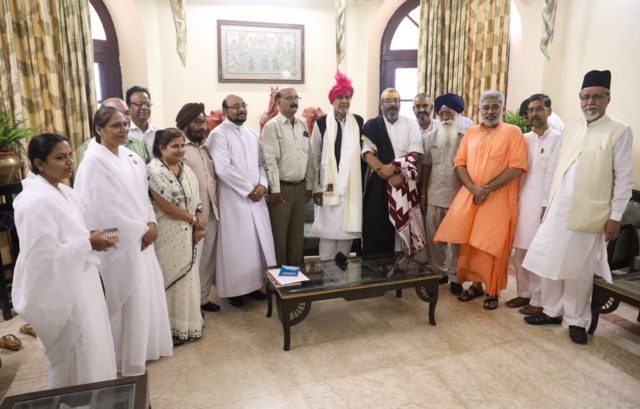
Wednesday, 2nd August 2017– Spiritual leaders across the faiths of Islam, Hinduism, Christianity and Sikhism from Ajmer met with Nobel Peace Laureate Kailash Satyarthi.
Mr. Satyarthi has been actively seeking support from all religious leaders across the land to join the fight to combat child sexual abuse and trafficking.
In fact, earlier last month, Mr. Satyarthi had held a roundtable meeting with faith leaders in New Delhi to speak with them on their views and their religion’s views on how best to combat the growing menace of violence against children. This meeting in Ajmer is a follow-up to the roundtable, and he will continue to seek support and speak with faith leaders in states across India to further his mission and vision of an India which is safe for its children.
During the meeting, he highlighted that when it comes to violence against children and exploitation of children, this issue must be considered above the confines of religion. In a land of such religious diversity as India, all faith leaders must come together and unite their beliefs on this issue.

“Every religious head I have spoken with, every faith leader I have met, has expressed support and a true willingness to fight for children. This is the beauty of religious diversity in India- They endorse my view, that child sexual abuse and trafficking is an issue which blurs the boundaries of region and religion as we must come together to fight against these heinous crimes”, said Mr. Satyarthi.
He emphasised to the leaders, that with their numerous followers and disciples, the power of religion will herald a revolution and incite a mass awakening and an urge to fight for the safety and security of the country. Faith leaders command the trust and faith of millions of people around the country and they must work towards sensitizing them, creating awareness and ultimately finding solutions to the evil of child abuse.
Hearing Mr. Satyarthi citing the terrible cases that have come to light in recent times, Swami Shivjyotishnand Ji said,”The kidnapping of children and then forcing them into criminal activities is a heinous crime. Such incidents involving children are excruciating and the perpetrators must be labelled as criminals and treated accordingly.
We stand with Kailash Satyarthi Ji and support his work to create awareness about these issues.”
Agreeing with Shivjyotishanand ji, Father Cosmos Shekhawat said, “There is an urgent need to raise our voice against this crime. Forcing children to work and threatening them, is choking any chance at securing a normal childhood for them. We are with Kailash Satyarthi Ji and assure him that he has the support of each and every person in this society for his cause.”
The post Nobel Peace Laureate, Sh. Kailash Satyarthi seeks support for his fight appeared first on Core Sector Communique.
]]>The post Africa remains world’s second-fastest growing region appeared first on Core Sector Communique.
]]>Ahmedabad, India, May 24, 2017 – In 2016, Africa as a whole maintained its position as the world’s second-fastest growing economies behind South Asia, according to data released during the Financial Presentation at the African Development Bank Group’s Annual Meetings, which entered its third day on Wednesday in Ahmedabad, India.
 afdb
afdb
The report analyzed the continent’s economic outlook, Bank operations, financial profile and capital market activities, noting that the continent recorded an average of 2.2% GDP growth in 2016 compared to 7.1 posted by South Asia powered India against a 2% average for the developed economies.
The report said African economies would improve further to average 3.4% growth in 2017 and 4.3% in 2018, driven largely by growing domestic demand and good performing countries.
“Although natural resources and primary commodities are still major drivers, their importance has declined while domestic factors including consumption demand play an increasing role,” AfDB Senior Vice-President Charles Boamah said during the presentation.
Other factors include improved supply conditions and good business environment, prudent macroeconomic management, favorable external financial flows, and high public spending, he said.
The report notes that, while natural resources and primary commodities remain major growth drivers, their importance has declined, while domestic factors including consumption demand now play a greater role.
Vast differences in country, sub-regional performances
East Africa emerged the best sub-regional performer with a 5.3% real GDP growth average driven by strong performance in Ethiopia, Tanzania and Djibouti.
North Africa followed with an average 3.3% growth driven by recoveries in Egypt (4.3%) and Algeria (3.5%), amidst persistent political uncertainties.
Southern Africa recorded a 1.1% average due to the poor performance of South Africa and Angola, two major commodity exporters in the sub-region hit by drought, persistent power outages and adverse terms-of-trade shocks, while Madagascar and Mozambique were rare bright spots, posted growth rates above 4%.
Central Africa followed with a 0.8% average due to low commodity prices while some countries lime Cameroun proved resilient. Central African Republic and São Tomé and Príncipe improved their economic performances.
West Africa was at the bottom, averaging a 0.4% growth rate despite good performances by Côte d’Ivoire and Senegal, which were cancelled out by recession and socio-political factors that bogged down the economy to 1.5% growth.
Nigeria and South Africa account for the largest share of Africa’s GDP with 29% and 19%, respectively.
Overall, external flows slowed
The report said Foreign Direct Investment increased slightly reaching US $56.5 billion in tune with growing urbanization and cities growing with consumer markets increasingly targeted by foreign investors. Official development assistance (ODA), which remains the most important source of public finance, declined by 1.7%.
Remittances mainly by the African diaspora represent a key source of capital for African countries totaling US $64.6 billion in 2016, the report says.
However, the facts on the ground suggest that these resources are insufficient to fully meet the continent’s development challenges.
An improved outlook
In this regard, the Bank estimates that its High 5 priorities – Light up and power Africa, Feed Africa, Industrialise Africa, Integrate Africa, and Improve the quality of life for the people of Africa – would spearhead Africa’s economic diversification and growth in broad-based economic opportunities that will shield the continent from future commodity shocks and enhance their resilience.
“Growth prospects would further be boosted by expected increases in commodity prices, strong domestic demand, better macroeconomic governance and an improved business environment,” co-presenter and Acting Vice-President for Finance, Hassatou N’Sele, said.
However, the report also cited rising debt, structural weaknesses, power outages, climate change, conflict, political instability and terrorism among some of the downside risks which should not be ignored.
The post Africa remains world’s second-fastest growing region appeared first on Core Sector Communique.
]]>The post Much Hope for Jordan and the Region – Young People Are the Bright Lights appeared first on Core Sector Communique.
]]>- Economic and political reforms are needed to give young people hope and to allow them to thrive as entrepreneurs
- New careers are emerging, and education is key to creating the talent required for start-ups
- A diverse group of clerics called for a review of religious and education institutions, as well as of religious curricula. It is time to pay more attention to youth and the role of women in the region.
- More information about the World Economic Forum on the Middle East and North Africa: http://wef.ch/mena17
 Dead Sea, Jordan, 21 May 2017 – The World Economic Forum on the Middle East and North Africa concluded today with strong expressions of hope for Jordan and the region, as well as recognition that investing in educating young people is critical. Mirek Dusek, Head of Regional Strategies, Middle East and North Africa, and a Member of the Executive Committee at the World Economic Forum, pointed to the “amazing potential of young people and young companies” across the region who have had such a strong presence during the meeting. “We have seen pockets of excellence, but we feel a new economic model is emerging of entrepreneurship.”
Dusek noted that many of these young start-ups have succeeded despite their environment. “How can we help them to be more sustainable and put them at the core of what this region is about?” he asked.
The Forum has been working for many years facilitating dialogue on the crises facing the region to ensure the right stakeholders are sitting down to address fragility and humanitarian catastrophes and deal with the political picture, Dusek added. Leaders from different faiths also discussed the future of Iraq after the liberation of Mosul from Daesh, as well as the role of clerics in society.
Ghassan Hasbani, Deputy Prime Minister of Lebanon, said he took away ideas about how to continue creating hope for the young people in the region. “We need to show them examples of success and that we are taking the right action to create the right environment for them to stay in the region … and succeed,” he said. “The region is in turmoil and facing political, economic and social challenges,” he added, but young people are a bright light shining. “We want to give them hope by taking proactive action on the legislative and regulatory side, but also on the encouragement and support side, he said. Hasbani praised the Forum’s Global Shapers community, a network of Hubs developed and led by young people with exceptional potential who want to make a contribution to their communities, and the more than 100 Arab start-ups represented at the meeting.
“We need to keep focusing on entrepreneurship at all levels,” he added. “We need to move forward with supporting entrepreneurship and encourage bigger enterprises to be more socially responsible.”
Start-ups face many challenges in the region, but Ambareen Musa, Chief Executive Officer of Souqalmal, United Arab Emirates, said they struggle with two main areas: talent and regulations. “It is extremely hard to find local talent. We need a real investment in education. It is about educating from a young age about entrepreneurship,” she said. “There are new careers coming on board. Education is key to creating sustainable environment now and for the next generation of start-ups.”
The next challenge is regulations. Investors want to know how big the regional market is, Musa added. “There have been a lot of changes, but I would like to see them faster. The dream is one currency, one region and no borders from a talent and regulatory perspective. That will make the expansion of the region for us much, much easier. It will also attract foreign direct investment.” She pointed out that the region has been built on entrepreneurship. Musa noted that the meeting’s common theme was “reform” and a mindset that it is time to move forward and create a sustainable environment.
Sana Hawasly, Chief Executive of Daraty, Syria, works with children in the education sector. “We want education to empower young people to create a lifelong learning opportunity with no restrictions around their educational experience,” she said. “The best way to create this content is make kids feel free to express themselves and do the work they like to do.” Daraty started with electronics to prepare them to build technology. In 2020 and beyond, people will require technical skills. “We are giving them the tools for the next marketplace that will replace what we are facing now,” Hawasly added. “We were amazed at how kids were enthusiastic to do this.”
Hawasly’s main takeaway from the meeting is the enthusiasm venture capitalists and investors expressed and their interest in the Syrian people. “We should bridge the gap between how much technology is going into Syria and the excitement of investors. We have a powerful workforce in Syria and are strong in technology. We have a great lack of opportunity. I will go back with a great hope that the world is waiting for talent from Syria. We have to track the opportunities and do the hard work to get there.”
Khadija Idrissi Janati, Founder and Chief Executive Officer of KMK Groupe, Morocco, and a Co-Chair of the World Economic Forum on the Middle East and North Africa, told participants that digital transformation is here and we need to adapt. But with increasing use of digital, society needs checks and balances. Children need to be exposed to digital technologies and the internet, but there must be trust and the engagement of parents.
“Trust is one of the challenges of the use of society media,” she said. Responsibility is critical. It is also critical to verify the veracity of the information on social media. Idrissi Janati pointed out that Facebook just hired 3,000 people to verify information. “We are aware of the benefits [of digital media], but we also must be aware of the risks,” she said.
Seyed Salih Al-Hakim, Director of the Hikmeh Center for Dialogue and Cooperation in Iraq, pointed to the need to keep religion out of politics and the role of clerics in fostering values. “Today, people have recognized that religion cannot be pushed into politics. It has its own place and cannot be part of the political bazaar,” he said. Although religion is an integral part of people’s lives, “People want to have a civil state. We do not want a religious government; we want a civilian government that respects religion … we have tried political Islam and it was not helpful. In history, when the sacred came into politics, it ruined our politics.”
In post-conflict Iraq, there will be a need to create “a country of citizenship” as there is a need for true reconciliation. A dialogue among a group of clerics called for a review of religious and education institutions, as well as of religious curricula. It is time to pay more attention to youth and the role of women in the region. Al-Hakim called on entrepreneurs starting out to pay attention to values in addition to setting objectives and goals.
The World Economic Forum on the Middle East and North Africa has taken place at the Dead Sea in Jordan on 19-21 May. With the full support and presence of Their Majesties King Abdullah II and Queen Rania Al Abdullah, this year marks the Forum’s ninth meeting in Jordan and the 16th meeting in the region. More than 1,200 business and political leaders and representatives from civil society, international organizations, youth and the media from over 60 countries participated under the theme, Enabling a Generational Transformation.
The post Much Hope for Jordan and the Region – Young People Are the Bright Lights appeared first on Core Sector Communique.
]]>The post The Bengal Chamber opens new office in Siliguri, to work more closely with industrial/trade associations in the region and promote dynamic growth in North Bengal appeared first on Core Sector Communique.
]]>10th December 2015, Siliguri:
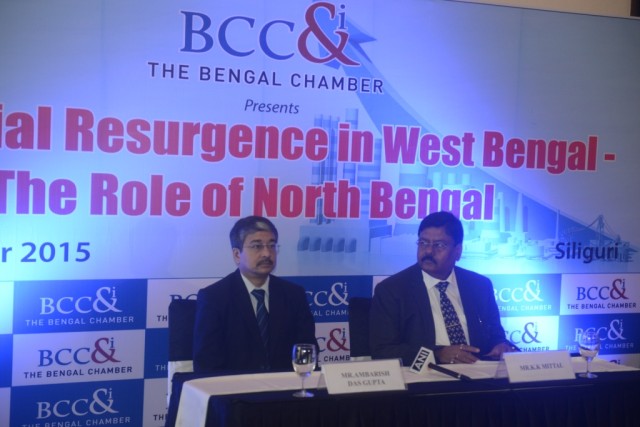
The Bengal Chamber of Commerce and Industry (BCC&I) is pleased to announce the opening of their new office in Siliguri, which is expected to help the Chamber work more closely with the many industrial/trade associations in the region, paving the way for more dynamic growth of trade and commerce in North Bengal. As India’s oldest Chamber, BCC&I carries out multiple roles as catalyst, initiator, facilitator, business partner and service provider, and has helped governments, both at the Centre and State, in crafting and pioneering significant legislations.
As the gateway to North Bengal. Siliguri is now being considered as an economic centre in itself, which is showing a quick growth rate. Thanks to Siliguri, North Bengal has become a hub for trade and commerce, with countries like Nepal and Bangladesh using the corridor through Siliguri to help in transporting rice and other commodities. Siliguri’s trade businesses include timber, tea, transport and tourism. The city has also become a prominent and preferred destination for investments, thanks to its rapid growth.
“The new Siliguri office of the Bengal Chamber will help to establish Siliguri as a gateway for trade, commerce and industry in eastern and north-eastern India, as well as help business and industrial establishments in Siliguri make deeper inroads into mainstream industrial activity,” said Mr. Ambarish Dasgupta, president, BCC&I. “We hope that in this way, the Chamber will be able to contribute more efficiently to the economic activities of the region as well as the nation, retaining our focus and roots in the eastern region.”
The Siliguri office is being inaugurated with a Panel Discussion on “Industrial Resurgence of West Bengal – Role of North Bengal”. The panelists for the discussion include: Mr. KK Mittal (CMD, PCM Group, Siliguri).
The post The Bengal Chamber opens new office in Siliguri, to work more closely with industrial/trade associations in the region and promote dynamic growth in North Bengal appeared first on Core Sector Communique.
]]>The post HUMAN RESOURCES WILL PLAY A CRUCIAL ROLE IN SHAPING FUTURE OF THE REGION appeared first on Core Sector Communique.
]]>HR leaders and thinkers set to provide insight into innovation and employee engagement at the 12th edition of HR Summit & Expo next week
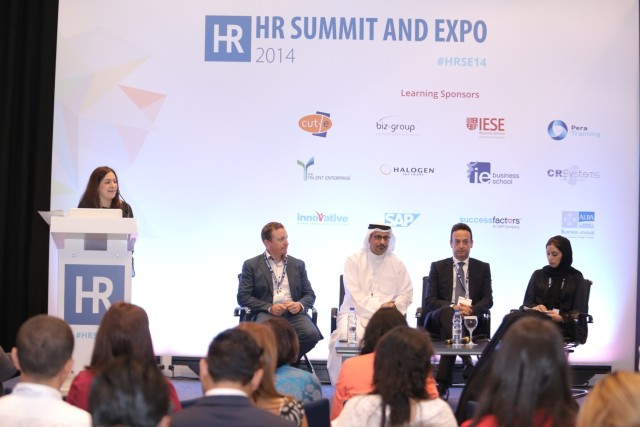
Dubai, UAE, 14 November 2015: More than 3,000 human resources professionals from the Middle East will gather in Dubai next week as the 12th edition of the HR Summit & Expo opens its doors.
Running from 16-18 November at the Dubai International Convention and Exhibition Centre, the theme of this year’s summit is Business Unusual: Disrupting HR and Leading Innovation, led by guru speakers who will be joined by a collection of eminent authors, thinkers and HR leaders from some of the most well-known organisations around the world.
Many of these experts agree that there is a need for companies to drive innovation in order to increase employee engagement and this is especially significant in order to address some of the challenges facing HR in the Middle East.
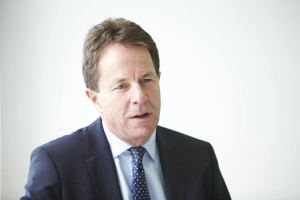 Peter Cheese, one of the guru speakers at the summit and Chief Executive of the CIPD, the professional body for HR and people development, said: “We know that the Middle-East workforce, like most places, has some good engagement in well-run organisations, but also areas where engagement is poor. The key will be to ensure that any employee engagement strategy has a strong regional focus and takes into account the differing needs of different groups in the workforce.”
According to Cheese, the key to raising employee engagement in the Middle East workforce is understanding the differing needs of different groups in the workforce.
Rita Trehan, Chief Capacity Officer who has made a career of business transformation within Fortune 200 companies and another speaker at the conference, added: “With a population that is heavily orientated towards millennial, there is a need to rethink the future of the workplace and what this generational group is seeking from the world of work since it is very different to the generations before them.
“Understanding these differences and the impact that this is has on workplace practices will require companies to be willing to adapt, innovate and change at a much faster rate than they have done in the past.”
More than 60 concurrent sessions will take place throughout the three day summit, as well as a choice between 10 certified master classes led by an unrivalled faculty of facilitators, where the prevailing theme will be the importance of HR to lead innovation in Middle East businesses.
Added Cheese: “The world of work is changing and in turn, so must HR. We believe HR can make a huge difference in the Middle East. With economies shifting from an almost total reliance on oil and gas to a sustainable future as knowledge and innovation-led markets, HR can only become more important.”
Among the other guru speakers speaking at the summit include Ram Charan, co-author of best-selling book, The Talent Masters; Fons Trompenaars, globally renowned consultant and organisational theorist; and best-selling author Jim Kouzes, one of Wall Street Journal’s twelve best executive educators in the United States.
Other experts include Sven Rohte, Chief Commercial Officer at Daman; Neil Morrison, Group HR Director at Penguin Random House; Shirley Davis, President and CEO of SDS Global Enterprises; and Ripa Rashid, Senior Vice President at Centre for Talent and Innovation.
Ramy Bayyour, Show Director of the HR Summit and Expo, said: “This year’s event promises to offer an invaluable, highly relevant insight for HR professionals in the GCC and beyond.
“The show has become firmly established as the Middle East’s ‘must attend’ event and we are delighted to be welcoming an esteemed group of speakers who will be sharing their insight on a particularly relevant theme in the industry.”
Running alongside the summit and exhibition is the Middle East HR Excellence Awards which will showcase the best HR talent in the Middle East and honour professionals in the public and private sectors. Winners will be celebrated across 10 separate categories at a gala dinner on Tuesday 17 November at The Address Hotel Downtown Dubai.
The HR Summit and Expo is supported by Headline Sponsors Daman, Profiles International, CIPD, Wiley and CivilSoft; Strategic Partner Gulf Talent; Platinum Sponsors Halogen Software, FranklinCovey Middle East, Qiyada; Gold Sponsor Tanfeeth; and Silver Sponsors BTS, Eruditus, Zurich, HGS, Cass Business School and Mary Gober International.
More information is available at: www.hrsummitexpo.com.
The post HUMAN RESOURCES WILL PLAY A CRUCIAL ROLE IN SHAPING FUTURE OF THE REGION appeared first on Core Sector Communique.
]]>