- 40 businesses and government leaders commit to efforts that cut waste and pollution from our consumption economy, including the Chief Executive Officers of Alphabet, The Coca-Cola Company, Royal Philips, Unilever and the Governments of Indonesia, Nigeria, the People’s Republic of China and Rwanda
- Platform for Accelerating the Circular Economy (PACE) tackling pressing environmental challenges, from electronic waste to plastic pollution.
- Globally, nearly 90 billion tonnes of materials in 2017 consumed, with only 9% cycled back into the economy
- This pollutes the environment and wastes an estimated $4.5 trillion in “recoverable” resources by 2030
The 48th World Economic Forum Annual Meeting is taking place on 23-26 January in Davos-Klosters, Switzerland, under the theme Creating a Shared Future in a Fractured World. For more information, www.weforum.org
Davos, Switzerland, 24 January 2018 – The heads of some of the world’s largest companies such as Alphabet, The Coca-Cola Company, Royal Philips, Unilever, the Governments of Indonesia, Nigeria, the People’s Republic of China and Rwanda and UN Environment, the Global Environment Facility and the World Bank have committed to efforts that cut waste and pollution.
They have partnered to form the Platform for Accelerating the Circular Economy (PACE) and are taking action to tackle pressing environmental challenges, from electronic waste to plastic pollution.
They advocate a circular economy: one that exchanges the typical cycle of make-use-dispose of in favour of redesign, reuse and recycling. The longer that materials and resources are in use, the greater the value extracted, which reduces our dependence on them. Extending the life of products creates new business opportunities and revenue streams, while minimizing the environmental impact of mining, resource extraction, refining and manufacture.
Globally, we consumed nearly 90 billion tonnes of materials last year, according to the International Resource Panel. This is predicted to double by 2050. Only 9% is cycled back into the economy, causing a huge impact on the environment and wasting an estimated $4.5 trillion in “recoverable” resources.
Plastic pollution is littering the oceans to such an extent that there could be more plastic than fish (by weight) in the seas by 2050.
Waste from electronics is growing and many countries don’t have systems to manage it safely. In 2016, 44.7 million metric tonnes of e-waste was generated, equivalent to the weight of 4,500 Eiffel Towers. E-waste contains a number of toxic substances that can cause great harm to health.
Pollution is leading to early deaths and led to an estimated 9 million people dying prematurely in 2015.
PACE is chaired by the heads of UN Environment, the Global Environment Facility and Royal Philips in collaboration with the Ellen MacArthur Foundation, the International Resource Panel, Accenture Strategy and Circle Economy. The World Economic Forum acts as host and facilitator to PACE. A full list of members is available here. PACE emerged from Project MainStream, a CEO-led initiative that helps to scale business-driven circular economy innovations.
PACE members are driving a series of efforts to increase business leadership, support enhanced investment and scale innovation. These include:
- Tackling plastic pollution in ASEAN: Partners including the Indonesian Ministry of Maritime Affairs, The Coca-Cola Company, the World Bank, the Global Environment Facility and UN Environment are helping to design solutions and channel investments to tackle marine plastics in the region. These efforts are a complement to the global New Plastics Economy Initiative led by the Ellen MacArthur Foundation.
- Tackling electronic waste in Africa and China: Two million tonnes of waste from electronic goods are produced in Africa each year but the majority of countries lack the infrastructure and policy frameworks to recycle this waste safely. A collaboration between Philips, Dell, HP, Microsoft, the Global Environment Facility, UN Environment and the Nigerian Ministry of Environment is developing a sustainable business model based on circular economy to address the e-waste challenge in Nigeria. Through the Africa Circular Economy Alliance, it aims to scale across other countries in the region. The platform is also working in China where a study with Tsinghua University found that only $160 million of a potential $1.3 billion of material value is recovered by the formal recycling industry.
- Reusing and refurbishing capital equipment: Globally, high-value machines and equipment use between 2 billion and 5 billion tonnes of ore a year. Following the initiative of Philips, a growing group of companies including ASML, Cisco, Dell, HP, KPN, Mitsubishi Elevators and Vanderland are pledging to take full responsibility for the reuse, refurbishment and recycling of the capital equipment they sell to businesses and governments. This will incentivize extending the life of products and stopping waste at the end of product use, while capturing the economic value of materials.
- Circular Supply Chain Accelerator: The Circular Supply Chain Accelerator will provide support to medium-sized enterprises in the supply chain of large multinationals to accelerate the development of new circular business models. Lead by ING, partners in this work include the European Investment Bank, Royal BAM, Atkins, Arup and Intesa Sanpaolo, with support from Accenture Strategy.
- Government procurement: This accounts for 12% of global GDP. UN Environment is leading efforts to work with governments in creating markets for circular products and services.
Frans van Houten, Chief Executive Officer, Royal Philips, said: “Embracing circular economy principles will help decrease environmental impact and our use of resources. At the same time, it provides business opportunities and can make our economies more inclusive. I invite all parties, both private and public, to join forces at our platform.”
Naoko Ishii, Chief Executive Officer and Chairperson, Global Environment Facility (GEF), said: “Moving to a circular economy is key for protecting the global commons. Working upstream and shifting the broader system of production and consumption is critical to moving to a circular economy. The GEF is pleased to partner with governments, as well as companies and other multilateral funding organizations though PACE to help leverage our respective resources for greater impact.”
Erik Solheim, Executive Director, UN Environment, said: “Tackling pollution requires actions oriented to building circularity and resource efficiency in our economy. This task is urgent, needs to be undertaken at scale and requires the action of many stakeholders: PACE plays a key role in meeting this challenge, and reaping these benefits.”
Antonia Gawel, Head of Circular Economy Initiative, World Economic Forum, said: “With the advent of the Fourth Industrial Revolution, we have innovations and technologies that can help us stop waste and pollution while serving the needs of society. What we need now is to scale these up while driving collaborative leadership.”
The World Economic Forum’s 48th Annual Meeting is taking place on 23-26 January 2018 in Davos-Klosters, Switzerland. Three thousand leaders from around the world are gathering in a collaborative effort to shape the global, regional and industry agendas, with a commitment to improve the state of the world.
]]>
- Doctors at Columbia Asia Hospitals, Ghaziabad, say most badly affected are children a large number of who are complaining of wheezing, difficulty in breathing
- Non-smokers are reporting with conditions that are usually prevalent in chain smokers
Ghaziabad, 26th October 2017: Previous years trends did not inspire much hope of a healthy festival of lights this year as well. As fireworks lighted the city on Diwali night, the objective of a green Diwali in the region went up in smoke. With toxic air fuelled by Diwali crackers and the onset of winter conditions engulfing the city over the past week, Ghaziabad residents, especially children and old people, are reporting increasing incidence of respiratory disorders such as breathlessness, wheezing and cough.

Doctors at Columbia Asia Hospitals, say that while air quality is never too good in the city, thanks to intense vehicular pollution, Diwali festivities have worsened the situation with each passing year. Children and old people are majorly impacted as they find it very difficult to cope with poor air quality, say doctors. “We have seen a significant spike in people reporting with respiratory problems over this week. Common complaints include cough and breathlessness. It is well known that lighting fireworks releases a toxic mixture of gasses which include carbon monoxide, carbon dioxide, sulfur dioxide, and even manganese and cadmium particles in the atmosphere. This means city residents are practically inhaling poisonous air, which is severely affecting their lung health. No surprise, our pulmonary department is overflowing with patients,” said Dr. Gyan Bharati, Pulmonologist, Columbia Asia Hospital, Ghaziabad.
Invariably, combustion of fireworks deteriorates environmental conditions every year after Diwali due to the bursting of crackers. Usually it appears that pollution has cleared in a few days after Diwali, but due to onset of winter and other environmental factors, the pollution caused around this time takes around 4 months to dissipate and therefore increases prolonged exposure to these gasses.
“While every individual is affected by bad air quality, the most badly affected are children. Children are more active than adults and therefore their intake of air in to lungs is higher, and their lungs are also not fully developed till late teens. Children’s ability to filter out or detoxify environmental agents and pollution is different. Also, in kids airway epithelium is more permeable than in adults, which makes them more vulnerable to diseases. The airway epithelium is the first defense against respiratory viruses and pollutants. On a daily basis we are seeing several children as young as 4 years old who are sick because of inhaling toxic air. The use of nebulizers is very high in children of polluted cities like ours today,” adds Dr. Sanjay Sharma, Consultant Paediatrician, Columbia Asia Hospital, Ghaziabad.
With winter conditions also setting in, the dust and particulate material from vehicular pollution and smoke from crackers is hanging over the city sky, creating choking smog like conditions. The dangerous mix of pollutants in our air also increases risk of lung cancer, much like smoking cigarette toxins does. For children who grow up in highly polluted cities like Delhi, the impact of this dangerous air can be catastrophic on their undeveloped lungs and respiratory systems. “Most people who see us today have lung conditions similar to those prevalent in chain smokers. The distinction between smokers and non-smokers is diminishing because everybody is inhaling air as toxic as several cigarettes a day,” added Dr. Gyan Bharati, Pulmonologist, Columbia Asia Hospital, Ghaziabad.
For people residing in the city and specially for their children, it is essential to take some short and long term measures:
- Adults should note the daily air quality index of the city for a week after Diwali, and if pollution levels tend to exceed over 200 mcg/m3, children should not be sent outdoors.
- Children should not be allowed to venture outside for playing and other activities. Make your kids wear quality air masks whenever they step outside at least for a week post Diwali.
- It is important that indoor air is kept clean and pollution free. Lighting firecrackers in the balconies or porch should be avoided. Keep windows and doors closed on Diwali night for preventing toxic gasses from entering inside.
- Encourage kids to drink a lot of water during this period. Water helps flushing out toxins from the system.
- Increase the intake of anti-oxidants rich diet which includes fruits and vegetables. They help in boosting vitamins in the body and its immune system.
About Columbia Asia Hospitals Pvt. Ltd.
Columbia Asia Hospitals Pvt. Ltd. is the only company in India to utilize 100% foreign direct investment (FDI) route in the hospital sector.
About Columbia Asia Group of Companies
The Columbia Asia Group is owned by more than 150 private equity companies, fund management organizations and individual investors. The group currently operates eleven facilities in India and has presence in Ahmedabad, Bangalore, Gurgaon, Ahmedabad, Kolkata, Mysore, Patiala and Pune. The company also operates hospitals in Malaysia (12), Vietnam (3), and Indonesia (3). The Indian management operations are managed from its office in Bangalore.
]]>Pollution tightens its grip over National Capital Region
Diwali – festival of celebration or suffocation
Rise in respiratory diseases

The National Capital which has been tagged as the most polluted city in the world by WHO is still suffocating under the pressures of increased emissions and pollutants. The upcoming festival of Diwali is bound to increase health issues and respiratory ailments. The festival of lights can very well become the festival of suffering for those ailing with Asthma.
Dr. Gyan Bharti Consultant – Pulmonology, at Max Hospital Patparganj advises “There has been a significant increase in children suffering from Asthma, bronchitis and other respiratory disorders. Some children suffer excessively during the Diwali season, particularly if they are suffering from above diseases. Parents should be made aware that buying crackers for their children can actually be a health hazard for them in the coming future.”
Last year, Max Patparganj saw, an alarming increase in cases of children and adults coming in emergency department with respiratory diseases during Diwali time. This year they are expecting same increase if we are not going to learn lesson from last year.
The national capital has the highest concentration of PM2.5 — particulate matters less than 2.5 microns– form of air pollution, which is considered most serious and can cause respiratory diseases and other health problems.
Dr. Praveen Pandey Senior Consultant, Pulmonology at Max Patparganj advises, “ Avoid Fire crackers this Diwali, not only for safe guarding your health but also for your near and dear ones, who may be suffering with underlying respiratory diseases and the exposure to alarming rise in toxic levels of pollutants and emissions during this season may be a cause of hospitalization and death to them.”
Even healthy people may suffer from Eye irritation, coughing, wheezing and breathlessness. The reason is that crackers contain 75% potassium nitrate, 15% carbon and 10% sulphur, and when they are burnt, harmful gases such as sulphur dioxide, carbon dioxide, carbon monoxide, manganese and even cadmium, are released, which irritate the delicate airways of lungs and worsen the condition of people with pulmonary diseases.
Doctors say that it is crucial to have an intake of nutritious diet consisting of home cooked meals, fresh fruits and vegetables.
Five years ago, out of the 100 patients only 7-8 people suffered from sinusitis but now we see at least 50 out of 100 suffering from sinusitis.
Post-Diwali, people suffering from high blood pressure, diabetes and breathing disorders queue up in hospitals as they do not adhere to the precautionary measures prescribed by doctors. People should avoid being too close to burning fire crackers and avoid smoke.
 Complete chain of waste monitoring green technologies to be covered through three new launches
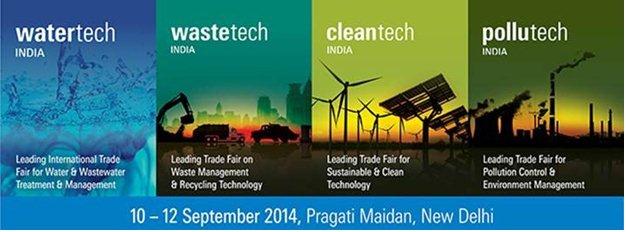
Messe Frankfurt India for the third edition of Watertech India 2014 will take up an environmental initiative addressing concerns of the four major sectors in resource conservation and waste management. Drawing from an over-whelming response in the last two editions, the next edition of Watertech India will see the launch of three concurrent shows – Wastetech India, Cleantech India and Pollutech India, thus covering the entire chain of waste, water, pollution and energy management.
Scheduled to be held from 10 – 12 September 2014 at Pragati Maidan, New Delhi, Watertech India 2014 will provide an unique opportunity to showcase products and best practices in the control and re-utilisation of waste in these core sectors. Mr Raj Manek, Managing Director, Messe Frankfurt Trade Fairs India commented: “The four co-jointly held environmental shows will not only create opportunities for the exhibiting companies but also encourage public and private sector professionals to change their outlook on the future by bringing business and sustainability at the forefront.”
Over the last two years, Watertech India has been identified as the leading trade fair, providing innovative products that help businesses reduce pollution generated through their production centers and plants. . Now, with the introduction of the three sector-focused shows, the fair will set the stage for economically viable and green solutions for wastewater treatment, resource recycling, clean energy and pollution management.
The previous edition of Watertech India drew to a very satisfying close with over 3,000 sqm of exhibition space, attracting over 1,400 trade visitors. The concurrent conference on Drinking Water, Sanitation, Municipal and Industrial Wastewater Treatment saw active involvement of municipal representatives from 18 states & union territories across India, representing different water supply and sanitation schemes implemented by the Ministry of Drinking Water and Sanitation.
The third edition of the trade fair once again endeavours to unite an intelligent mix of professionals from industries, research organisations, government associations along with a display of innovative technologies and best practices. Looking forward to the 2014 edition of Watertech India, Yasmin Dubash, Trade Commissioner, Consulate General of Canada remarked: “The exhibition last year was very useful and we saw some very innovative solutions which has prompted us to participate again this year. We will be bringing our new technologies this year, that have practical applications in the industry. We hope to see all the latest developments in India’s wastewater management sector.
Messe Frankfurt has a successful history of hosting global trade fairs such as Water Expo China, Canadian Waste & Recycling Exp, Eco Expo Asia and Building Solar China. The company will announce the launch of a new portal based on its environmental technology exhibitions & conferences as well as its environment-focused initiatives around the world.
With the concurrent launch of Wastetech India, Cleantech India and Pollutech India with Watertech India 2014, Messe Frankfurt further extends its portfolio of fairs focused on addressing environmental concerns and underlines its position as a leading exhibition organiser for ‘Green industry’ global professionals. The show is poised to become India’s most comprehensive trade and networking arena for economically-efficient and sustainable technologies.
For more information about these events, please visit respective event websites: www.watertechindia.com; www.wastetech-india.com; www.pollutech-india.in; www.cleantech-india.in
Messe Frankfurt
Messe Frankfurt is one of the world’s leading trade show organisers with 543* million euros in sales and 2,026* employees worldwide. The Messe Frankfurt Group has a global network of 28 subsidiaries and approx. 50 international Sales Partners, giving it a presence for its customers in more than 150 countries. Events “made by Messe Frankfurt” take place at more than 30 locations around the globe. In 2013, Messe Frankfurt organised 114* trade fairs, of which more than half took place outside Germany.
Messe Frankfurt’s exhibition grounds, featuring 578,000 square metres, are currently home to ten exhibition halls and an adjacent Congress Center. The company is publicly owned, with the City of Frankfurt holding 60 percent and the State of Hesse 40 percent.
For more information, please visit our website at: www.messefrankfurt.com
]]> Jakarta, 7 June 2013 – Greenpeace International Executive Director Kumi Naidoo met with Indonesian President Susilo Bambang Yudhoyono on board the Greenpeace ship, the Rainbow Warrior, in Jakarta today, to express Greenpeace’s support for the President’s legacy of protecting the nation’s biodiversity.
|

 Stockholm, October 10, 2012 – Exposing the vulnerability of Swedish nuclear power plants, at least seven Greenpeace activists stayed more than 24 hours undetected at two sites following a test of their security procedures.