The post GJEPC URGES GOVT. TO WITHDRAW EXCISE TAX ON JEWELLERY appeared first on Core Sector Communique.
]]>- Council to engage in dialogue with Govt. to roll back excise duty & facilitate ease in business
- Council avoids strike/protest; yet morally supports GJF & gems & jewellery trade associations
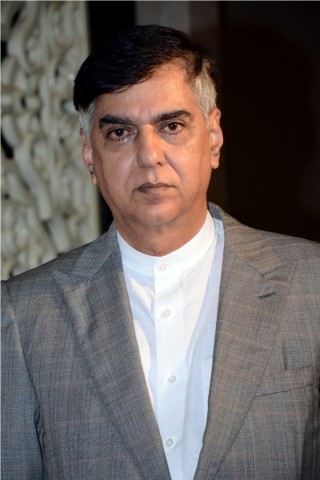 Gems and Jewellery Export Promotion Council (GJEPC) today stated that the imposition of 1% excise duty on jewellery (other than plain Silver jewellery) by the Government of India in Union Budget 2016-17 is not in the interest of the industry. GJEPC Chairman has already approached the Government to initiate meetings with the Finance Minister and Officials of the Finance Ministry and also the Commerce Minister & Commerce Ministry to persuade them to rollback their decision of imposition of excise duty on jewellery.
Mr. Praveenshankar Pandya, Chairman, GJEPC, said, “For 30 to 40 years, there was no excise on jewellery due to the small scale nature of manufacturing and sale of goods and the unique way the industry does its business. Also the industry also imports all its gold from outside after paying Customs duty. Hence, the Council is of the opinion that it needs to be withdrawn by the Govt. forthwith.”
“Though we morally support the stand taken by GJF and other industry associations, we do not want to go on strike as a protest against this announcement as we believe in engaging with the Govt. with constructive dialogue to persuade them to repeal the same,” Mr. Pandya added.
Gem & Jewellery Industry had made several representations to the Government to facilitate Ease of Doing Business in the Sector. In India, jewellery is largely produced by the SMEs and they are not equipped to follow the rigid compliance of excise norms. The imposition of excise would severely impact jewellery production in India resulting in loss of employment to the uneducated but skilled jewellery workers.
“We are distressed to find in the case of the gems & jewellery sector, no specific attention has been paid to address ease of doing business considering that exports of gems & jewellery account for a major share in the world market. We expected that the Government would announce measures to facilitate the export-oriented industries and create an environment of ease of doing business. We find that our existing concerns have not been addressed in this Budget,” Mr. Pandya added.
In the past, successive Governments have considered this and not levied excise on jewellery. The Council strongly urged the Hon. Finance Minister to reconsider the withdrawal of levy of excise on jewellery products. GJEPC will continue to engage with the government on key issues and challenges faced by the Industry.
About GJEPC
The Gem & Jewellery Export Promotion Council (GJEPC) was set up by the Ministry of Commerce and industry, Government of India (GoI) in 1966. It was one of several Export Promotion Councils (EPCs) launched by the Indian Government, to boost the country’s export thrust, when India’s post-Independence economy began making forays in the international markets. Since 1998, the GJEPC has been granted autonomous status. The GJEPC is the apex body of the gems & jewellery industry and today it represents over 6,000 exporters in the sector. With headquarters in Mumbai, the GJEPC has Regional Offices in New Delhi, Kolkata, Chennai, Surat and Jaipur, all of which are major centres for the industry. It thus has a wide reach and is able to have a closer interaction with members to serve them in a direct and more meaningful manner. Over the past decades, the GJEPC has emerged as one of the most active EPCs, and has continuously strived to both expand its reach and depth in its promotional activities as well as widen and increase services to its members.
The post GJEPC URGES GOVT. TO WITHDRAW EXCISE TAX ON JEWELLERY appeared first on Core Sector Communique.
]]>The post IIC submits representation for 2015 Budget to Govt; seeks recognition, easier financing for social enterprises appeared first on Core Sector Communique.
]]>- The IIC representation, submitted to MoS Finance Shri Jayant Sinha, appeals to the government to stimulate the impact investment ecosystem
- Impact investment is estimated to cross $6 billion, or Rs 40,000 crore by 2020, while the annual figure is likely to exceed $1 billion in the next five years
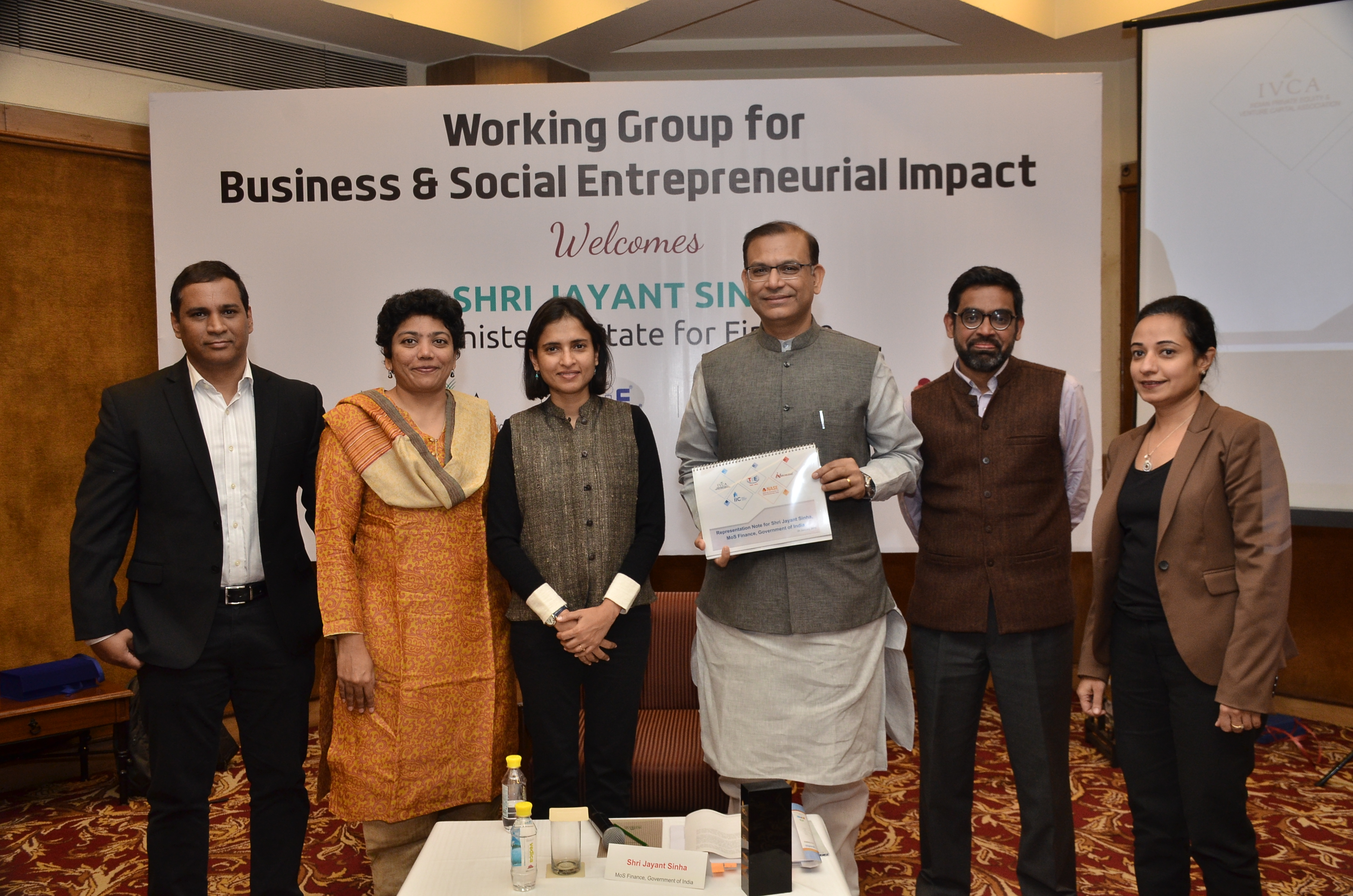
New Delhi, 28 Jan, 2015: Impact Investors Council (IIC), an industry body to promote impact investing in India, today submitted a representation for the forthcoming Budget to the Minister of State for Finance, Shri Jayant Sinha, on behalf of the investors and social entrepreneurs, seeking recognition for the Rs 10,000-crore sector, and easier financing for social enterprises.
Impact Investors invest in social enterprises, which are working to create social and environmental change in the country. Impact investing essentially involves investing with the implicit intention of generating positive social impact along with a return on capital. It ends the old dichotomy, which saw business as simply a way to make profit, while social progress was best achieved through charity or aid.
Impact investment has been growing at a rate of 27%in India over the last seven years, and 30+ impact investment funds in the country have invested a cumulative amount of $1.6 billion in 300+ social enterprises and across a range of industries such as financial inclusion, agribusiness, healthcare, education and clean energy, among others[1].
Social enterprises in India have exemplified the power that businesses can do ‘good’ while creating value for themselves. However, they have found it challenging to source institutional capital, especially in their initial years. Impact investing has played a key role in filling the crucial gap of financing social enterprises in India.
“Impact Investors have used the power of financial markets and ingenuity of social entrepreneurs to build Rs 10,000 crore impact investment industry with a promise to exceed Rs 6,000 crore annually by 2020. The industry helps bridge our national social investment gap while serving the poor and underserved. Therefore, IIC is requesting the Government to partner us and help galvanize the impact investment eco-system,” said Amit Bhatia, Chief Executive Officer, IIC.
In its first ever member-only convention, the board members of the council presented the priority areas that need immediate attention from the government to boost the impact investing activity in India. IIC requested for the following:
- Official recognition of impact investors, social enterprises and IIC
- Review of social venture fund (SVF) guidelines
- Extending priority sector lending to social enterprises
- Increasing access to External Commercial Borrowing (ECB) funding by social enterprises
- “Panel Member” on the high level committee on Corporate Social Responsibility (CSR) and social impact assessment measures.
The number of impact investors-funded social enterprises is expected to reach 1,000 by 2020. The staggering growth is on the back of impact investment, which is estimated to cross $6 billion or Rs 40,000 crore by 2020, while the annual figure is likely to exceed $1 billion in the next five years. The cumulative investment of Rs 10,000 crores positions India as one of the largest impact investment destinations in the world[2].
IIC is working towards the goal of reducing information asymmetry in the impact investing sector. The council has helped in establishing a working definition of impact investing that outlines the contours of impact investing and an impact investor in India. It has also put forth a comprehensive view on the quantum of impact investing across years, sectors and stages of enterprise growth. In addition to these activities, IIC is currently working towards developing national standards for impact assessment and measurement.
The post IIC submits representation for 2015 Budget to Govt; seeks recognition, easier financing for social enterprises appeared first on Core Sector Communique.
]]>The post Govt. sets Target of 15,000 MW of wind Energy during 12th plan period. appeared first on Core Sector Communique.
]]> The Government has set a target of 15000 MW of wind power to be installed during 12th Plan period. The capital expenditure for setting up one MW wind power project is approximately Rs.6 crores. A total capacity of 18551 MW from wind energy has already been established in the country. This is around 9% of the total installed power capacity in the country.
The Government has been promoting wind power projects through private sector investment by providing fiscal and promotional incentives such as 80% Accelerated Depreciation, concessionalimport duty on certain components of wind electric generators, excise duty exemption to manufacturers. 10 years tax holiday on income generated from wind power projects is also available. Loans for installing windmills are available from Indian Renewable Energy Development Agency (IREDA) and other Financial Institutions. Technical support including wind resource assessment is provided by the Centre for Wind Energy Technology (C-WET), Chennai. This apart, preferential tariff is being provided in potential states. A Generation Based Incentives (GBI) was available from December 2009 to 31st March 2012, under which Rs. 0.50/unit generated from wind power projects was provided to the projects which did not avail Accelerated Depreciation (AD) benefit. The GBI and AD benefit have been discontinued w.e.f. 01.04.2012.
The Centre for Wind Energy Technology (C-WET), Chennai, the Government has undertaken an extensive wind resource survey programme to identify the potential sites for wind power projects. A total 701 wind monitoring stations have so far been established in the country. The data collected is available with C-WET, which is used by various stake holders in wind sector.
The state-wise wind power installed capacity is given as under. The states of Uttar Pradesh and Jharkhand do not have any wind potential site.
STATE-WISE WIND POWER INSTALLATION
| States |
Capacity (MW) |
| Andhra Pradesh |
435 |
| Gujarat |
3093 |
| Karnataka |
2113 |
| Kerala |
35 |
| Madhya Pradesh |
386 |
| Maharashtra |
2,976 |
| Rajasthan |
2,355 |
| Tamil Nadu |
7,154 |
| Others |
4 |
|
Total |
18,551
|
The post Govt. sets Target of 15,000 MW of wind Energy during 12th plan period. appeared first on Core Sector Communique.
]]>The post Govt plans 2% raise in excise duty, service tax appeared first on Core Sector Communique.
]]> The finance ministry is considering a proposal to raise excise duty and service tax by two per cent to 14 per cent each in the Union Budget for 2013-14. The move is likely to help the ministry collect about Rs 30,000 crore. Certain exemptions may also be rolled back.
“It is being debated whether both excise duty and service tax should be increased to 14 per cent. Certain exemptions may be removed and Customs duty on crude oil may be restored. A final decision would be taken close to the Budget,” said a finance ministry official, on the condition of anonymity. Peak Customs duty, however, might be retained at 10 per cent.
In June 2011, Customs duty on crude oil imports had been done away with.
These steps, proposed in pre-Budget meetings, are aimed at improving the government’s tax-to-gross domestic product (GDP) ratio. Though most Budget announcements come into effect from a new financial year, changes in excise and Customs duties have immediate effect. For instance, even if Budget 2013-14is announced on February 28, the government would avail of the additional two per cent excise duty rise in March.
The ministry official said it was argued even in the Goods & Services Tax (GST) regime, the combined rate for services would be 16 per cent. Though increasing the excise duty to 14 per cent would raise the rate to pre-crisis levels, most in the government feel both service tax and excise duty should be kept at the same level. At this rate, service tax would be at an all-time high.
Once GST is implemented, both the Centre and states may levy service tax at eight per cent each. Currently, states cannot tax services. Goods, however, are likely to be taxed at the peak rate of 20 per cent in the GST regime. At a time when states already levy value-added tax at 12.5 per cent, tax of 14 per cent by the Centre would make goods expensive.
Though crude oil prices (Indian basket) are still at the June 2011 level of about $110 a barrel, the finance ministry wants to restore Customs duty on crude oil, as this has put undue pressure on the exchequer. In 2011-12, it had to forgo revenue of about Rs 58,190 crore, owing to the fall in Customs duty on petroleum products.
Officials said, while taking a decision on taxes, the government would also keep in mind the results of the Assembly elections in Gujarat. It might find it a little difficult to opt for a potentially unpopular move like this in case of an anti-Congress verdict. In fact, a section in the ministry has been advocating a cut in the rates to aid growth and revive sentiment. Though this may be a good move, politically, because the cost is passed on to end consumers, the ministry is worried about its fiscal implications.
An increase in taxes may also affect growth, which had already slipped to 5.5 per cent in the first quarter of this financial year. In 2011-12, too, the ministry had increased excise duty and service tax by two per cent each.
The post Govt plans 2% raise in excise duty, service tax appeared first on Core Sector Communique.
]]>