The post How secure are women working in the manufacturing sector of India? G S Ramesh, Chairman, Layam Group appeared first on Core Sector Communique.
]]> Globalisation has brought in a different perspective in the industrial sector and the advent of multinationals in our country has also created a new climate of industrial culture. According to a 2011 ILO (International Labour Organisation) paper, 83.8 per cent of South Asian women are engaged in so-called vulnerable employment and most of the work that these women are engaged in can be qualified under `casual labour’ piece-work such as the manufacturing of garments and other small items, produced within the restraints of the workers’ household. Informal labour is generally qualified by the absence of decent labour conditions as recommended by the ILO and a lack of any sort of secure and sufficient wages. Women workers present a considerable share of this so-called informal workforce, a share that has in fact risen substantially over the last 20 years. On the other hand, the number of Indian women engaged in formal, secure and recognised labour is still minimal. Only 14-15 per cent of workers in the formal sector are women, their numbers hardly rising over the past years.
In the above context, in India, the presence of women employed in the manufacturing sector is still a question mark. If we compare India with South-East Asian countries such as Thailand and China, we have failed to build a significant manufacturing sector that can absorb and employ women workforce.The work opportunities that do exist in the formal economy manufacturing sector are in the existing patriarchal framework exploited by men rather than women. India’s largest manufacturing units are still being dominated by men, but however, there has been a mindset change due to the liberalisation and it has been felt that, with regard to productivity , efficiency and precision, women are better than men.
Social security is very important for working women in informal sectors as well as the manufacturing sector, as they face various hazards in their life and at the workplace. It has been observed and several studies indicate that the issues, which still need attention are: 1. Improper compensation; 2. Discomfort and mental stress; 3. Dual responsibilities creating emotional strain; 4. Hazards related to society and family; 5. The physical protection and sexual harassment.
At the national level, the government and other social institutions have launched various social security programmes to meet the minimum needs of poor informal sector workers, which are classified under three heads as mentioned below: i. Centrally funded social assistance programme; ii. Social insurance scheme; iii. Social assistance through welfare funds of central and state governments.
However, the most important aspect is to change the approach and mindset. Any amount of social legislation or enactment is not going to help unless we accept and adapt to the change.
The post How secure are women working in the manufacturing sector of India? G S Ramesh, Chairman, Layam Group appeared first on Core Sector Communique.
]]>The post Budget 2015: Wish list, expectations for HR industry by G S Ramesh appeared first on Core Sector Communique.
]]> The upcoming budget to be known as ‘Skill India’ has obviously created expectation and is the wish list for any industry. As you know, if India has to become of global quality, skill is the only answer. So the government is also working hard to meet the need for skilled employees.
Over and above, the industry is looking forward to certain concession in excise and taxation to make the product viable. Industry is hoping that the non-taxable gift limit from the existing Rs 5,000 per annum will be changed to Rs 10,000 per annum.
The boost in the manufacturing sector, especially in MSMEs and other allied sector is going to look for skilled manpower and thus the job recruitment scenario is going to change and they will be a good potential for growth.
The industries which are going to get a push from this year Budget is manufacturing, agriculture and infrastructure.
Several reforms such as manufacturing sector can sell its product through retail including E-commerce platform and initiatives like committee to examine the financial architecture for MSME Sector etc. is a clear cut road map for economic recovery and accelerated growth in industry. This in-turn, will boost employment automatically. Hence the overall budget is going to be a clear vision for fixing the economy.
With the emphasis laid on skill development and make in India campaign, recruiters also anticipate the government to find ways of generating employment opportunities in tier 2 and 3 cities. The government should also make skill development in the public-private partnership in skill development, which in turn will make India a lucrative destination for both domestic and foreign investors.
The author is G S Ramesh, Chairman, Layam Group
The post Budget 2015: Wish list, expectations for HR industry by G S Ramesh appeared first on Core Sector Communique.
]]>The post Layam Group awarded the Best Management Student of 2014 with a cash prize of one lakh appeared first on Core Sector Communique.
]]>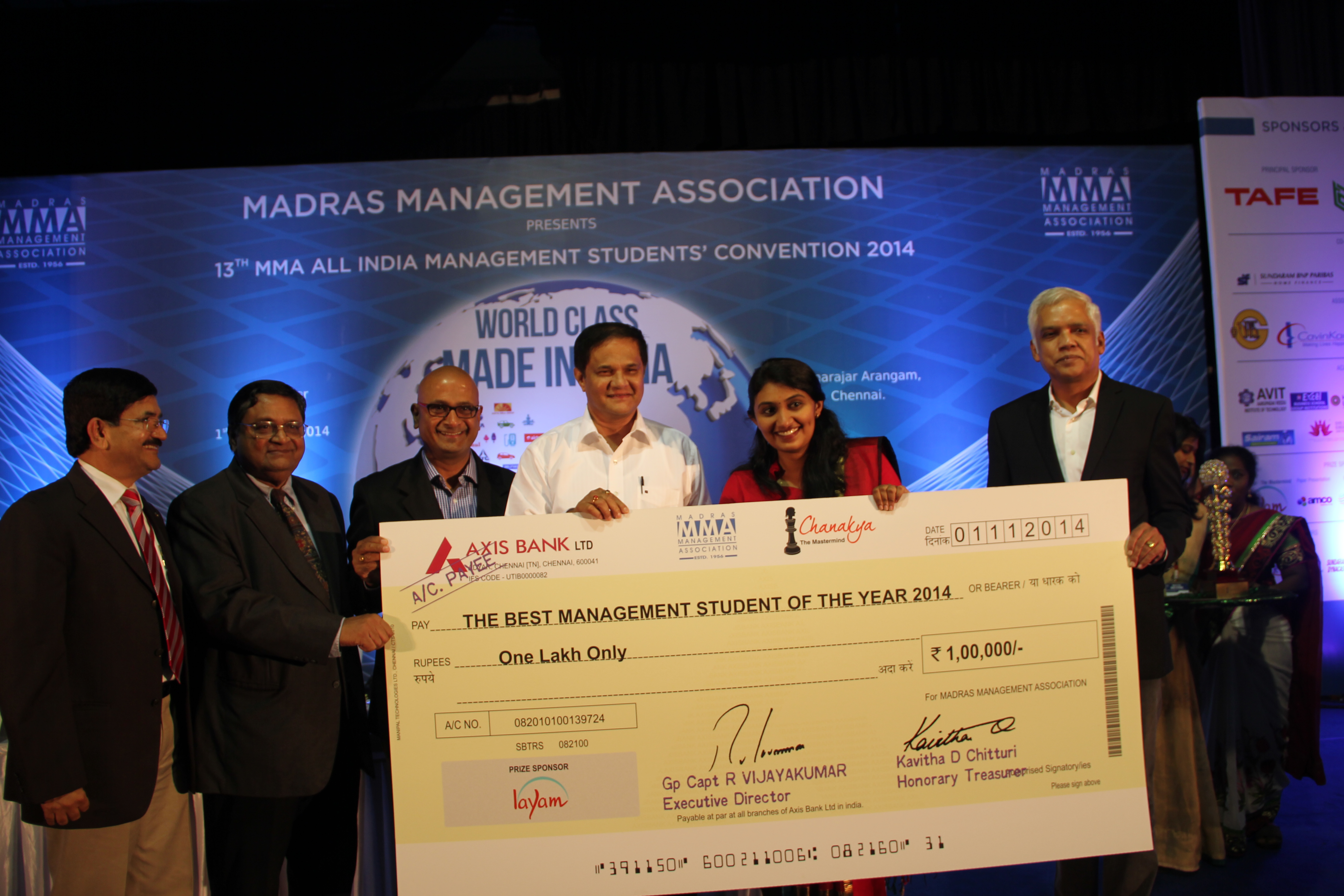 Chennai: Nov 05, 2014: As part of Madras Management Associations 13th MMA All India Management Students’ Convention, Layam Group today gave away Rs 1, 00,000 as cash prize to the Best Management Student of the Year 2014.
Arya S Nair of XIME, Cochin won the award after a nail biting finals.
Over 3000 students registered for the award. After initial screening and multi-step process, which included panel discussions and essay writing, 10 students qualified for the final round. The finalists were interviewed by an expert panel and had a series of rapid fire question before, ultimately, crowning the winner.
“We believe in nurturing talent, which is why we were more than willing to be associated with MMA as Knowledge partner and sponsored the Chanakya award. The idea is to identify and recognize bright talent who are future managers for this country,” said G S Ramesh, Chairman of Layam Group. “
About Layam Group:
Headquartered in Chennai, Layam has presence in the key manufacturing hubs of the country. They provide HR Consulting, IR consulting, and business consulting services. With a growing team, Layam strongly believes in upholding ethical standards, transparency, commitment and quality and value system.
The post Layam Group awarded the Best Management Student of 2014 with a cash prize of one lakh appeared first on Core Sector Communique.
]]>