The post International tourism an engine for the economic recovery appeared first on Core Sector Communique.
]]> In the first nine months of 2013, international tourism grew by 5% according to the latest UNWTO World Tourism Barometer. The number of international tourist arrivals reported by destinations around the world increased by some 41 million between January and September, growing above UNWTO’s initial forecast and creating an important stimulus to the receiving economies.
International tourist arrivals grew by 5% in the first nine months of the year, to reach a record 845 million worldwide, an estimated 41 million more than in the same period of 2012. Growth was driven by Europe and Asia and the Pacific, both seeing tourist numbers increase by 6%.
“International tourism continues to grow above expectations, supporting economic growth in both advanced and emerging economies and bringing much needed support to job creation, GDP and the balance of payments of many destinations” said UNWTO Secretary-General, Taleb Rifai. “It is particularly encouraging to see the strong results in many European destinations, where the tourism sector is, undoubtedly, one of the engines of the economic recovery”.
Europe beats expectations
In Europe, the world’s most visited region, international tourist arrivals grew by 6% led by above-average results in Central and Eastern Europe (+7%) and Southern and Mediterranean Europe (+6%). This growth exceeds the initial forecast for 2013 and is double the average growth rate of international tourism in Europe since 2000 (+2.7% a year between 2000 and 2012).
Asia and the Pacific (+6%) continued to show robust results, bolstered by South-East Asia (+12%).
The Americas (+3%) reported comparatively weaker results, with better performance in North America (+4%) and Central America and (+3%).
In Africa (+5%) growth was fuelled by the recovery in North Africa (+6%), while the Middle East saw only a marginal increase (+0.3%).
Growth in tourism receipts confirms positive trend
The positive trend registered in international tourist arrivals is reflected in international tourism receipts reported by destinations worldwide for the first six to ten months of the year.
Among the 25 largest international tourism earners, receipts saw double-digit growth in ten destinations – the United States (+11%), Macao (China) (+10%), the United Kingdom (+18%), Thailand (+28%), Hong Kong (China) (+21%), Turkey (+13%), India (+13%), Japan (+23%), Greece (+15%) and Taiwan (Pr. of China) (+12%).
Exponential growth in outbound expenditure by China and Russia
Among the top ten source markets, the Russian Federation led growth, with expenditure on trips abroad up by 29% in the first nine months of the year. This follows the strong growth in recent years, as a result of which Russia has moved up from the 12th largest outbound market in 2000 to the 5th largest in 2012 (US$ 43 billion).
China, which became the number one source market in the world last year (US$ 102 billion), also continued to see rapid growth, posting a 22% increase in expenditure on outbound tourism through September 2013.
Outbound expenditure from other BRIC economies was also strong in Brazil (+15%). The performance of advanced economy source markets was comparatively weaker: Canada (+3%), the United States (+2%), the United Kingdom (+2%) and France (+2%) grew moderately, while Germany reported zero growth and Japan, Australia and Italy saw declines in expenditure.
Note: UNWTO will announce full 2013 results during its traditional press conference to be held on 20 January 2014, the eve of the Spanish tourism fair FITUR.
The post International tourism an engine for the economic recovery appeared first on Core Sector Communique.
]]>The post How does the Fiat Linea Classic compete against Maruti Swift DZire? appeared first on Core Sector Communique.
]]>The Fiat Linea Classic has been launched on Indian shores at an attractive price of Rs. 5.99 lakhs INR (Ex-showroom, Delhi). Though the new Linea features the same design in terms of dimension, as the present Linea, Fiat has done away with some features to make it more competitively priced. The Linea Classic, being quite affordable, will face tough competition against Chevrolet Sail, Maruti Swift DZire and Honda Amaze.
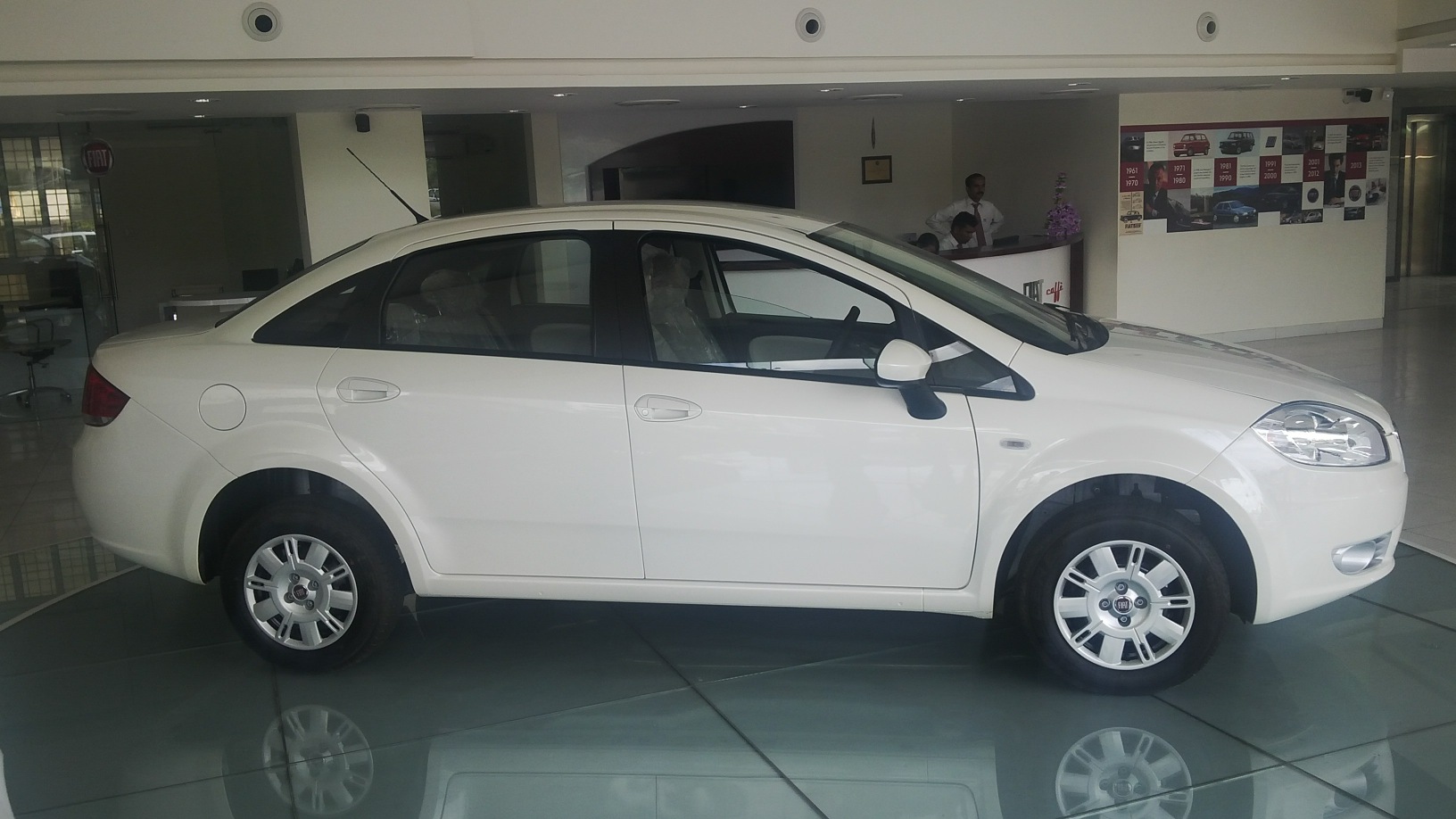
Fiat Linea Classic and Maruti Swift DZire compared:
Engine
The Linea Classic is powered by 1.3-litre 75bhp 16V Multijet Diesel Engine. This 4-cylinder multi-jet diesel powertrain delivers a peak power output of 75 bhp at 4000 rpm and clocks a peak torque of 197 Nm at 1750 rpm. The powertrain features a 5-speed manual transmission gearbox. This is a front–wheel drive and features a front suspension of Independent Wheel, Helical Coil Springs, Double Acting Telescopic Dampers and Stabilizers Bar.
It delivers 16.2 kmpl mileage on city roads and clocks 19.5 kmpl on highways.
On the other hand, the Swift DZire is driven by a powerful 1.3-litre 74bhp 16V DDiS Diesel Engine. This 4-cylinder DDiS diesel power train generates a maximum power of 74 bhp at 4000 rpm and churns a peak torque of 190 Nm at 2000 rpm. This 5-speed manual transmission gearbox is engineered with a McPherson Strut front suspension. The Swift DZire delivers 18.6 kmpl on city roads and 23.4 kmpl on highways.

Features and styling
Though Fiat has cut down on many features in the Linea Classic to keep the costs low, it still boasts of some exciting features like power steering, front and rear power windows, trunk lights, vanity mirror, low fuel warning lights, rear seat headrest, rear seat center arm rest, height adjustable front seat belts, front cup holders and seat lumbar support.
Meanwhile, the Swift DZire sports exciting features like multi-function steering, Automatic climate control, air quality control, remote trunk opener, remote fuel lid opener, and accessory power outlet though it does not have seat lumbar support as seen in Classic.
Exteriors
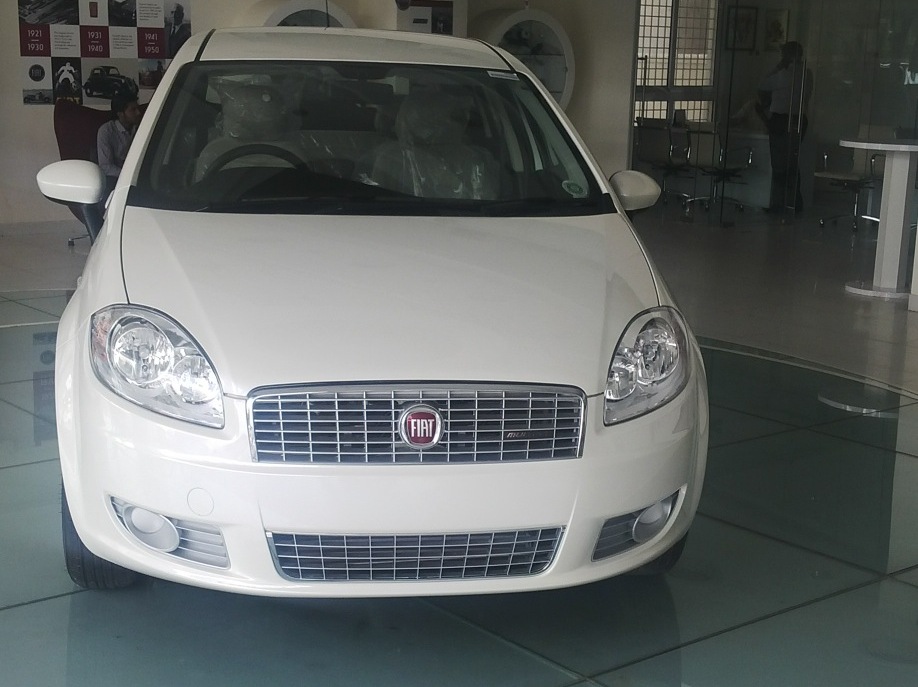
The Linea Classic exteriors are available in an exciting range of colors like Pearl White, Hip Hop Black, Minimal Grey, Tuscan White and Oceanic Blue.
On the other hand, the Swift ZDi exteriors look quite fascinating. At first look, this sedan looks plush. A stunning black grille adorns the front façade of the DZire ZDi. The Suzuki logo is done up in stunning chrome finish. The front façade also feature a smooth, easy flowing nose design.
Interiors
In terms of interiors, the Linea Classic can be seen as a disappointment among many. Fiat has borrowed the Linea Classic’s interiors from its popular hatchback Punto. This may not appeal to certain sections of sedan customers but it will completely depend on the buyer since they may not get some of the Linea Classic’s features in other, similarly priced entry level sedans like the Honda Amaze or even the Maruti Swift DZire.
The bad news is that the interiors are borrowed from Punto and would not appeal to the sedan buyers but it depends on the buyers who also get to choose from other auto majors within the same price tag, options like, Honda Amaze and Maruti Swift DZire that are market leaders in the segment.
On the other hand, the Swift DZire ZDi is the top end variant and sports chic and urbane interiors. The interiors are adorned in a classic two-tone beige color theme. The cabin is quite roomy and well-ventilated. Seating arrangements look proper and Maruti Suzuki has used supreme quality fabric for designing the upholstery.
Indeed, Fiat Linea Classic and Maruti Swift DZire comparison is sure to delve into many other sections which may not have been discussed above. Although Fiat has cut down on some features in the Linea Classic, it has also added some new features like programmable speed limit buzzer, hydraulic power steering, fire prevention system and dual parabola headlamps.
On the other hand, the Swift DZire charms buyers and critics alike with its robust braking system. In front, the new Linea has ventilated disc brakes while in the rear it has drum brakes. The braking system of the DZire is enhanced further by Electronic Brake Force Distribution system, Anti-lock Braking system and Brake Assist.
Story sourced from www.cardekho.com
The post How does the Fiat Linea Classic compete against Maruti Swift DZire? appeared first on Core Sector Communique.
]]>