The post Flying laboratory reveals crucial tropical forest conservation targets in Borneo appeared first on Core Sector Communique.
]]>
Washington, DC— About 40 percent of northern Malaysian Borneo’s carbon stocks exist in forests that are not designated for maximum protections, according to new remote sensing and satellite mapping from Carnegie’s Greg Asner and his colleagues.
Asner’s flying laboratory, the Carnegie Airborne Observatory, was able to map carbon stocks that—together with satellite imaging and other geospatial data—will guide conservation efforts undertaken by the Sabah Forestry Department in Malaysian Borneo, the Southeast Asia Rainforest Research Partnership (SEARRP), the PACOS Trust, BC Initiative and other organizations.


“We are proud to be part of this groundbreaking endeavor in the state of Sabah, which sets us apart in accelerating the quest and capacity to protect, restore, and conserve more high-conservation and high-carbon forests in this country,” said Sam Mannan, Chief Conservator of Forests. “We shall apply the information gathered for the common good of society, particularly, in mitigating against the worst effects of climate change. This project is of immense value to tropical forest management.”
Why is measuring carbon stocks so important?
Because tropical forests like those in the Sabah have converted large quantities atmospheric carbon into organic material—and they accomplish more of this than any other terrestrial ecosystem on Earth. But when this forest land is repurposed for agriculture, logging, or mining, carbon is released into the atmosphere, where it contributes to climate change. Tropical deforestation and forest degradation account for about a tenth of the world’s carbon emissions each year.
So, figuring out which segments of Sabah’s forests contain the most carbon in the form of biomass is an important first step in helping the government of the Sabah meet its goal of increasing protected forests from 1.8 to 2.2 million hectares.
“The nearly 4 million hectares of Sabah’s forests are a kaleidoscope of many different habitats and management histories, which required a wall-to-wall mapping effort to truly quantify the amount of carbon they contain,” Asner explained.
Using the Carnegie Airborne Observatory’s signature technique, called airborne laser-guided imaging spectroscopy, integrated with satellite imaging, and other geospatial data, Asner and his team were able to provide high-resolution maps of Sabah’s forests. In addition to finding 50 trees of the tallest tropical trees ever measured, the CAO team pinpointed important targets for conservation efforts.
They found that about 40 percent of the state’s carbon is contained in forests that are not protected at the highest designation. What’s more, they discovered that Sabah could double carbon stocks by allowing previously logged forests to regenerate—a process that they estimate would take about a century.
SEARRP’s Glen Reynolds said: “it’s a rare opportunity to work with state-wide datasets of this quality. By integrating the CAO maps with ground-based biodiversity data and information on the use of forests by local people, we should be uniquely well placed to identify hundreds of thousands of new conservation areas in Sabah that not only protect key habitats, but also the livelihoods of forest-dependent communities”.
“Forest carbon is an important factor in locating places where conservation efforts could make the greatest impact,” Asner added. “But other data on canopy biodiversity and animal habitats, such as our work on Bornean orangutans, will also help inform decisionmakers.”
This study was supported by the UN Development Programme, Avatar Alliance Foundation, Roundtable on Sustainable Palm Oil, Worldwide Fund for Nature, Morgan Family Foundation, Natural Environmental Research Council, and the Rainforest Trust.
The Carnegie Institution for Science (carnegiescience.edu) is a private, nonprofit organization headquartered in Washington, D.C., with six research departments throughout the U.S. Since its founding in 1902, the Carnegie Institution has been a pioneering force in basic scientific research. Carnegie scientists are leaders in plant biology, developmental biology, astronomy, materials science, global ecology, and Earth and planetary science.
The post Flying laboratory reveals crucial tropical forest conservation targets in Borneo appeared first on Core Sector Communique.
]]>The post AfDB and WWF agree to focus on conservation, energy and agriculture appeared first on Core Sector Communique.
]]>Abidjan, Côte d’Ivoire, 30 November 2017 – The World Wide Fund for Nature (WWF) and the Africa Development Bank (AfDB) have announced a new three-year partnership agreement. The agreement comes on the heels of a three-year Memorandum of Understanding (2014-2017) in which the two organizations committed to deliver major eco-conservation programmes for Africa.

Commenting on the extended agreement, Frederick Kwame Kumah, WWF Africa Regional Director, said, “This is clear sign of total confidence and mutual recognition of both institutions.” This shows appreciation of WWF’s added value in the partnership with the leading financial institution in Africa and one of the most respected multilateral development banks. He added.
Kumah said the two institutions’ three-year work plan will include, intensifying collaboration on the Bank’s New Deal on Energy for Africa and how to make it work to Light up and power Africa. “This will see us collaborate on the link between energy and the impact on natural systems like forests and the impact of increasing fuel needs and cooking stoves in rural areas,” Kumah added.
In addition, WWF will engage in agriculture and productive landscapes and sustainable palm oil; as well as sustainable infrastructure development and growth corridors in Africa and the role of wildlife and potential of ecotourism for Africa in recognition of the challenge that the illegal wildlife trade poses.
WWF and AfDB signed the initial MoU on 21 July 2011, which provided for a broad range of cooperation around green growth and sustainable development in Africa. The MoU was renewed in 2014 at the African Development Bank’s Annual Meetings in Morocco with a provision to host a WWF staff at the Bank’s head office in Abidjan. The renewed MoU contains the same provisions.
Six years of formal partnership has seen the AfDB and the WWF collaborate on the production of two knowledge products namely Africa Ecological Footprint and Africa Ecological Futures. The two institutions have equally collaborated on climate change; South-South cooperation; and fighting illegal wildlife trafficking, which saw the adoption of the Marrakech Declaration and discussions on the issues at the highest level at the UN General Assembly in New York.
AfDB Director for Agriculture and Agro-Industry Chiji Ojukwu applauded the renewed partnership, stating, “The Bank considers WWF a treasured partner as we pursue mainstreaming our green growth objectives within the High 5s.”
The post AfDB and WWF agree to focus on conservation, energy and agriculture appeared first on Core Sector Communique.
]]>The post RSPO: Cause of deforestation or conservation? appeared first on Core Sector Communique.
]]> The RSPO has published its 2016 RSPO Impact Report, providing a detailed look at RSPO’s sustainability efforts and outcomes from the past year.
Over the years, the RSPO’s focus has remained constant: transforming the market to make sustainable palm oil the norm. To ensure the vision is achieved, the RSPO vigilantly monitors the impact of RSPO on the 3 pillars of sustainability, People, Planet and Profit.
Here are a few highlights from the 2016 RSPO Impact Report:
● High Conservation Area: As of 30 June 2016, the total High Conservation Value area set aside within RSPO Certified concessions amounts to 157,115 ha, an increase of 9% from the last reporting period. That is an area of forest and indigenous communities lands equal to the size of more than 200,000 soccer fields now set aside for conservation.
● Paraquat: At least 40 RSPO growers have phased out paraquat, and at least 33 also have a policy banning, or have already phased out, WHO category 1a and 1b pesticides.
● Resolution of grievances: Out of the 63 complaint cases since 2009, 41 have either been closed or are closed for monitoring.
● Support to smallholders: Since 2013, the RSPO has been running a Smallholder Support Fund (RSSF) aimed at improving access to RSPO certification, promoting sustainable agricultural practices and increasing production of Certified Sustainable Palm Oil (CSPO). RSPO has certified 109,415 smallholders (individual and schemed) in the last reporting period.
Together with monitoring the RSPO impacts, the report identifies areas of contribution and opportunity for support by the RSPO to the 17 Sustainable Development Goals (SDGs) launched by United Nations in 2015. The RSPO, through its actions, is already working in supporting five of the SDGs: zero hunger, clean water and sanitation, decent work and economic growth, responsible consumption and production, and life on land. The RSPO continues to support and further integrate the other SDGs into RSPO standards and activities.
The report also includes data from several industries that have committed to 100% CSPO in many European countries, and as of the reporting period Germany, France, the Netherlands and the UK have all made significant progress towards reaching their targets.
“RSPO recognises that oil palm cultivation has been linked as one of the major causes of deforestation across the globe. However, with the mandatory assessment becoming part of the RSPO new planting procedure, our members have been able to increase the HCV certified areas. This practice hence eliminates the loss of forests with outstanding and critical importance due to their environmental, socio-economic, cultural, biodiversity and landscape value” said Darrel Webber, CEO of the RSPO. He further added “the most important priority in the sustainable palm oil sector is to continue to help shape government and global policy to strike the right balance between the need for development and environmental protection globally”
To further strengthen its global engagement with the largest consumer and producer markets, the RSPO has in the last year set up additional offices in China and Latin America and now has representatives in India, Thailand and the USA.
About RSPO
In response to the urgent and pressing global call for sustainably produced palm oil, the Roundtable on Sustainable Palm Oil (RSPO) was formed in 2004 with the objective of promoting the growth and use of sustainable oil palm products through credible global standards and engagement of stakeholders. The seat of the association is in Zurich, Switzerland, while the secretariat is currently based in Kuala Lumpur with satellite offices in Jakarta, London and Zoetermeer (NL).
RSPO is a not-for-profit association that unites stakeholders from seven sectors of the palm oil industry – oil palm growers, palm oil processors or traders, consumer goods manufacturers, retailers, banks and investors, environmental or nature conservation NGOs and social or developmental NGOs – to develop and implement global standards for sustainable palm oil.
Such multi-stakeholder representation is mirrored in the governance structure of RSPO such that seats in the Executive Board and project-level Working Groups are fairly allocated to each sector. In this way, RSPO lives out the philosophy of the “roundtable” by giving equal rights to each stakeholder group to bring group-specific agendas to the roundtable, facilitating traditionally adversarial stakeholders and business competitors to work together towards a common objective and make decisions by consensus.
The post RSPO: Cause of deforestation or conservation? appeared first on Core Sector Communique.
]]>The post Mahindra Group launches its 9th Annual Sustainability Report – Shifts sustainability narrative from conservation to rejuvenation appeared first on Core Sector Communique.
]]>|
November 28, 2016, Mumbai: Mahindra Group today launched the 9th edition of its annual Sustainability Report at their General Executive Board Meeting. The report, conforming to the GRI G4–Core guidelines, the fourth generation in transparent Sustainability reporting, has also reported on the 10 point India Business & Biodiversity Initiative (IBBI) declaration for the first time. This shows Mahindra’s willingness to work on biodiversity and its sustainable use in its operations and beyond towards rejuvenation of India’s biodiversity
The theme, ‘We love positive disruption’ takes its inspiration from the idea that sustainability lies in developing a feasible alternative to conservation, to ensure that we do not paralyze progress by the scare of scarcity, but go in hot pursuit of plenty. According to Anirban Ghosh, Chief Sustainability Officer, Mahindra Group, “The success of sustainability lies in rejuvenating our natural resources and our businesses in the new context of climate change. Our experience with multiple programs in renewable energy, energy efficiency, integrated watershed development, afforestation and bio-diversity strengthens this belief. Sustainability must lead to better livelihood for the people, only then will it be sustainable.” The sustainability report includes the important milestones achieved by the company for 2015-16. Mahindra and Mahindra Ltd, became the first company in the world to join The Climate Group’s worldwide program, EP100, a commitment to double energy productivity by 2030. In addition, Mahindra & Mahindra Ltd. has announced an internal carbon price to work towards reducing its carbon footprint. Actions like these have consolidated the company’s leadership position in the sustainability space. Mahindra & Mahindra, Mahindra Finance and Tech Mahindra feature on the Carbon Disclosure Leadership Indices with Tech Mahindra being one of only two Indian companies in the A List. Tech Mahindra is also listed on the World Leadership Index of the Dow Jones Sustainability Index while Mahindra & Mahindra and Mahindra Finance are listed on the Emerging Market Index for the fourth year. Diverse initiatives were taken in the year across all sectors to achieve cumulative energy savings of 150,578 GJ. With water security posing a risk to India’s economic growth story Mahindra has undertaken aggressive actions on the water conservation front. The Group consumed 6, 67,505 million m3 of water less than its previous year’s consumption. Additionally, the micro-irrigation systems installed by the company in the state of Gujarat alone saved 8.4 million m3 of water in a year and thus the Mahindra Group continues to be Water Positive. Mahindra has spent INR 1,851.10 million on social initiatives, which is above the 2% mandated by the Company Act, in corporate social responsibility projects. This reflects Mahindra’s continued commitment towards the wider community. Some of the programs by which Mahindra gives back to society are Nanhi Kali, Lifeline Express, watershed development, Hunnar, amongst others. In the past year, 120,466 Nanhi Kalis got access to education. Over 38,862 employees across the Group contributed more than 253,119 person hours towards employee-driven social initiatives under the ESOPs program (Employee Social Options). The report can be downloaded from: http://www.mahindra.com/resources/pdf/sustainability/Mahindra-Report-2015-16.pdf About Mahindra The Mahindra Group focuses on enabling people to rise through solutions that power mobility, drive rural prosperity, enhance urban lifestyles and increase business efficiency. A USD 17.8 billion multinational group based in Mumbai, India, Mahindra provides employment opportunities to over 200,000 people in over 100 countries. Mahindra operates in the key industries that drive economic growth, enjoying a leadership position in tractors, utility vehicles, information technology, financial services and vacation ownership. In addition, Mahindra enjoys a strong presence in the agribusiness, aerospace, components, consulting services, defence, energy, industrial equipment, logistics, real estate, retail, steel, commercial vehicles and two wheeler industries. In 2015, Mahindra & Mahindra was recognized as the Best Company for CSR in India in a study by the Economic Times. In 2014, Mahindra featured on the Forbes Global 2000, a comprehensive listing of the world’s largest, most powerful public companies, as measured by revenue, profit, assets and market value. The Mahindra Group also received the Financial Times ‘Boldness in Business’ Award in the ‘Emerging Markets’ category in 2013. Visit us at www.mahindra.com |
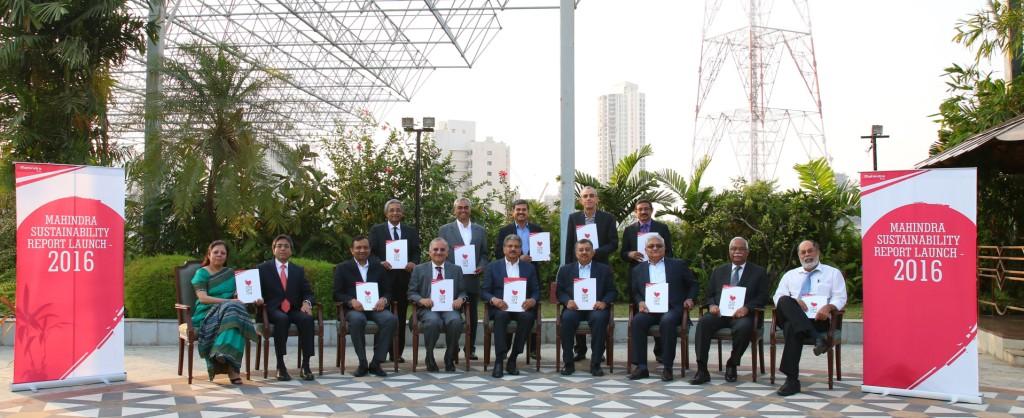
The post Mahindra Group launches its 9th Annual Sustainability Report – Shifts sustainability narrative from conservation to rejuvenation appeared first on Core Sector Communique.
]]>The post USV Limited supports conservation of wildlife habitat in Mumbai appeared first on Core Sector Communique.
]]> Sponsors Sunjoy Monga’s book “Mumbai Safari” as part of its CSR initiative on environment protection
Mumbai, July 16, 2014: USV Limited, under its CSR programme, has initiatives for the environment and women empowerment. The CSR initiative is led by the company’s Chairperson, Mrs. Leena Gandhi Tewari.
As part of its environment protection programme, the company, under the ‘Flora and Fauna’ initiative, has sponsored a book by well known environmentalist, Sunjoy Monga titled “Mumbai Safari” – Nature in the Extreme. This book explores the incredible wealth of biodiversity across a range of habitats within and immediately around one of the world’s most congested urban regions.
The book was launched by Leena Tewari and Prashant Tewari, Managing Director, USV Ltd in the presence of Praveen Pardeshi, Principal Secretary, Revenue and Forests Department of Maharashtra. Also present were Homi R Khusrokhan President Bombay Natural History Society, Dr. Ramani Director Bombay Natural History Society, Padmabhushan awardee Mr Julio Ribeiro and Abodh Aras director of WSD.
Speaking on the launch, Leena Tewari, said, “Wildlife conservation as an issue is very close to my heart. In an urban city such as Mumbai, due to the rising infrastructure and population, urban biodiversity and habitat is severely affected. We believe that small steps such as awareness can be brought about through such books and may lead to developments that incorporate design and management strategies that can aid cities to conserve wildlife habitats.”

Sunjoy Monga said, “This book shows that Mumbai is a glorious realm of nature’s bounty and is a visual treat for any nature lover. I would like to thank USV Ltd for supporting me in my efforts to put together this book.”
Another CSR initiative by USV Ltd is the Dr. Susheela Gandhi Centre for Women – a Mumbai based institution dedicated to the empowerment of underprivileged women through the medium of dance. Mrs. Tewari started the centre with the sole objective of upliftment of women from the weaker sections of the society. The centre is specially meant for the physical, mental, spiritual and economical empowerment of women and girls so that they can be made strong, confident and be able to transform themselves into a good person and have a bright future in life.
The post USV Limited supports conservation of wildlife habitat in Mumbai appeared first on Core Sector Communique.
]]>The post Koffee with Khetan :System Restore appeared first on Core Sector Communique.
]]>after the mining is over, conservation and restoration of the natural environment is becoming a concern says Sumit Khetan
 Resource and mining companies are the favourite whipping boys for any crime whatsoever around the world nowadays. A case in point is the proposed new tax regime in Australia. The Australian government’s plan to impose a structural change to the taxation of the Australian resources sector will result in significant and disproportionate additional taxation on the industry and could well curb the large-scale, long-term investments required to develop Australia’s natural resources for the benefit of all Australians.
In an increasingly energy hungry world, the importance of resources cannot be over-emphasized. However, in the back of the mind is the latent fear that sooner than later these resources will become exhausted and that in our mad haste to grow, we are, in fact. paying scant regards to conservation and are only expediting our inevitable tryst with doomsday.
However, the biggest challenge to resource plays is today from a rainbow coalition of environmentalists who are screaming murder, their combined voice becoming shriller by the hour. Depleting natural resources, mindless mining, destruction of ecological balance, denigrating the forest cover, changing the face of nature …. the allegations are countless and growing everyday.
To be fair to the resource companies, they do adhere to the strict norms which all mining companies are subject to around the world. However, my personal feeling is that even this is not enough and that the companies should take on themselves, as ecologically and socially conscious citizens, the onus to do more.
Take the fact that all mining companies are expected to replace the material they mine out so that the Earth’s balance is maintained. They are also expected to ensure that the rehabilitation of the mined area takes place. They do these things religiously – in letter certainly and often in spirit too.
However, they can do a lot more. For example, the huge tracts of mining land can be used to harness the power of the sun and the wind to generate electricity which the companies can effectively use to offset their carbon footprint. Another innovative step forward will be to employ the displaced people, in any, to plant trees and aid the process of forestation, which too needs no elaboration.
The resource companies should set aside a certain predetermined amount of their profits, which should be utilized for such specific earth-friendly projects. Every year’s fund should be spread over three years which will ensure that progressively more amount of money will be available for the project and there will be a sense of purpose and direction as opposed to knee-jerk reactions that such projects normally are.
Resource majors like BHP Billiton, Rio Tinto, Xestrara, Coal India, and a host of others have the necessary wherewithal and the financial muscle to embrace such moves and can seize the opportunity to set the yardstick against which all such efforts will be measured in the future. Imagine a future world order, where companies may be mining fossil fuels, but their own requirements for energy is generated using green non-conventional sources –- that is clean development for you!
(Sumit Khetan is the CFO of the Concast Group and is an expert in overseas acquisitions and global financing. This particular piece had appeared in the May 2010 issue of the Core Sector Communique)
The post Koffee with Khetan :System Restore appeared first on Core Sector Communique.
]]>