Every year in India, approximately 123000 new cases of cervical cancer are diagnosed and 68000 women die from this deadly disease. Maximum numbers of cases occur in rural areas as compared to urban areas because of lack of awareness, knowledge and facilities to diagnose. Fortunately the incidence is decreasing but unfortunately it is still one of the most common cancer in Indian women, along with breast cancer.
Cervical cancer is a cancer arising from the lower narrow part of the uterus which is the entrance to the womb. It commonly presents as abnormal bleeding, which may be inter-menstrual or post-coital or post-menopausal .Seldom it does not cause any significant symptoms.
The cells lining the cervix undergo certain changes which may or may not proceed to full blown cancer. There is a strong correlation of HPV infection (human papilloma virus infection) with progression to cancer cervix. Almost all cases of cancer cervix are associated with prior HPV infection. The age group most prone is 35-55. It is rarely seen below 20 years. Although 20% cases are above 65 years of age.
HPV infections are of two types- low risk and high risk. There are nearly about 120 types of HPV of which many are “low risk” types. Low risk infections usually do not progress to cancers. They can, however, cause genital warts or very minor cell changes in the cervix. There are more than a dozen types of “high-risk” HPV that can cause abnormal cells to form on the cervix. Types 16 and 18 are the most dangerous, since they cause about 80-90 percent of cervical cancers of total. In one study, the National Cancer Institute found that about 10 percent of women with HPV type 16 or 18 developed advanced, pre-cancerous cervical disease within three years, and 20 percent did so in 10 years.
High risk infections can be detected on routine screening like PAP smear, HPV DNA testing and by colposcopy. They often present as lesions on the cervix like cervical erosions which can be treated by cryocautery, electrocautery or LEEP. For prevention of HPV infection, two vaccines are available- injections Gardasil and injection Cervarix. Both vaccines target HPV 16 and 18 which are the high risk HPV strains. All girls and women between ages 13 to 45 are advised to meet their gynecologist and go in for the vaccination.
Lower age of sexual exposure and multiple sexual partners are definitely responsible for HPV infections and progression to cervical cancer. Lower age at first pregnancy and long term use of oral contraceptives also contribute to risk factors. Low socio- economic status, low education, smoking, exposure to DES in the mother’s womb are also linked to cancer cervix. A person affected with HIV infection is 5 fold more at risk of cancer cervix.
Detection of cancer cells can be done by conventional PAPs screening/ Liquid cytology + HPV testing. This is usually done by an experienced gynecologist. Once the cancer cells are detected the next step is the staging of cancer. This depends on the size of tumor, depth of spread and spread to lymph nodes. Also spread to distant and neighboring organs is looked into. Treatments offered are surgery + radiotherapy + Chemotherapy. In advanced cases we offer targeted therapy where treatment is customized to make the rest of the patient’s life comfortable.
Case Study:-
A 32 year old lady had come to us with complaints of persistent discharge and post coital bleeding. She had large cervical erosion for which she was advised hysterectomy by gynecologists. We examined the patient, did PAP smear, HPV testing and Colposcopy directed biopsy of cervix. She was diagnosed to have cervical intra-epithelial neoplasia I( CIN I) with high risk HPV infection. After antibiotics course, Cryotherapy was done to cure her erosion. Patient was kept under observation and repeated PAP smears and HPV testing were done. She is now symptom free and her PAP smears and HPV testing are normal.
 Dr. Shruti Bhatia, is a caring, skilled professional, dedicated to simplifying what is often a complicated and confusing area of health care. She is a certified Gynecologist, with over 15 years of experience in the field. Having got her MD – Obstetrics & Gynaecology from Kasturba Hospital, Delhi, she went on to get her DNB (Obstetrics & Gynaecology ) from the same hospital. She is currently associated with Action Cancer Hospital in Paschim Vihar, Delhi and is one of the most popular Gynaecologists of the area. Her services include: Management of surrogacy, Caesarean Section procedure, contraceptive advice, and treatment of Gynae problems, Hpv Vaccination and the treatment of menopause-related issues. She also holds professional memberships at Association of Obstetricians & Gynecologists of Delhi (AOGD), Association of Gyne Oncologists of India (GOI) and Indian Society of Colposcopists and Cervical Pathology (ASCCP). She also advises upon the treatment of menstrual problems and female sexual problems. She goes the extra mile to ensure that her patients are fully comfortable and are aware of the treatments. Dr. Shruti Bhatia makes sure that her patients are fully aware of the treatments meted out to them and goes the extra mile in educating them. Her consulting fees are INR 800 at the Action Cancer Hospital in Paschim Vihar, Delhi. If you are in Delhi, you can book an online appointment with her.
]]>
 Etymologically the term Oncology originates from the Greek word ὄνκος (ónkos), meaning “tumor”, “volume” or “mass”. Oncology is that branch of medicine that deals with the prevention, diagnosis and treatment of cancer. A medical professional who practices oncology is an oncologist.
While cancer is an affliction that is perhaps as old as humanity itself, the dread that is normally associated with the term has been arrested to a very great extent by advancements in the study and practice of oncology. The three major components that have improved survival in cancer are:
- Prevention – by reduction of risk factors like tobacco & alcohol consumption
- Early diagnosis – by screening of common cancers , comprehensive diagnosis and staging
- Treatment – by Multimodality management – seeking the inputs of cross discipline specialists by discussion in tumour board and treatment in specialised cancer centres
The modern trends point to the fact that cancers are best managed by discussing in multi-disciplinary tumour boards where specialists from the fields of medical oncology, surgical oncology, radiation oncology, pathology, radiology and organ specific oncology meet to find the best possible management for an individual patient considering the physical, social, psychological, emotional and financial status of the patients.
Another point that needs to be stressed at the very onset is the importance for the oncologists to keep themselves abreast of the latest trends in oncology. This is borne about by the facts that cancer cells are in a constant process of mutation requiring newer and more pronounced treatments. Besides, as there can be no standardized treatment for cancer across the board, specific steps have to be taken in each particular case to address, attack and mitigate the spread in individual patients.
The field of oncology has three major areas: medical, surgical, and radiation.
- A medical oncologist treats cancer using chemotherapy or other medications, such as targeted therapy.
- A surgical oncologist removes the tumor and nearby tissues during an operation. He or she also performs certain types of biopsies.
- A radiation oncologist treats cancer using radiation therapy.
However, there are other types of oncologists as well depending on their areas of super specialisations:
- A gynecologic oncologist treats gynecologic cancers, such as uterine cancer and cervical cancer.
- A pediatric oncologist treats cancer in children. Some types of cancer occur most often in children and teenagers, such as certain brain tumors, leukemia, osteosarcoma, and Ewing’s sarcoma.
- A hematologist-oncologist diagnoses and treats blood cancers, such as leukemia, lymphoma, and myeloma.
Cancer in Numbers
- One woman dies of cervical cancer every 8 minutes in India.
- For every 2 women newly diagnosed with breast cancer, one woman dies of it in India.
- As many as 2,500 persons die every day due to tobacco-related diseases in India.
- Smoking accounts for 1 in 5 deaths among men and 1 in 20 deaths among women, accounting for an estimated 9,30,000 deaths in 2010.
- Estimated number of people living with the disease: around 2.5 million
- Every year, new cancer patients registered: Over 7 lakh
- Cancer-related deaths: 5,56,400
- Deaths in the age group between 30-69 years: Total: 3,95,400 (71% of all cancer related deaths) Men: 2,00,100; Women: 1,95,300
- Cancers of oral cavity and lungs in males and cervix and breast in females account for over 50% of all cancer deaths in India.
The top five cancers in men and women account for 47.2% of all cancers; these cancers can be prevented, screened for and/or detected early and treated at an early stage. This could significantly reduce the death rate from these cancers.
Oncology Terms
Various terms are used when referring to different types of cancers, their spread, potential dangers and probable treatments. While we come across such terms randomly and use them with little or no knowledge in general, awareness about them is a basic necessity, if only to comprehend the gravity of the situation. While the list is by no means a definitive one, we have sought to explain a few basic terms in the most rudimentary sense for the benefit of the readers.
Acute: symptoms that start and worsen quickly but do not last over a long time.
Benign: a tumor that is not cancerous.
Biopsy: The removal of a small amount of tissue for examination under a microscope. Only a biopsy can make a definite diagnosis.
Cancer: A group of more than 100 different diseases that can begin almost anywhere in the body, characterized by abnormal cell growth and the ability to invade nearby tissues.
Carcinoma: Cancer that starts in skin or tissues that line the inside or cover the outside of internal organs.
Chemoprevention: The use of natural, synthetic or biologic substances to reverse, slow down, or prevent the development of cancer.
Chemotherapy: The use of drugs to kill cancer cells.
Chronic: a disease or condition that persists, often slowly, over a long time.
Imaging test: A procedure that creates pictures of internal body parts, tissues, or organs to make a diagnosis, plan treatment and observe
In situ: In place. Generally Cancer that has not spread to nearby tissue, also called non-invasive cancer.
Invasive cancer: Cancer that has spread outside the layer of tissue in which it started and has the potential to grow into other tissues or parts of the body, also called infiltrating cancer.
Leukemia: A cancer of the blood. Leukemia begins when normal white blood cells change and grow uncontrollably.
Localized cancer: Cancer that is confined to the area where it started and has not spread to other parts of the body.
Lymph nodes: Tiny, bean-shaped organs that help fight infection.
Lymphatic system: A network of small vessels, ducts, and organs that carry fluid to and from the bloodstream and body tissues. Through the lymphatic system, cancer can spread to other parts of the body.
Lymphoma: A cancer of the lymphatic system. Lymphoma begins when cells in the lymph system change and grow uncontrollably.
Malignant: Refers to a tumor that is cancerous. It may invade nearby healthy tissue or spread to other parts of the body.
Mass: A lump in the body.
Metastasis: The spread of cancer from the place where the cancer began to another part of the body. Cancer cells can break away from the primary tumor and travel through the blood or the lymphatic system to the lymph nodes, brain, lungs, bones, liver, or other organs.
Pathologist: A doctor who specializes in interpreting laboratory tests and evaluating cells, tissues, and organs to diagnose disease.
Polyp: A growth of normal tissue that usually sticks out from the lining of an organ, such as the colon.
Precancerous: Refers to cells that have the potential to become cancerous. Also called pre-malignant.
Predisposition: A tendency to develop a disease that can be triggered under certain conditions.
Primary cancer: original cancer.
Prognosis: Chance of recovery; a prediction of the outcome of a disease.
Sarcoma: A cancer that develops in the tissues that support and connect the body, such as fat and muscle.
Screening: The process of checking whether a person has a disease or has an increased chance of developing a disease when the person has no symptoms.
Secondary cancer: Describes either a new primary cancer (a different type of cancer) that develops after treatment for the first type of cancer, or cancer that has spread to other parts of the body from the place where it started.
Stage: A way of describing cancer, such as where it is located, whether or where it has spread, and whether it is affecting the functions of other organs in the body.
Tumor: A mass formed when normal cells begin to change and grow uncontrollably. A tumor can be benign (noncancerous) or malignant (cancerous, meaning it can spread to other parts of the body).
The piece was originally written for the Express Health Guide 2016.
]]>Smear Don’t Fear initiative returns with free specialist consultations and Pap tests; 1.82 million UAE-based women at risk of developing cervical cancer

Dubai, UAE, 2 May, 2016: His Excellency Humaid Al Qatami, Chairman of the Board and Director-General of the Dubai Health Authority, inaugurated today Zulekha Hospital’s cervical cancer screening and prevention campaign aimed to promote early detection and save lives across the UAE.
According to a February 2016 report by the HPV Information Centre, an international cervical cancer data compiling institute supported by the World Health Organisation and the European Commission, as many as 1.82 million female UAE residents are at risk of developing cervical cancer.
Developed for the third consecutive year, the ‘Smear, Don’t Fear’ campaign is one of Zulekha Hospital’s key CSR initiatives, stressing the importance of regular checks for early detection and educating the wider public about the cervical cancer vaccine that can eliminate the disease.
This year’s campaign, run under the theme “Today is the Day,” was launched during a press conference featuring prominent doctors and global cancer campaigners, highlighting the need for urgent action following the dramatic rise of cervical cancer in the UAE.
During the launch ceremony His Excellency Humaid Al Qatami said that such public awareness campaigns are vital for disease prevention and health promotion.
“This is the third time we’re extending our support to Zulekha Hospital in their effort to spread the message that cervical cancer can be easily prevented and effectively cured, if detected in the early stages. Such public awareness campaigns are vital to educate the community about preventive healthcare and screening,” he said.
Speaking on the occasion were also Dr Layla Mohamed Al Marzouqi, Director of DHA Health Regulation & Dubai Medical Tourism Project, and Mrs Neeta Bhushan, Deputy Chief of Mission & Head of Chancery, Embassy of India, along with leading gynaecology specialists from Zulekha Hospital.
Addressing the audience via video link from the United States was Dr Pamela Munster, renowned cancer expert from the University of California in San Francisco, widely regarded as one of the world’s leading universities in health sciences.
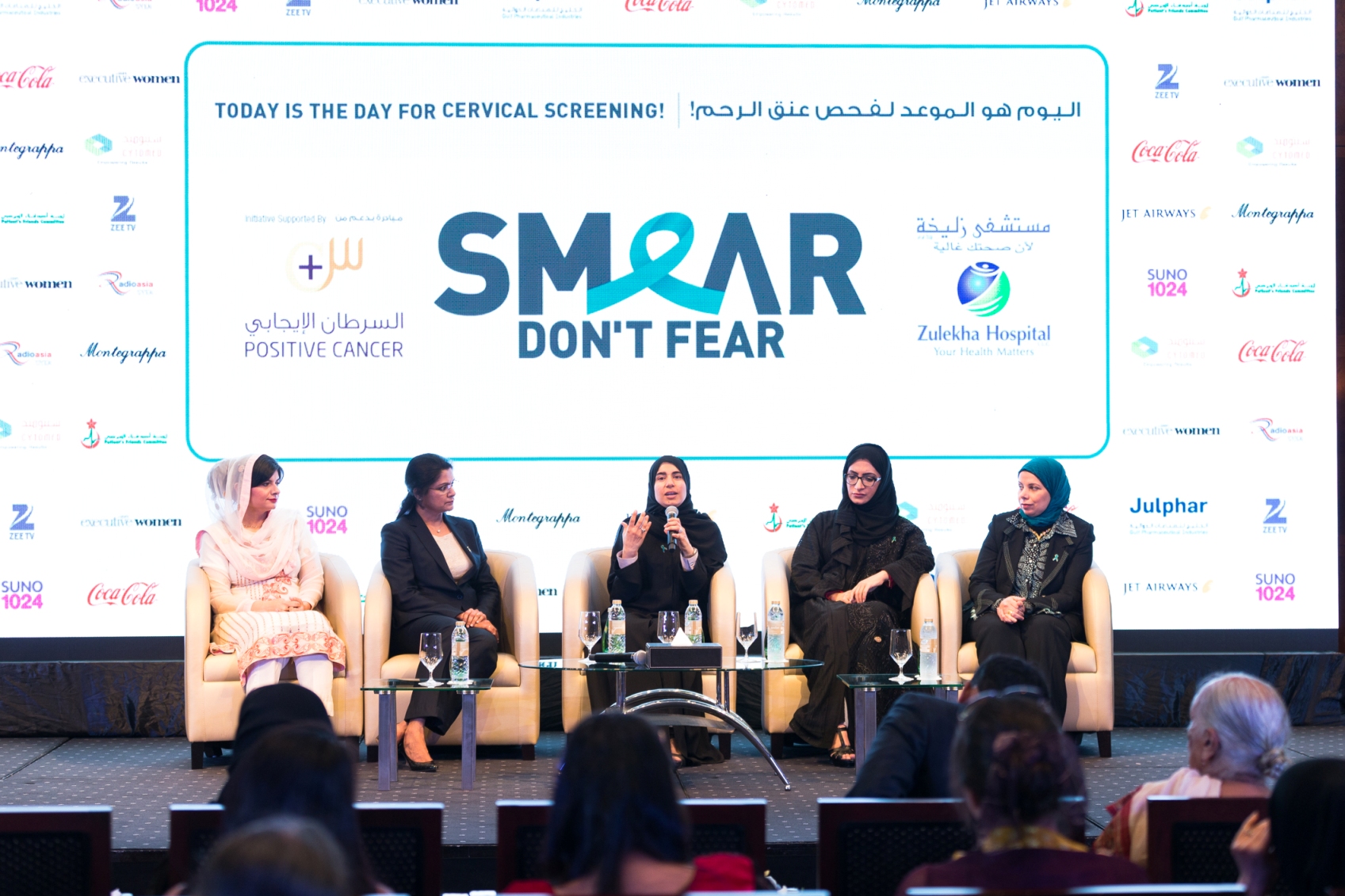
Annually, cervical cancer affects as many as 93 women in the Emirates with 28 fatal cases on average, but regular screening can effectively prevent the disease. As part of the new campaign, women in the UAE can take advantage of free specialist consultations and Pap tests at Zulekha Hospitals in Dubai and Sharjah from now until 31 August.
Zanubia Shams, Co-Chairperson of Zulekha Hospitals said: “Worldwide statistics list cervical cancer as the second most common cancer among females between 15-45 years of age and we want to highlight both the risk of the disease and the importance of regular checks.”
“The main objective behind our initiative is to educate women about the symptoms, risks and prevention as cervical cancer is the second most common cancer affecting hundreds of thousands worldwide. More than 92% of those diagnosed in the early stages can, however, be successfully cured.”
The disease is caused by the human papillomavirus (HPV) and the campaign’s long-term goal is to permanently eradicate the incidence of cervical cancer in the UAE by promoting and implementing a country-wide HPV vaccination initiative. The vaccine is recommended for both boys and girls under the age of 13 and can prevent most cases of cervical cancer if given before a female is exposed to the virus, according to United States Centres for Disease Control and Prevention (CDC).
Dr Pamela Munster said: “Last year, the Smear Don’t Fear campaign at Zulekha Hospital saw 475 women receive free consultations and free Pap tests. These figures show us that awareness initiatives of this kind do make a difference and are helping to eradicate a cancer that can be prevented. This year, we are urging the UAE public that today is the day to act. Making an appointment today is the first step.”
The campaign is supported by valued partners including Positive Cancer, Patient’s Friends Committee, Montegrappa, Jet Airways, Cytomed, Coca Cola, Julphar Pharmaceuticals alongside media partners Executive Women magazine, Zee Networks, Radio Asia and Suno 1024.
]]> Cervical cancer infection rate in UAE is 7.4 per 100,000 women
January 19, 2016
Prime Hospital, a leading healthcare provider in the UAE, along with other prime medical centers across the country, will hold a nationwide cervical cancer awareness campaign as part of the activities for International Cervical Health Awareness Month. The campaign, which will run until then end of the month, aims to increase awareness about cervical cancer as well as promote women’s health and reduce deaths from the highly curable disease in the UAE.
Cervical cancer is one of the most common gynecologic diseases affecting women’s reproductive organ along with ovarian, uterine, vaginal, vulvar, and the very rare fallopian tube cancers. The rate of cervical cancer infection in the UAE is 7.4 per 100,000 women from ages 35 to 55. Survival rate is more than 92 per cent if diagnosed and treated early.
Dr. Jamil Ahmed, Managing Director, Prime Healthcare Group, said: “Cervical cancer is the easiest gynecologic cancer to prevent through regular screening tests and follow-up. Unfortunately, many still succumb to the disease because it is discovered at the late stage. We hope to significantly reduce the mortality rate in the UAE by spreading public awareness, especially among women, on the importance of regular check-ups and early detection in our bid to help protect themselves from this type of illness.”
“The awareness campaign will focus on various areas so we can educate women on who are at risk. We will discuss when they should undergo cervical cancer test and what raises women’s chance of acquiring the disease. Our teams will also give them expert advice on how to prevent cervical cancer and the next steps to take if they are diagnosed. We invite the public to take part in our campaign as we look forward to helping them achieve good health,” Dr. Ahmed.
As part of the campaign, free health check-ups, gynecology consultations, and Pap smear tests will be extended to all registered individuals. A 15 per cent discount on human papillomavirus (HPV) vaccines will also be available for those who are interested to avail of this service. For registration, visit www.primehealth.ae.
HPV, the main cause of cervical cancer, is a common virus that is passed from one person to another during sexual intercourse. Usually HPV will go away on its own, but if it does not, it may cause cervical cancer over time. At least half of sexually active people will have HPV at some point in their lives, but few women will get cervical cancer.
Early on, cervical cancer may not cause signs and symptoms. Advanced cervical cancer may cause abnormal bleeding or discharge from the vagina such as bleeding after sexual intercourse. Pap smear and HPV tests can either help prevent cervical cancer or find it early.
]]>Dubai First and Dubai Ladies Club back initiative to encourage regular checks; women offered free specialist consultations, Pap tests



Dubai, UAE, 18 May, 2015: Zulekha Hospital, a pioneer in UAE healthcare, is spearheading a new cervical cancer screening and prevention initiative to help reduce the incidence of the disease and save lives across the Emirates.
The ‘Smear, Don’t Fear’ campaign has been developed by Zulekha Hospital with the active support of the Dubai Ladies Club and leading consumer finance company Dubai First as part of their CSR support targeting women between the age group of 35-65 years.
While this is the high-risk group, cervical cancer can affect anyone over 25 years and the risk of the disease, as well as the importance of regular checks for early detection were highlighted at today’s official launch press conference by eminent doctors and cancer campaigners.
They included Dr Pamela Munster, renowned cancer expert from the University of California in San Francisco, widely regarded as one of the world’s leading universities in health sciences; Dr. Layla Mohamed Al Marzouqi, Director of DHA Health Regulation and Dubai Medical Tourism Project; Huda Abdalla, Board Member of Dubai First & Chairman of Women Advisory Committee ; Lamia Abdulaziz Khan, Director of Dubai Ladies Club; and Zanubia Shams, CEO of Zulekha Hospital, along with leading gynaecology specialists from Zulekha Hospital.
“The key message of the new campaign is to remind young professionals of the importance of smear tests and show that together we can help prevent cervical cancer if the disease is identified at an early stage,” said Zanubia Shams.
The prime objective behind the new initiative is to educate women about the symptoms, risks and prevention of the second most common cancer affecting hundreds of thousands worldwide, as more than 92% of those diagnosed in the early stages can be successfully cured.
From now until 31 August, women can take advantage of free specialist consultations and Pap tests at Zulekha Hospitals in Dubai and Sharjah.
As part of a larger and ongoing outreach initiative, men are encouraged to support or even accompany their female friends and family members to the clinics when the women are tested for the HPV virus which can cause cervical cancer. The campaign also urges everyone to wear a cervical cancer campaign ribbon to show support and help create awareness about the disease.
Dr Pamela Munster said: “Early detection means it is possible for the majority of cases to be cured, and we want to also help to remove the stigma that is sometimes associated with the disease as it only impacts sexually active women. Our goal is encourage women to have regular checks at their local clinic at least every three to five years.”
The long-term goal of the campaign is to implement a population-wide vaccination drive to permanently rid the UAE of cervical cancer. Since women do not report any noticeable symptoms until after the cancer has invaded the surrounding organs or spread to the lungs, detecting the virus early is crucial.
Speaking at the campaign launch Ms. Huda Abdalla, said, “This is a fantastic initiative and Dubai First is delighted to be associated with Zulekha Hospital for this noble cause. Awareness campaigns play a vital role in educating women about the success rate of early detection of cancer. We will be working closely with Zulekha Hospital to ensure that this is a long-term initiative that generates a real impact on women and families across the UAE, which complements our CSR programme and efforts to contribute to the community.”
Lamia Abdulaziz Khan, commented: “Women tend to ignore their health, which is why Dubai Ladies Club has always been committed to helping raise awareness about the importance of regular health exams and tests that can help find problems before they start.
“By getting the right health services, screenings, and treatments, you are taking steps that help your chances for living a longer, healthier life. We are delighted to support this initiative by Zulekha Hospital that is making our community a healthier place.”
Dr. Layla Mohamed Al Marzouqi, said: “Awareness about cervical cancer is critical for early detection and to help save lives. Initiatives such as this encourage women to go for annual screenings and re-emphasise the importance of regular screening and early detection.”
Zulekha Hospital is strengthening its capability to treat patients suffering from cancer in Dubai and the Northern Emirates through the construction of a AED200 million centre for advanced specialised oncology treatment.
Staffed by specialists including radiation oncologists, physicists, and radiation therapists and managed as a centre of excellence for cancer care and research, the new Dubai facility is scheduled to open in early 2017.
]]>-A series of Women Empowering Talks was organized by AAS







8th November 2014, New Delhi: – Virendra Kumar Goel (Convener) AAS NGO organized an interactive session on Cervical Cancer with Dr. Anshuman Kumar – Director; Asian Center & Chief Cancer Surgeon; Asian Institute of Medical Sciences, Rita Gangwani – Personality Development Mentor.
As part of the interactive session, women were educated about the prevention and cure of Cervical Cancer. All the participants were encouraged to pledge to do their part to prevent cervical cancer by scheduling an annual gynecologic exam. Women who t0ok the pledge can also opt to receive an annual reminder to schedule an annual exam.
“During the session in order to spread awareness for Cervical Cancer Dr. Anshuman Kumar – Director; Asian Center & Chief Cancer Surgeon; Asian Institute of Medical Sciences said, it is critical that women take time to learn about cervical cancer and understand that this disease is preventable,” He added “With cervical cancer, women hold their destinies in their own hands. Women who take the pledge are therefore making a promise to protect their health by getting an annual exam and asking their doctor about cervical cancer screening.”
“The main focus for organizing the session is to spread the awareness about the increasing risk of Cervical cancer in India, as a team of believers our NGO, AAS thinks that small beginnings can initiate a big change and the world can be transformed into a beautiful place to live”, says Varsha Goel – President, AAS NGO.
The Occasion was marked by TV Stars: – Neha Sargam – from serial Chand Chupa Badal Mein, Ekta Tiwari from serial Tere Mere Sapne, Richa Sony – from Serial Bhagyavidhata, Aanchal Khurana – from serial Sapne Suhane ladakpan ke, Sanvi Talwar from O Gujariya and Shiju Kataria – from serial Behnein
About AAS
AAS is a registered nonprofit organization that strives to address social issues by spreading Attitudinal Awareness in Society. As a part of its flagship Cervical Cancer Awareness initiative, team AAS has successfully organized over 70 large scale drives, Seminars and events collaborating with hospitals, PSUs, member clubs, resident welfare associations and other partner NGO’s impacting the lives of over 1,50,000 women in the Delhi/NCR region. Furthermore, with a view to provide knowledge for all, AAS has recently launched another initiative called ”Brilliant India” – focusing on providing counseling as well as financial assistance to underprivileged children.
This fund raiser is an attempt by AAS to bring hope and smile in the life of many women who are suffering from this deadly disease and have no means to come out of it on their own
]]>
 The careHPVTM Test is the first HPV diagnostic designed for regions with limited healthcare infrastructure, complementing QIAGEN’s market-leading digene HC2 HPV Test
- Commercial launch of careHPV Test in India enables high–quality screening for prevention of cervical cancer among women in low-resource areas
- The careHPV Test plays an important role in QIAGEN’s Corporate Social Responsibility effort around the world, especially in low-resource areas
India, February 26, 2014 — QIAGEN N.V. today announced the commercial launch in India of its careHPVTM Test, the only molecular diagnostic for high-risk human papillomavirus (HPV) designed to screen women in settings with limited healthcare infrastructure, such as areas lacking electricity, water or laboratories. HPV is the primary cause of cervical cancer in women, so screening for the viral infection is a powerful strategy for prevention and early treatment of the deadly cancer. The careHPV Test was launched commercially in China in 2013 and has been used in several other countries, including as part of QIAGEN’s corporate social responsibility effort, QIAGENcares.
The careHPV Test for low-resource settings is highly complementary with QIAGEN’s digene HC2 HPV Test, the world’s most validated and sensitive diagnostic test for detection of high-risk HPV. The digene HC2 HPV Test is recognized as the “gold standard” in HPV screening and is widely used in developed countries and in large cities in emerging markets.
About 72,000 women in India die of cervical cancer each year, more than one-fourth of the world’s 270,000 annual deaths. In India, cervical cancer accounts for about 20% of all cancer-related deaths in women and is the number one cause of death in middle-aged Indian women.
“The launch of careHPV in India will help in efforts to reduce the high burden of cervical cancer for women in India,” said Dr. Victor Shi, President of QIAGEN Asia Pacific. “With the digene HC2 HPV Test serving areas that have modern healthcare infrastructure and the careHPV Test serving low-resource areas, QIAGEN is expanding our role as the global leader in preventive screening for cervical cancer and continuing to contribute to women’s health around the world.”
Dr. Partha Basu, Head of the Department of Gynecological Oncology and Officer In Charge, Division of Preventive Oncology, Chittaranjan National Cancer Institute, noted the importance of the two-tiered approach to screening: “Based on the findings of the screening project that we have been doing for four years in Kolkata and surrounding areas, there is a need for a cost-effective and easy-to-use test which can best meet the requirements of low-resource settings. Availability of the careHPV Test is an important step forward for the prevention of cervical cancer in India.”
QIAGEN’s robust, portable and easy-to-use careHPV Test combines the power of advanced molecular technologies with innovative design and features. For example, the system has color-coded, easy-to-understand menus and self-contained reagents. The test tolerates temperature variations that occur in rural clinics lacking refrigeration for sample storage due to limited electricity or water, and can provide results much faster. The careHPV Test was developed with support from PATH, an international nonprofit organization, and is manufactured by QIAGEN in Shenzhen, China.
The careHPV Test already plays an important role in QIAGENcares, QIAGEN’s collaborations with NGOs and governments in which it helps expand access to high-quality cervical cancer screening in resource-poor regions. For example, tests for cervical cancer have been conducted on women in El Salvador using the careHPV Tests since 2012. The test will also be used in other countries, including Vanuatu.
Also as part of QIAGENcares, QIAGEN and the Chittaranjan National Cancer Institute (CNCI) started a five-year-program in 2010 to provide cervical cancer screening with the digene HC2 HPV Test to 50,000 women in rural West Bengal. Screening is facilitated through mobile field clinics. This project has screened more than 36,000 women to date and has detected 216 cases of High Grade Squamous Intra-epithelial Lesions (HSIL) and 52 cases of cervical cancers. Most of the cervical cancers were at early treatable stages, and more than 90% of these patients have been treated at CNCI. In addition, many doctors and community-based healthcare workers have been trained in HPV screening. This project is the first HPV based screening project in India, demonstrating program aspects and successful implementation with clear deliverables.
Cervical cancer is the second most common cancer among women worldwide, and research has shown that 80% of new cases and deaths occur in developing countries, where awareness of the disease and access to preventive tests and medical treatment is low. In many low-resource areas, cervical cancer has eclipsed breast cancer as the primary cancer killer of women.
About QIAGEN
QIAGEN N.V., a Netherlands holding company, is the leading global provider of Sample & Assay Technologies that are used to transform biological materials into valuable molecular information. Sample technologies are used to isolate and process DNA, RNA and proteins from biological samples such as blood or tissue. Assay technologies are then used to make these isolated biomolecules visible and ready for interpretation. QIAGEN markets more than 500 products around the world, selling both consumable kits and automation systems to customers through four customer classes: Molecular Diagnostics (human healthcare), Applied Testing (forensics, veterinary testing and food safety), Pharma (pharmaceutical and biotechnology companies) and Academia (life sciences research). As of December 31, 2013, QIAGEN employed approximately 4,000 people in more than 35 locations worldwide. Further information can be found at www.QIAGEN.com/
]]>