The post airlines and airports are investing in biometrics to deliver a seamless passenger journey appeared first on Core Sector Communique.
]]>SITA CEO says collaboration is key to deliver secure and easy travel
INDIA – 27 September 2018 – Airlines and airports are investing to deliver secure and easy travel for passengers, with biometric technology a key priority. This is according to research released today by global IT provider SITA. The SITA 2018 Air Transport IT Insights show how biometrics are being incorporated into the evolution of self-service at the world’s airports. Over the next three years, 77% of airports and 71% airlines are planning major programs or R&D in biometric ID management.
Barbara Dalibard, CEO, SITA, said: “Secure and seamless travel is a must for the air transport industry. It is encouraging to see that both airlines and airports are investing in biometric technology to deliver a secure, paperless way to identify passengers across multiple steps of the journey. We have already seen great success where we have implemented it at airports across the world.

“As the research shows, integration causes challenges and the variety of legislative demands can be daunting for airlines and airports. To deliver a seamless passenger experience, we must all collaborate – airlines, airports, governments and industry suppliers – and use technology to automate, and even eliminate, tedious processes. We achieve the best results when we work together, this has been most apparent when we incorporate secure biometrics into the passenger journey.”
SITA already delivers identity management solutions, including biometric systems, that eliminate the need for manual checks. These improve the passenger experience while helping airlines and airports across the world meet the variety of regulations from Governments and border agencies. The most common of these is identity verification at self-service check-in kiosks. This is already in use at 41% of airports and 74% have plans to deploy the technology by the end of 2021. Self-boarding gates using biometrics with ID documentation, such as a passport, are also set to become commonplace over the next three years, with 59% of airports and 63% of airlines expecting to use them.
SITA’s research shows that the industry faces some challenges for the full adoption of biometrics for passenger identity checks. More than one third of airlines cite integrating the tools and technologies at airports, and a lack of standards for processes and technologies for integrating checks, as the major challenges. For airports, the situation is similar, though 39% of them say meeting government and legislative requirements is also a major challenge.
Airlines and airports are also considering new technologies for passenger identity management. One example is blockchain; 40% of airlines and 36% of airports believe the main benefit that blockchain can provide is to streamline this process, for example by reducing the need for multiple ID checks.
Overall, investment in technology is rising. SITA’s research shows investment by airlines over the past two years has been stable but future predictions for both operating and capital spend are very strong in 2018 with a forecast of 3.67% IT spend as a % of revenue. Airport spend will be strong too, with a forecast of 5.69% of revenue for this year.
Airlines are also investing in new technologies which offer them strategic and operational benefits. Artificial intelligence (AI) is seen as beneficial across a range of airline operations with 84% of airlines planning to have major or R&D programs in place by 2021. This is up from 52% in last year’s survey. Airports too are investing in AI with 61% planning a major program or R&D over the next three years, up from up from just 34% in 2017.
While both airlines and airports are investing in AI, their uses are different. Airlines are looking at the potential of using AI for virtual agents and chatbots with 85% planning to use it here by 2021. Some 79% of airports are currently using, or planning to use, AI for predictive analysis to improve operational efficiency.
Dalibard added: “It is clear that the will of the industry is to change the way we travel by improving efficiency and making the passenger journey as secure and seamless as possible. This requires a concerted and aligned drive, true collaboration, and SITA is fully committed to this.”
SITA’s Air Transport IT Insights are well established as the global benchmark research for the air transport industry. Over 180 senior IT executives at the top airlines and airports, representing 39% of global airport and 27% of global airline passenger traffic took part in the 2018 research. The 2018 results once again provide a clear insight on the air transport industry’s IT strategic thinking and developments.
About SITA
SITA is the communications and IT solution provider that transforms air travel through technology for airlines, at airports and on aircraft. The company’s portfolio covers everything from managed global communications and infrastructure services, to eAircraft, passenger management, baggage, self-service, airport and border management solutions. Owned 100% by more than 400 air transport industry members, SITA has a unique understanding of its needs and places a strong emphasis on technology innovation.
Nearly every airline and airport in the world does business with SITA and its border management solutions are used by more than 40 governments. With a presence at more than 1,000 airports around the world and a customer service team of 2,000+ staff, SITA delivers unmatched service to more than 2,800 customers in more than 200 countries.
For further information, go to www.sita.aero
The post airlines and airports are investing in biometrics to deliver a seamless passenger journey appeared first on Core Sector Communique.
]]>The post Can Airlines and airports use smart contracts for shared control of data? SITA Lab publishes research findings appeared first on Core Sector Communique.
]]>
INDIA – 9 November 2017 – SITA Lab, the research team of the air transport industry’s IT provider SITA, today revealed the learnings from research it carried out with British Airways, Heathrow, Geneva Airport and Miami International Airport into ‘smart contracts’ residing on a blockchain.
Blockchain has been heralded as a transformational technology for many industries. While several use cases have been identified for the air transport industry, the opportunity of using ‘smart contracts’ for shared control of data by airlines and airports is one which promises real benefits. SITA Lab today issued FlightChain, a paper outlining the findings of its research conducted with its airline and airport partners.

The air transport industry is highly-connected and there is a need for ‘single source of truth’ for various data used by different stakeholders. Control of shared data is a key concern for all. Blockchain offers potential to share data in a controlled way. SITA recognizes, however, that there is a need for research so the industry can take the right approach, to ensure governance, standards, compliance, security and more.
This research project was initially established by SITA Lab with Heathrow Airport Holdings Limited (HAL) and International Airlines Group (IAG) with Geneva Airport and Miami International Airport participating. Called FlightChain, it was devised to investigate a single source of truth for flight data. The “flight data problem” is a well-known issue in the industry – namely, there is no single source of the truth and the data that does exist, is not easily accessed by all parties.
While there are many cases of airlines and airports collaborating to share flight data, this data still resides in separate silos. When there are flight delays, this results in differences between passenger apps, airport FIDS, airline agents. FlightChain ensures all stakeholders have the same information.
Jim Peters, CTO, SITA, said: “Our FlightChain project has demonstrated that blockchain is a viable technology to provide a single source of truth for data for airlines and airports, specifically for real-time flight information. While there are other technologies available for sharing data, the use of blockchain, and smart contracts in particular, provides ‘shared control’ and improves the trustworthiness of the data. This research with our partners shows the potential of blockchain for sharing data across the air transport industry.”
FlightChain was established as a private permissioned blockchain (implemented on both Ethereum and Hyperledger-Fabric) that stores flight information on the blockchain, using a smart contract to arbitrate potentially conflicting data. British Airways, Geneva Airport, Heathrow and Miami International Airport provide flight data that is merged and stored on the blockchain. During this project more than two million flight changes were processed by the smart contract and stored on FlightChain.
Stuart Harwood, Heathrow Automation and Innovation, HAL, said: “Heathrow’s participation in FlightChain with SITA Lab has been very valuable. We are still early in the blockchain technology cycle and more research is required but FlightChain has shown the opportunities for shared control of data with our industry partners.”
Peters, added: “In a real-world network, it will be important to manage the changes to the smart contract as it affects all participants. Industry bodies such as ACI and IATA, working with SITA as the neutral IT provider to the air transport community, could be involved in the establishment of the contract. In fact, we can imagine a future where industry standards are written directly as smart contracts instead of published as PDF documents.”
Glenn Morgan, Head of Digital Business Transformation at International Airlines Group (IAG), said: “Now we’ve proven the technology, we are really excited by the opportunities that blockchain can create in the industry. We will work with IATA and ACI to ensure the best practices are in place.”
The research paper published today details key lessons learned regarding governance, smart contracts, system security and system performance, scalability and reliability. Along with a view on the use of public versus private blockchain networks for the air transport industry.
About SITA
SITA is the communications and IT solution provider that transforms air travel through technology for airlines, at airports and on aircraft. The company’s portfolio covers everything from managed global communications and infrastructure services, to eAircraft, passenger management, baggage, self-service, airport and border management solutions. Owned 100% by more than 400 air transport industry members, SITA has a unique understanding of its needs and places a strong emphasis on technology innovation.
Nearly every airline and airport in the world does business with SITA and its border management solutions are used by more than 30 governments. With a presence at more than 1,000 airports around the world and a customer service team of 2,000+ staff, SITA delivers unmatched service to more than 2,800 customers in more than 200 countries.
In 2016, SITA had consolidated revenues of US$1.5 billion. SITA’s subsidiaries and joint ventures include SITAONAIR, CHAMP Cargosystems and Aviareto.
For further information go to www.sita.aero
The post Can Airlines and airports use smart contracts for shared control of data? SITA Lab publishes research findings appeared first on Core Sector Communique.
]]>The post SITA CEO rallies airlines and airports in community fight against cyber threats appeared first on Core Sector Communique.
]]>
INDIA – 30 October 2017 – The air transport industry has cybersecurity as a top priority with 95% of airlines and 96% of airports investing resources into major cybersecurity programs or pilots over the next three years. Yet research released today from global IT provider SITA shows there is still room for improvement with only one third of boards at airlines, and a fifth at airports, having fully integrated cybersecurity into their business plans.

Speaking today at a gathering of European air transport industry leaders, Barbara Dalibard, CEO of SITA, highlighted that while cybersecurity is the number one priority for almost all airlines and airports, it demands more attention and must be higher on industry board agendas.
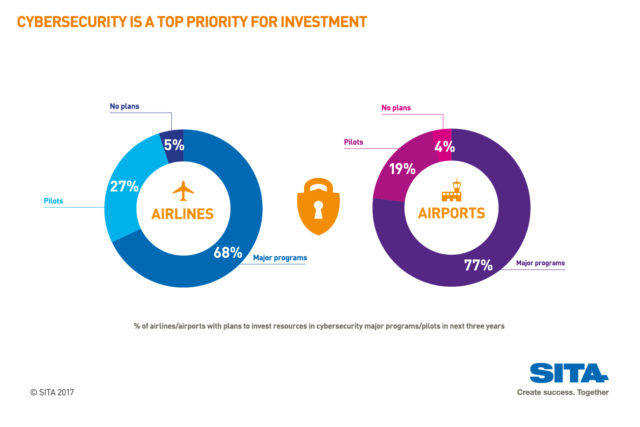
Dalibard said: “Recent global cyber attacks demonstrate the risks and the need for a proactive approach. The air transport industry is highly connected and reliant on partners. We must work as a community to fight the global threat to cybersecurity. While we are pleased to see a 46% increase in the number of airlines prepared to deal with major cyber threats over the past year, there is still more to be done. The industry should move from dealing with common cyber threats to being prepared for major ones. As the technology provider owned by industry members, SITA is committed to invest in, and lead, the community effort to maximize cybersecurity. Together we can ramp up the industry’s defenses and ensure we remain one step ahead of any threat.”

SITA has conducted in depth research into the level of cybersecurity maturity at airlines and airports in the fight against this global threat. The results show that there are very high levels of security awareness among staff at airlines (82%) and airports (85%). This year, beyond cybersecurity protection, the industry is focusing on threat detection and response management. Already CIOs at 69% of airlines and 47% of airports are implementing security events and correlation monitoring, while security incident response management is being put in place at 77% of airlines and 60% airports.

Dalibard added: “Airlines and airports are building their critical defenses and preparing to deal with common threats but we must all bring it to the highest level and integrate cybersecurity at executive and board level. Together we must identify, detect and react to cyber threats and protect the industry’s assets from attack.”
Having identified the challenge, SITA earlier this year partnered with Airbus to address the air transport industry’s distinct concerns and created a unique CyberSecurity Aviation Security Operations Center (SOC). It acts like a cyber-control tower with an integrated combination of processes, people and technology to detect, analyze, respond to, and report on cybersecurity incidents.

Markus Braendle, Head, Airbus Cybersecurity, said: “The air transport industry has unique cybersecurity challenges because of the varied and increasing use of smart end points across a largely distributed infrastructure. Digital transformation is enabling the air transport industry to deliver better services to its customers, but raising its threat exposure. Together SITA and Airbus CyberSecurity bring expertise and solutions to help airlines and airports monitor their digital assets to detect and respond to incidents.”
The SOC is part of a broader portfolio of SITA products and services that help airlines and airports identify threats and protect against, detect and respond to cyber-attacks.
SITA also operates the Community Cyber Threat Center, a security information sharing service run on behalf of SITA’s more than 400 air transport industry members. It enables actionable information on cyber threats to be shared in a timely manner among key industry stakeholders.
These initiatives are part of SITA’s commitment to lead the air transport community fight against cyber threats and to improve the integration of cybersecurity into business plans at board level at airlines and airports.
SITA’s 2017 Air Transport IT Trends Insights are available here.
The post SITA CEO rallies airlines and airports in community fight against cyber threats appeared first on Core Sector Communique.
]]>The post SITA solves the multi-merchant challenge for payment acceptance at airports appeared first on Core Sector Communique.
]]>First payment solution to support secure payments on common-use platforms now available
INDIA – 2017 Air Transport IT Summit – 24 May 2017 – SITA has launched the first payment solution which addresses the need for airlines to be able to accept payments securely at airports when using a shared IT infrastructure. SITA AirportConnect Common Use Payment Service enables payment transactions by multiple airlines on a single payment terminal. Importantly, this is possible with any, and all, of the departure control systems the airlines choose to use.

Airlines use common-use or shared IT infrastructure at airports around the world and this ground-breaking solution has been developed by SITA to support airlines that wish to accept payments at common-use check-in desks, kiosks and bagdrop areas for baggage fees, upgrades and other ancillary charges. SITA’s new solution uniquely combines point-to-point encryption (P2PE) technology, with Europay, Mastercard, Visa (EMV) and Payment Card Industry (PCI) compliant chip card payment terminals, applications and processes, to allow multiple merchants to use the same terminal while meeting PCI security standards.
SITA has implemented this service with a major European airline at a common-use airport where rigorous testing proved the effectiveness of the encryption technology for chip, magnetic stripe and contactless card payment transactions.
SITA’s common-use payment service meets the unique operational challenges of airlines. It allows airlines to share the same point of sale (PoS) and PIN entry devices (PEDs) at the airport, while continuing to use their preferred payment service providers and banks. This maximizes the benefits of the airline’s existing commercial relationships. Importantly, the service is also designed to minimize fraud risks by implementing encryption with EMV card readers and provides support for a secure payment solution aligned with credit card brand approvals.
Barbara Dalibard, CEO, SITA, said: “This new service, integrated with our SITA AirportConnect platform, allows airlines, airports and other air transport industry stakeholders to accept credit card payments in a common-use environment in line with Payment Card Industry standards. Our service features point-to-point encryption to provide a powerful, flexible solution for all stakeholders to ensure the protection of customer data.”
P2PE in SITA AirportConnect Common Use Payment Service delivers significant benefits including making account data unreadable by unauthorized parties. It “de-values” account data because it cannot be abused – even if stolen. In addition, P2PE can simplify compliance with PCI DSS (Data Security Standard) requirements for airlines and airports by reducing the number of addressable requirements during a PCI security assessment.
SITA AirportConnect Common Use Payment Service further enhances the community values that are central to common-use across the industry. It is the culmination of work with the International Air Transport Association (IATA) Common Use Working Group in collaboration with various payment industry leaders, including Verifone, Thales and Smart Technology Solutions.
Peter Galvin, Vice President Strategy at Thales e-Security said: “Thales’s extensive expertise and leadership in the payment security market, enriched by our long-standing partnerships with leading payments processing vendors, allows us to help innovators such as SITA deliver the high levels of performance and security required for payment processing.”
The payment terminals available as part of SITA’s service are capable of supporting PCI compliance requirements for an airline’s passenger credit card data handled through SITA’s CUTE/CUPPS/CUSS system. PCI compliance certification, however, still requires an end-to-end security review by each airline of its own full payment process.
Initially available for SITA AirportConnect workstations, the service will be rolled out to support SITA’s common-use kiosks and bagdrop stations over the coming months.
The post SITA solves the multi-merchant challenge for payment acceptance at airports appeared first on Core Sector Communique.
]]>The post SITA report outlines new technology to help airlines and airports predict future events appeared first on Core Sector Communique.
]]>Airlines and airports prepare to predict the future
SITA report outlines new technology to help airlines and airports predict future events

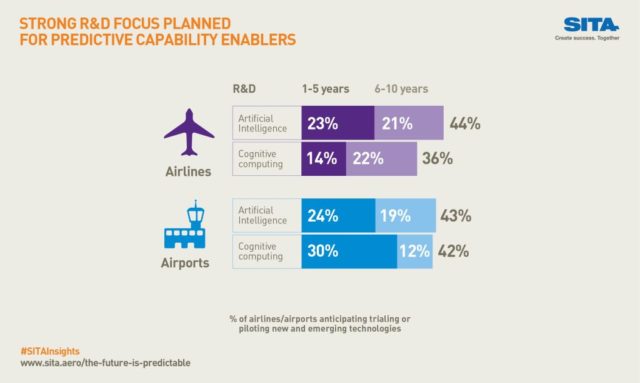
INDIA – 27 January 2017 – Airlines and airports are investing in technologies to help predict and prepare for future events. This is according to The Future is Predictable, a report published today by air transport IT provider, SITA. It outlines how efforts are being made to tackle the estimated US$25 billion[1] cost of flight disruptions to the air transport industry by harnessing artificial intelligence, cognitive computing, predictive analytics and other progressive technical capabilities.
SITA’s analysis reveals that predictive tools using artificial intelligence and cognitive computing are likely to be adopted by half of airlines and airports over the coming five to 10 years. However, a few front runners are already trialing predictive modeling, machine learning, and data mining. These efforts are mainly focused on initiatives that will provide passengers with more relevant information about their journey to create more seamless and personal experiences.
Nigel Pickford, Director Market Insight at SITA, said: “There is a desire to remove as much uncertainty as possible during travel. Airlines and airports are focusing on technologies that will make them more responsive to issues in their operations. This will enable them to improve their performance and customer services. At SITA we are funneling investment into specific research around disruption management. Our technology research team, SITA Lab, is currently developing disruption warning and prediction capabilities using industry-specific and public data feeds such as Twitter, to help tackle this huge challenge and reduce this tremendous cost to the industry.”
During 2017, SITA Lab will be validating delay predictions with airlines and airports and expects to complete up to five trials with its industry partners. The next stage will be to incorporate its delay prediction algorithm and disruption warning feeds into SITA’s services to the air transport industry.
In the report, leading airports and airlines share their experiences including Gatwick Airport where a seamless passenger experience from curb to gate is the goal. Here several different areas of airport activity are tracked to measure performance and move towards predicting it. Chris Howell, Head of Business Systems, Gatwick Airport, describing the work at Gatwick in this area, said: “We’ve moved from ‘how did we do?’ to ‘how are we doing?’ and can now also answer ‘how will we do?’”
As artificial intelligence develops the importance of maintaining the human touch is not lost on the airlines and airports. Indeed, the combination of people and artificial intelligence is described as transforming the travel experience. In a case study on European low cost carrier, easyJet, Alberto Rey-Villaverde, Head of Data Science, easyJet, said: “AI plus the human element is more powerful than AI alone.”
The science of artificial intelligence is developing quickly and airlines and airports are turning to the academic community to help them with predictive tools to tackle disruptions. SITA’s report discusses research that is being carried out with scientists from Binghamton University, State University of New York; University of Nottingham as part the European Union-funded consortium PASSME; Carnegie Mellon University; Oxford University’s Data Science Laboratory in the Mathematical Institute and University College London School of Management.
The Future is Predictable combines SITA’s global industry experience and studies with commentary and case studies from airports and airlines that are investing in the latest research and technologies. Those featured include: Gatwick Airport, easyJet, Brussels Airport Company, Delta Air Lines, Emirates, Denver International Airport, KLM and Meridiana along with industry perspectives from International Air Transport Association (IATA) and Airports Council International (ACI).
The post SITA report outlines new technology to help airlines and airports predict future events appeared first on Core Sector Communique.
]]>The post With Mahesh Lunch Home, CSIA now hosts the only sea-food restaurant across airports in India appeared first on Core Sector Communique.
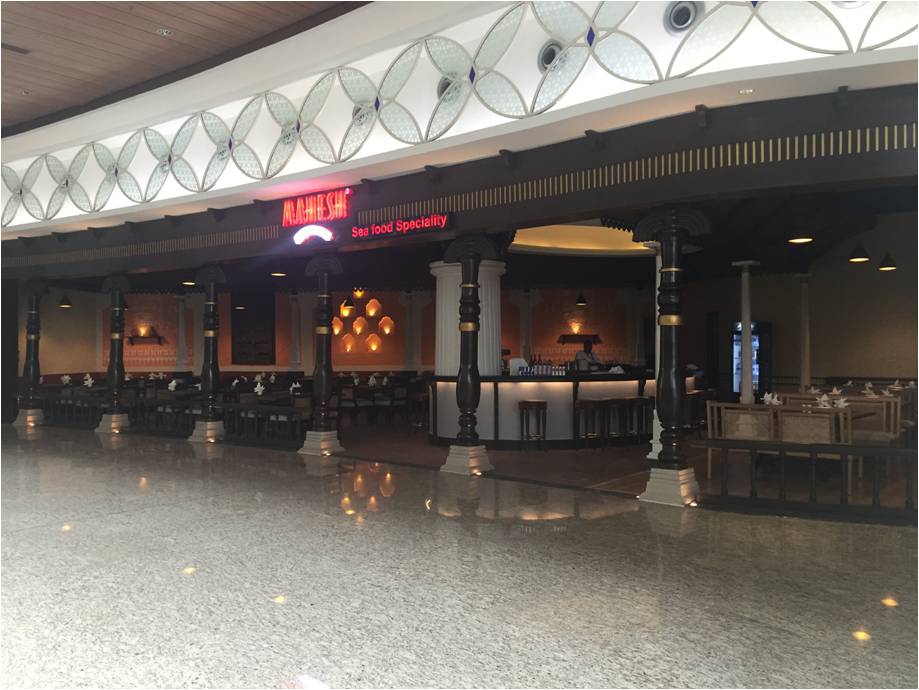
]]>Mumbai, September 02, 2016: To please the sea-food aficionados at the airport, Mahesh Lunch Home, the most trusted and renowned sea – food restaurant in the city opened its first and only outlet at any airport across India- at T2. The Mangalorean based restaurant chain offers an authentic sea-food experience, where travellers can enjoy the simple to the sumptuous coastal dishes, while transiting through Mumbai.

The only sea-food speciality restaurant at T2, Mahesh Lunch Home, spoils the travellers for choice with a variety of delicacies along with a guarantee of providing an exceptional ambience. Located at the international departures of the airport, the travellers, at this unique outlet, have the choice to sit in the ‘verandah’ – designed artistically with Rosewood and carved pillars, where mood lighting changes from day to night. Modelled after a ‘Nallu Kettu’, a typical single courtyard house, passengers can experience the exquisite coastal food from the city’s coastline while sitting in the comfort of the airport. Sea-food lovers transiting through the city have given an overwhelming response, enthralling the outlet to enjoy the hospitality and relish the full bodied coconut curries at T2.
About GVK MIAL
GVK Mumbai International Airport Pvt Ltd (MIAL) is a Public Private Partnership joint venture between a GVK-led consortium and the Airports Authority of India (AAI). GVK MIAL was awarded the mandate for operating and modernizing Chhatrapati Shivaji International Airport, Mumbai (CSIA). Through this transformational initiative, GVK MIAL aims to make CSIA one of the world’s best airports, which consistently delights customers besides being the pride of Mumbai. The new integrated Terminal 2 at CSIA enhances the airport’s capacity to service 40 million passengers and one million tons of cargo annually.
The post With Mahesh Lunch Home, CSIA now hosts the only sea-food restaurant across airports in India appeared first on Core Sector Communique.
]]>The post Let the games begin: thyssenkrupp completes modernization work at one of the largest airports in Brazil appeared first on Core Sector Communique.
]]>
Nearly two months ahead of the start of the world’s greatest sports event, modernization work at one of Brazil’s largest airport has been completed. Soon, 25 elevators, 21 escalators, 14 moving walks and 58 passenger boarding bridges supplied by thyssenkrupp will ensure quick and convenient transportation for over 17 million passengers who visit the RIOgaleão airport every year. The modernization work was completed in 13 months; the tight schedule meant that delivery and installation of the equipment took place in record fashion, with many new units installed while regular airport operations continued uninterrupted. “Modern airports are vital global hubs, and for major events, efficient and safe transportation of visitors is one of the biggest challenges. We are proud to have played an important part in addressing this challenge by modernizing RIOgaleão’s mobility infrastructure and helping to ensure the success of the games in Brazil,” says Andreas Schierenbeck, CEO of thyssenkrupp Elevator. The airport’s newly built Terminal 3 now houses the longest moving walk in Latin America, measuring 100 meters. In addition, the new passenger boarding bridges use innovative safety technologies – a first in Brazil: They feature a European-standard automated docking system that allows precise measurement of gaps and minimizes damage to the aircraft. This is particularly important when handling the world’s biggest passenger aircraft, the A380, as at least two bridges are needed per aircraft. RIOgaleão is the only airport in Brazil able to receive an aircraft of this size. Positive effects of the airport’s modernization are already visible; new airlines have added the airport to their schedules, while existing users such as Lufthansa are increasing the frequency of their flights to and from Rio. In this year, the airline hopes that its passenger numbers will increase from 6 million to 6.5 million per year. About us: thyssenkrupp Elevator thyssenkrupp Together with our customers we develop competitive solutions for the challenges of the future in the areas Mechanical, Plant and Materials. With our engineering expertise we enable our customers to gain an edge in the global market and manufacture innovative products in a cost- and resource-friendly way. For us, technical progress and innovations, allied with the combined strength of the Group, are key factors enabling us to meet current and future customer and market requirements around the world, grow on the markets of the future, and generate strong and stable earnings, cash flows and value growth. |
The post Let the games begin: thyssenkrupp completes modernization work at one of the largest airports in Brazil appeared first on Core Sector Communique.
]]>The post ThyssenKrupp presents ACCEL, a game-changing, efficient transit solution for cities and airports at inter airport Europe 2015 in Munich from October 6-9 appeared first on Core Sector Communique.
]]>
|
With this new solution, ThyssenKrupp marks its entrance into the mass transit sector. The company presents its latest technological development ACCEL, at the inter airport Europe in Munich, the world’s leading airport exhibition, from October 6-9. The unique transportation system offers high capacities and high speeds for short distances, with no waiting times for passengers and low implementation costs. ACCEL benefits airport operators looking to improve transit times between gates or between distant parking bays and the airport. With no waiting times or barrier gates, passengers need only 140 seconds to cover a distance of 270 metres, instead of the earlier 415 seconds, resulting in an impressive time saving of 66 percent. For airport operators, it eliminates the need and high costs associated with providing buses, automated people movers, or sky-trains for distances of up to 1.5 km. ACCEL can transport as many passengers as typical fully automated cabin systems, move up to 7,300 passengers per hour per direction, and combines smooth speed changes and the highest safety requirements for passenger transportation. Using a band of overlapping pallets that expand to three times the original size of each pallet, ACCEL’s revolutionary technology, applying the linear motor technology of the magnetic train Transrapid, ensures that passengers step onto the belt at normal walking speeds of 0.65 m/s (2.35 km/h), accelerate smoothly up to 2 m/s (7.2 km/h), and then decelerate back to normal walking speeds before leaving the system. For passengers who continue walking while on the belt, speeds of up to 3.3 m/s (12 km/h) can also be achieved. The ACCEL transportation system also facilitates the building of passenger feeders to existing metro stations, making them easily accessible even to commuters who do not usually use the metro due to its distance from their locations. Metro system capacities can now be maximised with new access points, and by increasing the connectivity of current metro networks, the new transportation system could capture 30% additional passengers. Implementing ACCEL works as an alternative to building expensive additional stations or carving complex underground connections, and results in a significant decrease in the number of road transport vehicles in use. Commenting on ACCEL’s many advantages, Andreas Schierenbeck, CEO, ThyssenKrupp Elevator AG, said, “ACCEL is our contribution in aiding the urban shift from road to rail – the ultimate goal for transportation authorities in large cities today. By reducing transit times in airport hubs and providing both rail and airport operators a cost-effective solution that requires no complex civil or infrastructure work, ThyssenKrupp ACCEL is successfully catering to the current needs of our rapidly developing urban communities”. In addition to being easy to use, ACCEL does not require large teams to operate and maintain, is a perfect solution to fill the current gap in short distance transportation in cities and airports, and is a very competitive alternative to existing automated people movers for distances of up to 1.5 km. With this product, ThyssenKrupp’s engineers have again increased safety and ease of maintenance while concurrently saving on operating costs. ACCEL was developed by the ThyssenKrupp Elevator R&D Centre with the support of the ThyssenKrupp Transrapid project and key suppliers such as Prodrive, Tecnotion, and Beckhoff. ThyssenKrupp is presenting ACCEL at the inter airport Europe in Munich from October 6-9 at Hall B5, booth number 1070. ThyssenKrupp Elevator ThyssenKrupp Together with our customers we develop competitive solutions for the challenges of the future in the areas Mechanical, Plant and Materials. With our engineering expertise we enable our customers to gain an edge in the global market and manufacture innovative products in a cost- and resource-friendly way. For us, technical progress and innovations, allied with the combined strength of the Group, are key factors enabling us to meet current and future customer and market requirements around the world, grow on the markets of the future, and generate strong and stable earnings, cash flows and value growth. |
 It is unique; passengers enter walking at a regular speed and get accelerated at high-speeds to the other end. Applying linear motor technology from the Transrapid magnetic train, the ACCEL transportation system can cut current transit times between airport gates by a remarkable two-thirds.
The post ThyssenKrupp presents ACCEL, a game-changing, efficient transit solution for cities and airports at inter airport Europe 2015 in Munich from October 6-9 appeared first on Core Sector Communique.
]]>The post ThyssenKrupp launches ACCEL, a game-changing transportation system set to accelerate transit times in cities and airports appeared first on Core Sector Communique.
]]> It is unique; passengers enter walking at a regular speed and get accelerated at high-speeds to the other end. Applying linear motor technology from the Transrapid magnetic train, the ACCEL transportation system will facilitate fast access to metro stations, making it possible to have a station entrance at less than 600 metres from any commuter, attracting up to 30% additional passengers. In airport terminals, ACCEL can cut current transit times between gates by a remarkable two-thirds.
ThyssenKrupp presented its most recent technological development today, marking its entrance into the mass transit sector. ACCEL is a unique transportation system offering high capacities and high speeds for short distances, with no waiting times for passengers and low implementation costs. The presentation, which included a ride on the new system, was held at ThyssenKrupp Elevator’s Innovation Centre in Gijon, Asturias, Spain, in the presence of Andreas Schierenbeck, CEO, ThyssenKrupp Elevator AG; Patrick Bass, Head of R&D, ThyssenKrupp Elevator AG; and Ramón Sotomayor, CEO, South Europe, Middle East and Africa, ThyssenKrupp Elevator AG.
As congestion in urban transport networks rises in tandem with the population increase in cities, city governments are under continual pressure to reduce road traffic congestion and combat the costs it imposes in terms of immense wastage of time, energy, and environmental resources. ThyssenKrupp ACCEL was developed to address this need in the current multimodal transportation network of large cities.
The ACCEL transportation system facilitates the building of passenger feeders to existing metro stations, making them easily accessible even to commuters who do not usually use the metro due to its distance from their locations. Metro system capacities can now be maximised with new access points, and by increasing the connectivity of current metro networks, the new transportation system could capture 30% additional passengers. Implementing ACCEL works as an alternative to building expensive additional stations or carving complex underground connections, and results in a significant decrease in the number of road transport vehicles in use.
Commenting on ACCEL’s many advantages, Andreas Schierenbeck, CEO, ThyssenKrupp Elevator AG, said, “ACCEL is our contribution in aiding the urban shift from road to rail – the ultimate goal for transportation authorities in large cities today. By reducing transit times in airport hubs and providing both rail and airport operators a cost-effective solution that requires no complex civil or infrastructure work, ThyssenKrupp ACCEL is successfully catering to the current needs of our rapidly developing urban communities”.
ACCEL also benefits airport operators looking to improve transit times between gates or between distant parking bays and the airport. With no waiting times or barrier gates, passengers need only 140 seconds to cover a distance of 270 metres, instead of the earlier 415 seconds, resulting in an impressive time saving of 66 percent. For airport operators, it eliminates the need and high costs associated with providing buses, automated people movers, or sky-trains for distances of up to 1.5 km.
ACCEL can transport as many passengers as typical fully automated cabin systems, move up to 7,300 passengers per hour per direction, and combines smooth speed changes and the highest safety requirements for passenger transportation. Using a band of overlapping pallets that expand to three times the original size of each pallet, ACCEL’s revolutionary technology, applying the linear motor technology of the magnetic train Transrapid, ensures that passengers step onto the belt at normal walking speeds of 0.65 m/s (2.35 km/h), accelerate smoothly up to 2 m/s (7.2 km/h), and then decelerate back to normal walking speeds before leaving the system. For passengers who continue walking while on the belt, speeds of up to 3.3 m/s (12 km/h) can also be achieved.
In addition to being easy to use, ACCEL does not require large teams to operate and maintain, is a perfect solution to fill the current gap in short distance transportation in cities and airports, and is a very competitive alternative to existing automated people movers for distances of up to 1.5 km.
With this product, ThyssenKrupp’s engineers have again increased safety and ease of maintenance while concurrently saving on operating costs. ACCEL was developed by the ThyssenKrupp Elevator R&D Centre with the support of the ThyssenKrupp Transrapid project and key suppliers such as Prodrive, Tecnotion, and Beckhoff.
The Elevator Technology business area brings together the ThyssenKrupp Group’s global activities in passenger transportation systems. With sales of 6.2 billion euros in fiscal 2012/2013 and customers in 150 countries, ThyssenKrupp Elevator is one of the world’s leading elevator companies. With 50,000 highly skilled employees, the company offers innovative and energy-efficient products designed to meet customers’ individual requirements. The portfolio includes passenger and freight elevators, escalators and moving walks, passenger boarding bridges, stair and platform lifts as well as tailored service solutions for all products. Over 900 locations around the world provide an extensive sales and service network to guarantee closeness to customers.
The post ThyssenKrupp launches ACCEL, a game-changing transportation system set to accelerate transit times in cities and airports appeared first on Core Sector Communique.
]]>The post SHIPPING, INLAND NAVIGATION, AIRPORTS AND ROADS SECTOR GIVEN PRIORITY appeared first on Core Sector Communique.
]]> INSTITUTION FOR MAINSTREAMING PPPs WILL BE SET-UP
SHIPPING, INLAND NAVIGATION, AIRPORTS AND ROADS SECTOR GIVEN PRIORITY
The Union Finance Minister Shri Arun Jaitley, while presenting the General Budget 2014-15 in Parliament today, has proposed to set-up an institution to provide support to mainstreaming PPPs called 3P India with a sum of Rs. 500 crore. The institution will facilitate nuanced and sophisticated models of contracting and developing quick dispute redressal mechanism of PPPs.
Shipping
The Finance Minister announced sixteen new port projects to be awarded this year with a focus on port connectivity. An amount of Rs. 11,635 crore will be allocated for the development of Outer Harbour Project in Tuticorin for phase I. SEZs will also be developed in Kandla and JNPT. A comprehensive policy will also be announced to promote Indian ship building industry in the current financial year.
Inland Navigation
The Finance Minister Shri Jaitley also announced a project on the river Ganga called ‘Jal Marg Vikas’ (National Waterways-I) to be developed between Allahabad and Haldia to cover a distance of 1620 kms, which will be completed over a period of six years at an estimated cost of Rs. 4,200 crore.
New Airports
The Finance Minister has announced a scheme for development of new airports in Tier-I and Tier-II Cities to be launched for implementation through Airport Authority of India or PPPs.
Roads
The Finance Minister Shri Jaitley announced an amount of Rs. 37,880 crores for National Highways Authority of India and State Roads, out of which Rs. 3,000 crores will be spent in the North East. He announced that during current financial year, a target of construction of 8500 kms of National Highways will be achieved. He also announced initiation of work on select expressways in parallel to the development of industrial corridors.
The post SHIPPING, INLAND NAVIGATION, AIRPORTS AND ROADS SECTOR GIVEN PRIORITY appeared first on Core Sector Communique.
]]>